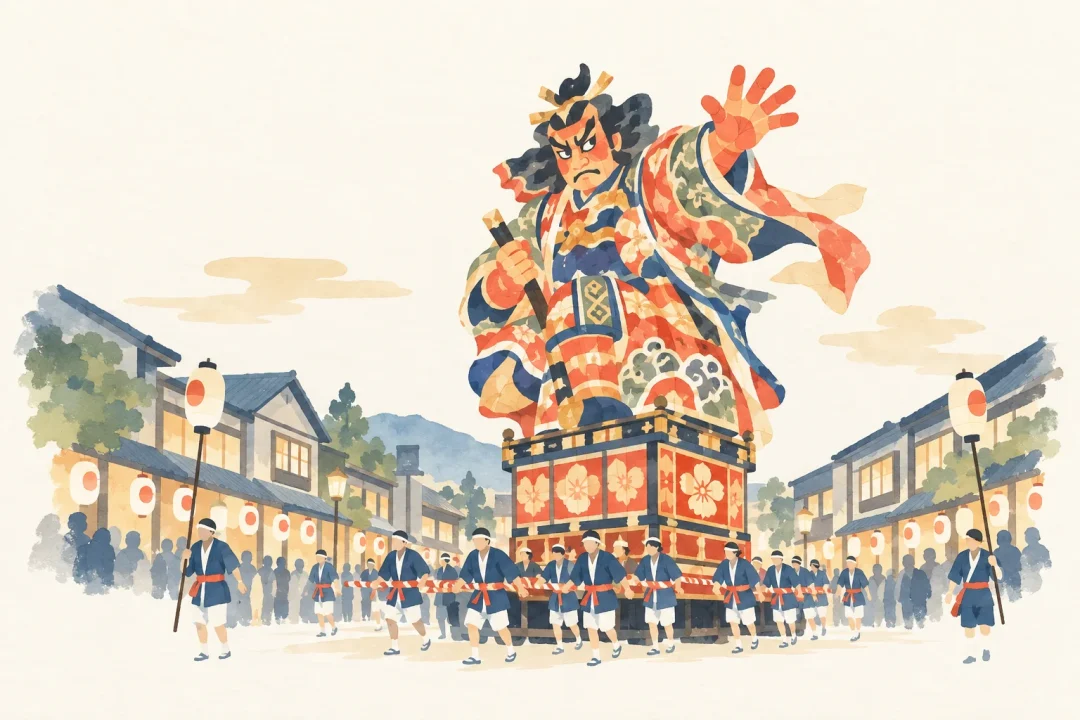
A festival where danjiri bring the people of Kuse together and carry autumn prayers with strength
Kuse Danjiri Festival
Festival information
EVENT INFORMATION- Season / frequency
- The first Saturday and Sunday of October
- Area
- Osaka Prefecture・Sakai City(From Tokyo: approx. 2 h 30 min–3 h · bullet train)Prefecture-level estimate to a main station or airport, not the venue. Airport access, check-in and onward travel are extra; remote areas and islands can take much longer.
- Highlights and activities
- Wishes behind the festival
- Last updated
- 2026/10/19
The Kuse Festival is an autumn festival passed down in the Kuse area of Naka Ward, Sakai City. Danjiri from each neighborhood enter shrines for miya-iri, and the joint parade brings the area's danjiri together in motion.
About Kuse Danjiri Festival
The Kuse Danjiri Festival is an autumn festival held in the Kuse area of Naka Ward, Sakai City, Osaka Prefecture.
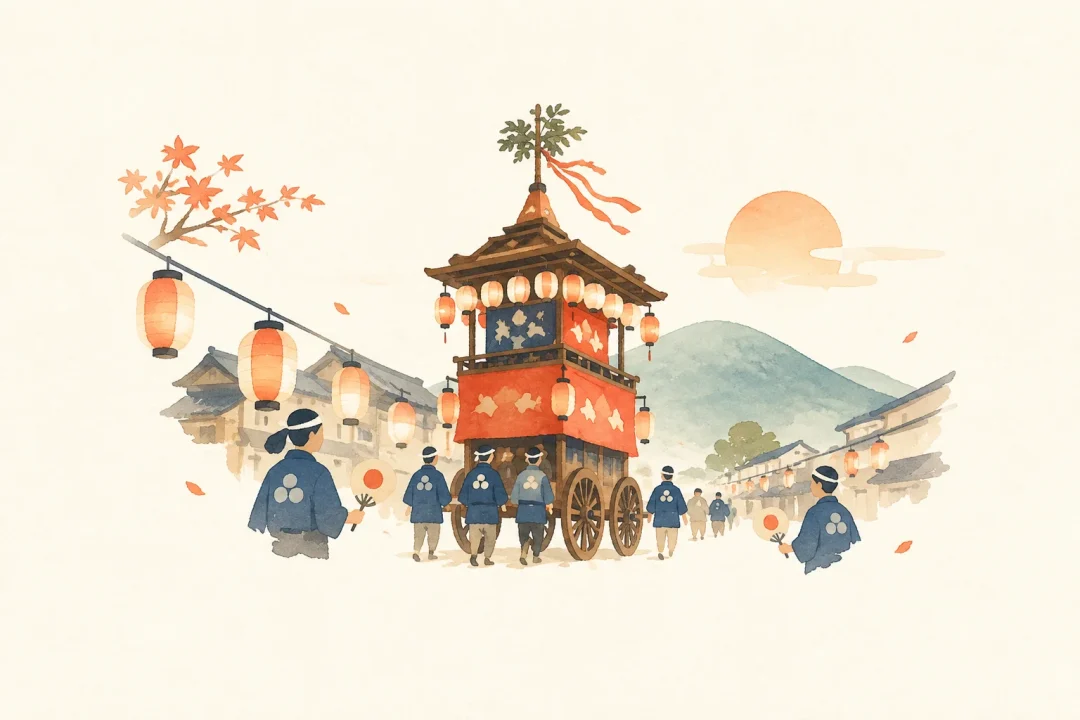
Neighborhoods across the area pull danjiri, and the festival is shaped by their miya-iri at shrines and joint processions that bring districts together.
The danjiri procession has been passed down as a local tradition in which danjiri are offered to shrines in prayer for good harvests and other blessings.
Rooted in the Kuse area, the festival offers a chance to enjoy the distinctive appearance of each neighborhood’s danjiri and the spectacle of the procession.
Source: 久世だんじり祭り - Wikipedia / 堺のだんじりは夜も走る!やりまわしや彫刻など、見どころ楽しみ方を紹介します
Festival highlights
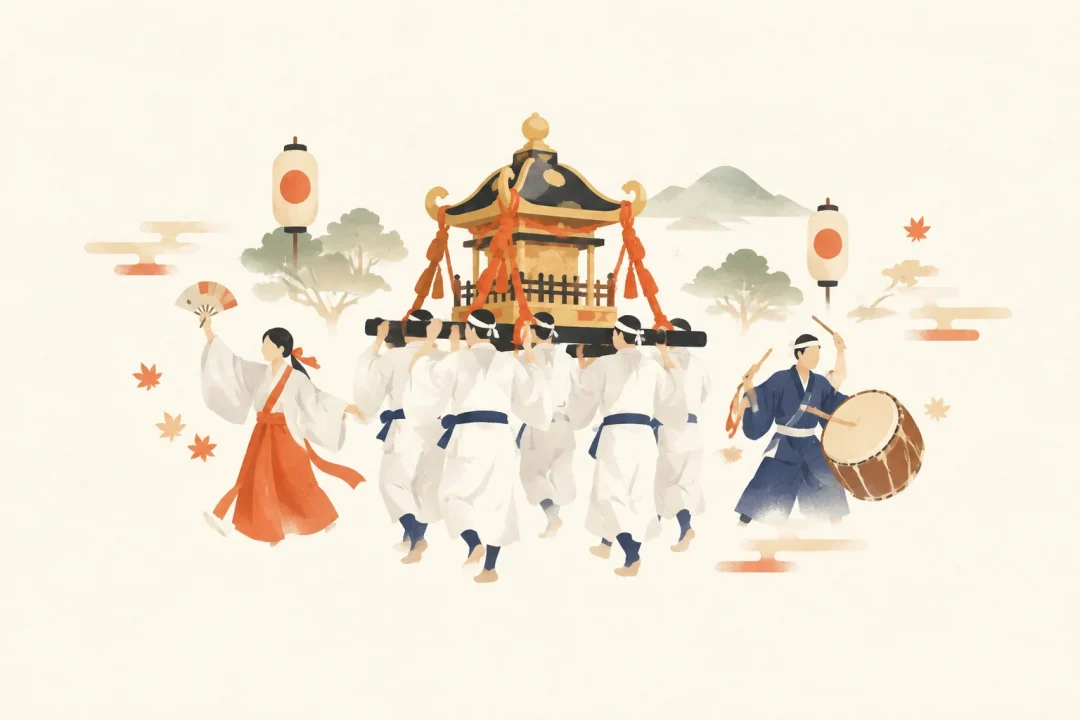
Highlights include pulling the danjiri together and guiding it into the shrine for miya-iri.
In Kuse, the danjiri enter Nonomiya Shrine on the first day and Tashihaya-hime Shrine on the second day. A joint parade is also held on the second day beneath the Senboku Route 1 overpass.
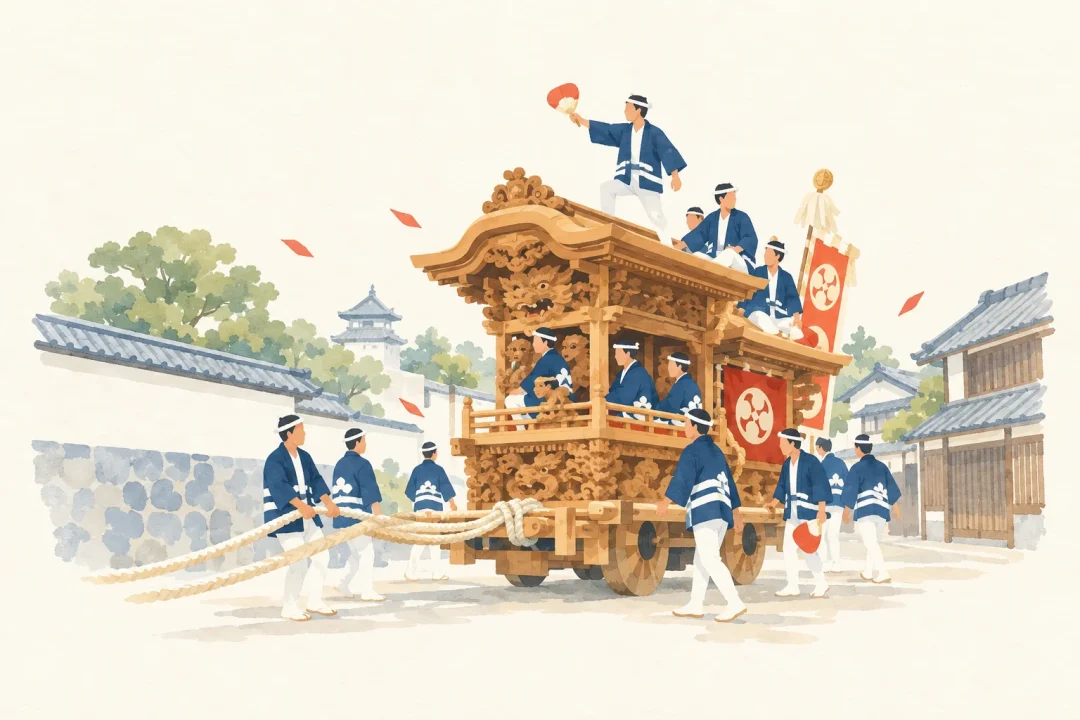
The danjiri are adorned with intricate carvings. You can admire not only their imposing presence as they move but also the fine details when they stop.
A festival where danjiri bring the people of Kuse together and carry autumn prayers with strength
What to expect
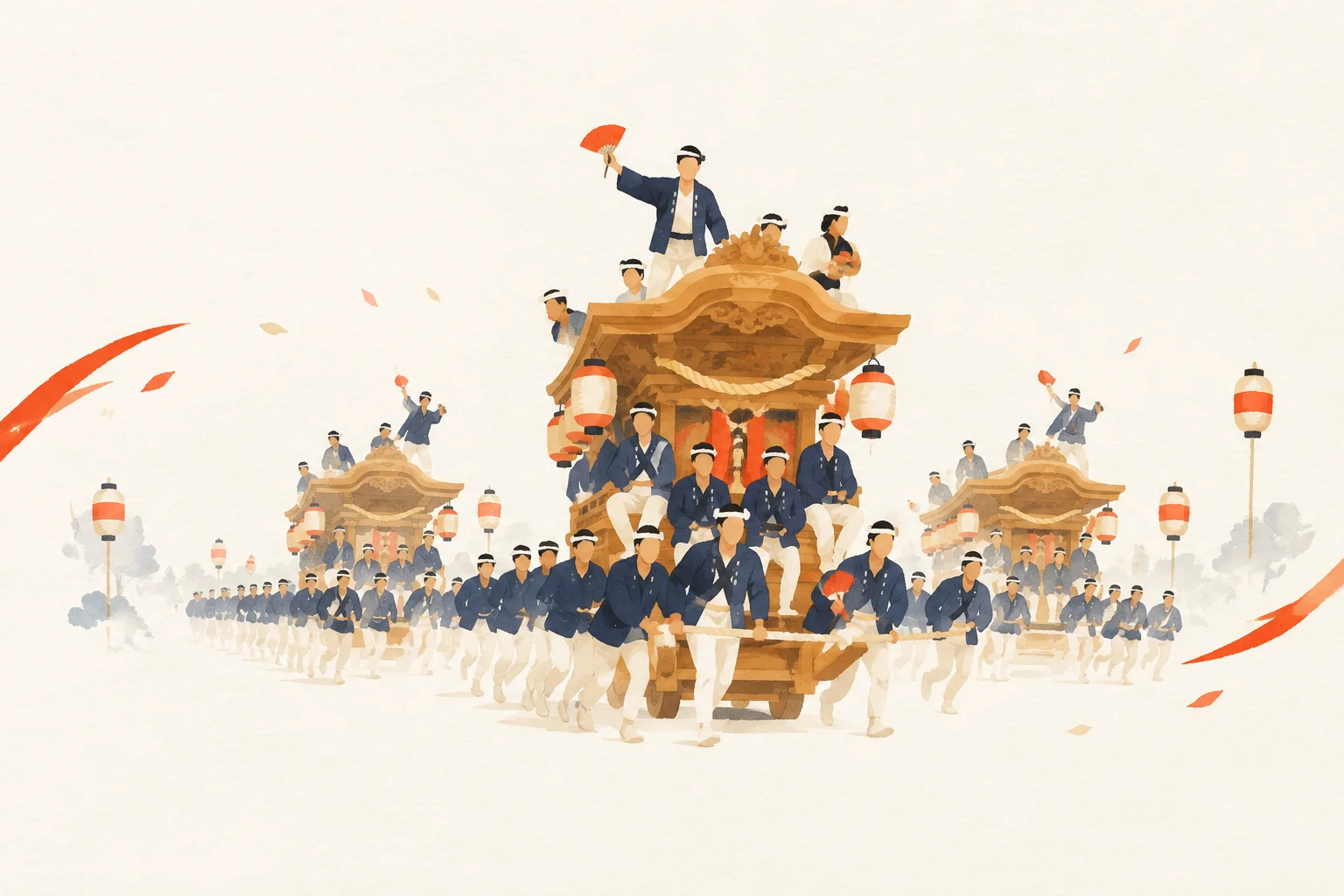
During the festival, large groups pull the danjiri from each neighborhood to local shrines for miya-iri.
The procession involves many roles working together: people pull the ropes, others use levers at the front and rear to steer, the daikugata give directions from the roof, and musicians play drums and flutes.
A joint parade featuring danjiri from several neighborhoods is also held on the second day, offering a chance to compare the danjiri from each neighborhood.
Location and access
- Address
Sakai City
Host municipality 大阪府堺市
This map shows the surrounding area, not the exact venue location.
Dates and season
- Season
The first Saturday and Sunday of October
Accommodation and hotels PR
Showing nearby accommodation.
Prices and availability are current at the time of retrieval. For multi-night stays, only the first night’s price is shown. Confirm the final price and directions to the venue with the booking provider. Select your dates again when using the area search link. Search area: within 3 km of Central Osaka Prefecture / Sakai City (the search is not centered on the festival venue)
Nearby attractions

石津神社
大阪府堺市にある神社

萩原神社
大阪府堺市にある神社

大鳥大社
大阪府堺市の神社
Origins and History of Kuse Danjiri Festival
The Kuse Danjiri Festival is said to date back to the Meiji 20s.
It is said to have begun when residents in the Kuse area, where new fields were being developed, prayed for bountiful harvests.
The festival was suspended for a time, but a 2022 notice described it as having returned after a 2-year hiatus beginning in 2020, for the first time in 3 years.
Even today, several districts pull danjiri, making the festival an event that symbolizes community bonds.
Source: 地元のだんじり祭りを応援!大阪・堺のBBQ場が地域連携!〜祭り当日の10/1・2、休憩所として提供!地区住民にドリンクサービスも!〜|BBQ&Co 株式会社バーベキューアンドコー
Kuse Danjiri Festival at a Glance
The Kuse Danjiri Festival is an autumn festival held in the Kuse area of Naka Ward, Sakai City.
Highlights include danjiri processions, miya-iri at shrines, and a joint parade; visitors can also admire the carvings on the danjiri.
It is said to date back to the Meiji 20s and has been passed down as a local event to pray for bountiful harvests.
Japanese Festivals.jp Editorial Team
Celebrating local culture and helping you discover a side of Japan you never knew.
Article updated: 2026/10/19
Submit information or a correction Submit photos of this festival