Kodai Odori of Kureko: feathered hats and the resonance of Buddhist chants
Kodai Odori
Festival information
EVENT INFORMATION- Season / frequency
- August 15, the first Sunday of September, and the final day of the equinoctial week
- Location
- Kureko area, Izumi Town
- Area
- Kumamoto Prefecture・Yatsushiro City(From Tokyo: approx. 1 h 50 min–2 h 10 min · flight time only)Prefecture-level estimate to a main station or airport, not the venue. Airport access, check-in and onward travel are extra; remote areas and islands can take much longer.
- Highlights and activities
- Last updated
- 2026/10/19
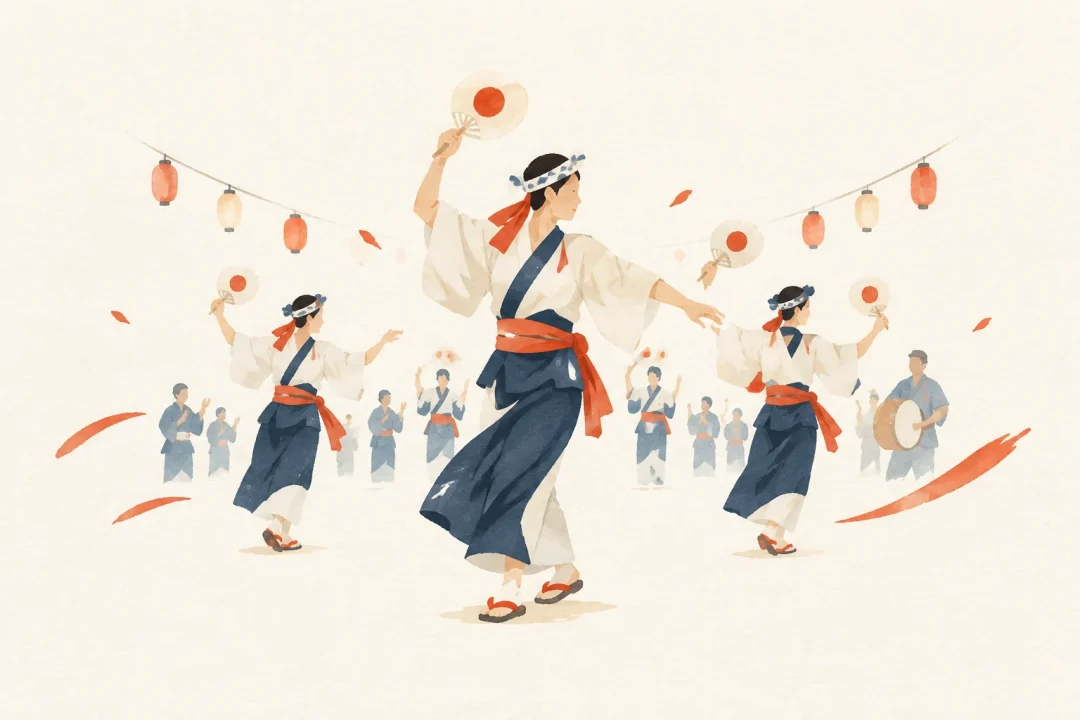
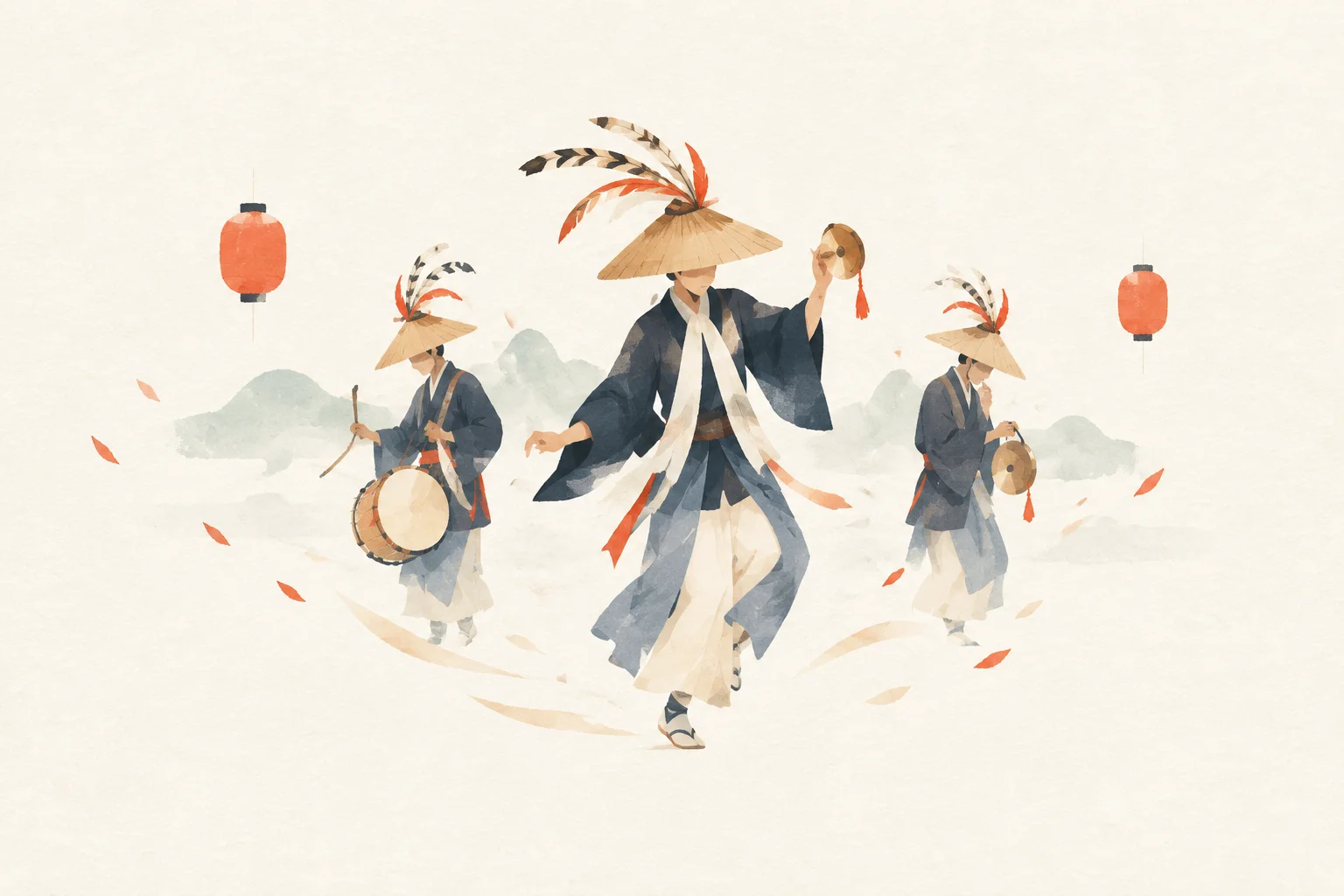
Kodai Odori, passed down in the Kureko area of Goka-no-Sho, Yatsushiro City, Kumamoto Prefecture, is a folk performing art characterized by feather-decorated hats, the sounds of gongs and shime-daiko, and dancing accompanied by Buddhist chants.
About Kodai Odori
Kodai Odori is a furyu dance passed down in the Kureko area of Goka-no-Sho, Yatsushiro City, Kumamoto Prefecture.
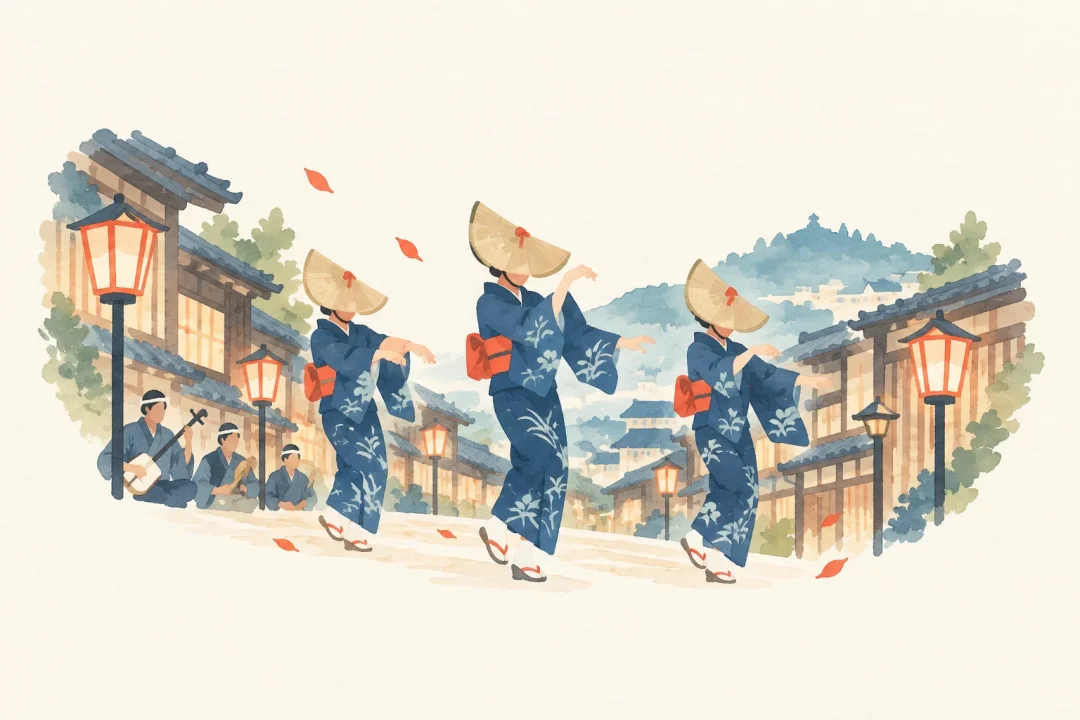
The dancers wear white tops and reddish-brown hakama, and dance wearing hats decorated with the black tail feathers of Kureko chickens.
It is distinctive for its use of gongs and handmade shime-daiko, and for dancing while chanting Buddhist prayers.
As a folk performing art handed down in the community, it is still passed on by a preservation association.
Source: 古代踊り | くまもと伝承芸能情報サイト
Festival highlights
One highlight is the sight of dancers moving gracefully in distinctive costumes and feather-decorated hats.
The hats are adorned with the black tail feathers of Kureko chickens, known as “shaguma.”
Gongs and handmade shime-daiko made locally provide the accompaniment, while the dance’s Buddhist chants evoke a quiet melancholy.
The costumes and sounds distinctive to furyu dances are also worth noting.
Kodai Odori of Kureko: feathered hats and the resonance of Buddhist chants
What to expect
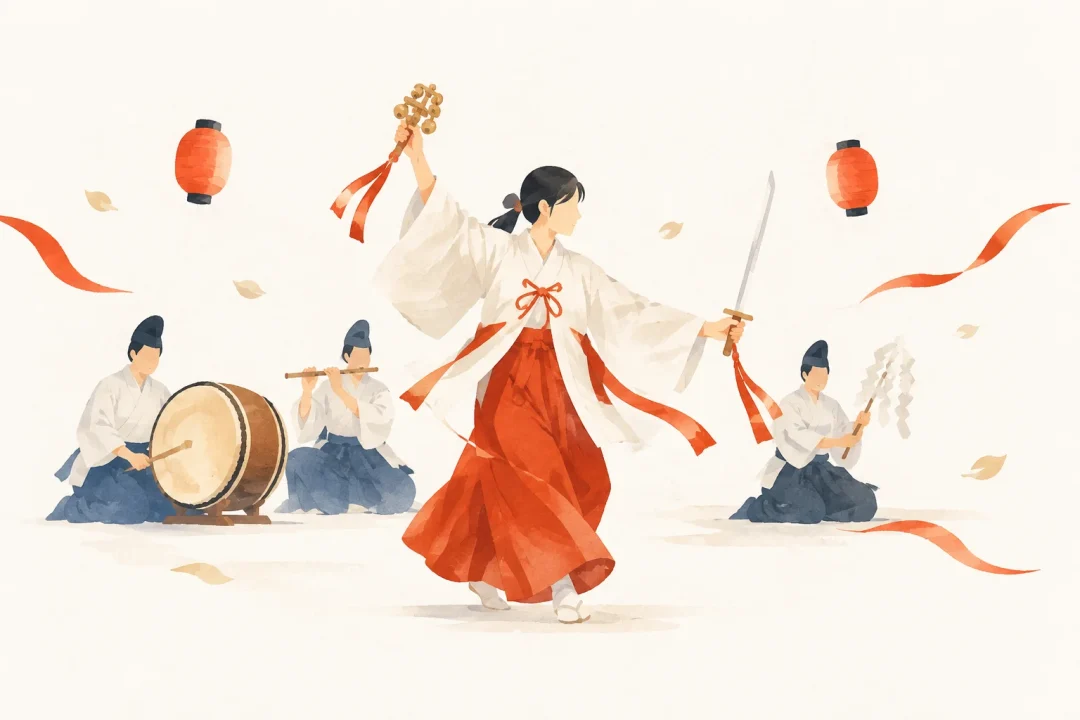
The dancers wear white tops and reddish-brown hakama, along with hats decorated with tail feathers, and dance to the sounds of gongs and shime-daiko.
A form accompanied by Buddhist chants has been preserved among the dances.
There are several performance dates, including August 15, the first Sunday of September, and the final day of the equinoctial week.
Check the event-specific information for details on the program and duration.
Location and access
- Venue and address
Passed down in the Kureko area of Izumi Town, Yatsushiro City, Kumamoto Prefecture.
Address Kureko, Izumi Town, Yatsushiro City, Kumamoto Prefecture
Dates and season
The main public performance dates include August 15, the first Sunday in September, and the last day of the equinox period.
Since several public performance dates are listed, please check the latest information before your visit.
Accommodation and hotels PR
Showing nearby accommodation.
Prices and availability are current at the time of retrieval. For multi-night stays, only the first night’s price is shown. Confirm the final price and directions to the venue with the booking provider. Select your dates again when using the area search link. Search area: within 3 km of Central Kumamoto Prefecture / Yatsushiro City (the search is not centered on the festival venue)
Nearby attractions

八代宮
熊本県八代市にある神社

八代市立博物館・未来の森ミュージアム
熊本県八代市にある博物館

松浜軒
熊本県八代市にある、熊本藩家老松井家の邸宅と庭園
Origins and History of Kodai Odori
Kodai Odori is a folk performing art that has been passed down for generations in the Kureko area of Goka-no-Sho.
It is said that Heike fugitives danced it while longing for the capital, and a form of the dance accompanied by Buddhist chants has been preserved.
It was designated a Prefectural Important Intangible Folk Cultural Property in Showa 37April 13, and selected as a Nationally Selected Intangible Folk Cultural Property in Showa 53January 31.
It is now passed on by a preservation association.
Official information
Kodai Odori at a Glance
Kodai Odori is a furyu dance passed down in the Kureko area of Goka-no-Sho, Yatsushiro City.
Hats decorated with the tail feathers of Kureko chickens, white tops and reddish-brown hakama, and the sounds of gongs and handmade shime-daiko create a striking appearance and sound.
It has a tradition of dancing while chanting Buddhist prayers, and has been designated a Prefectural Important Intangible Folk Cultural Property and selected as a Nationally Selected Intangible Folk Cultural Property.
Japanese Festivals.jp Editorial Team
Celebrating local culture and helping you discover a side of Japan you never knew.
Article updated: 2026/10/19
Submit information or a correction Submit photos of this festival