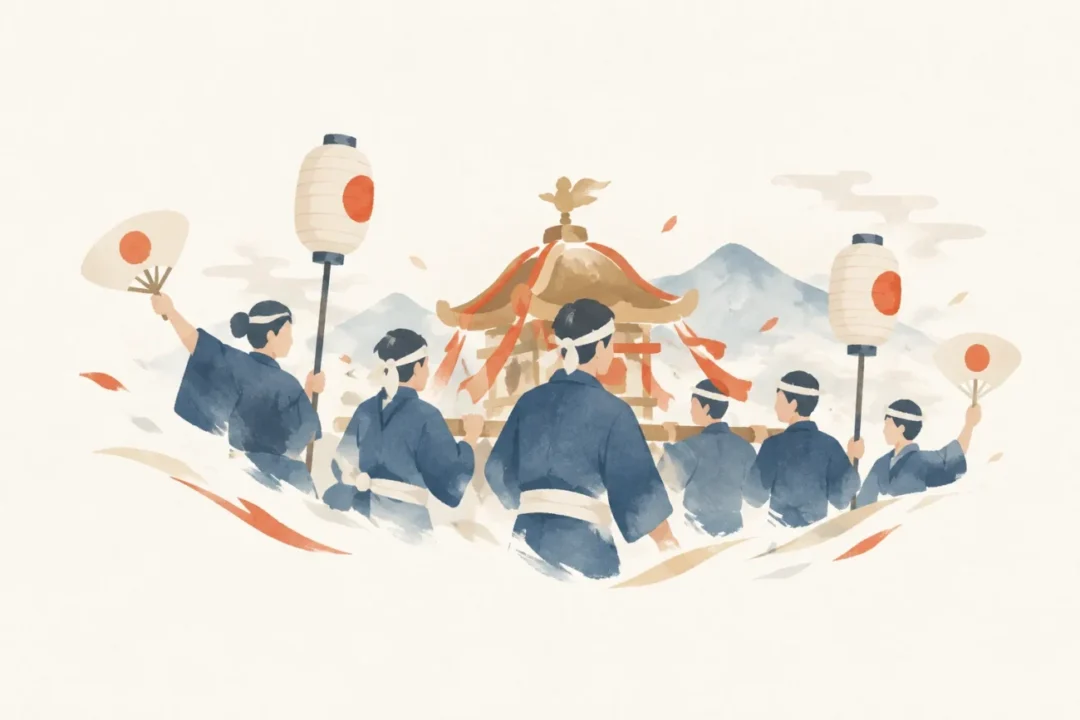
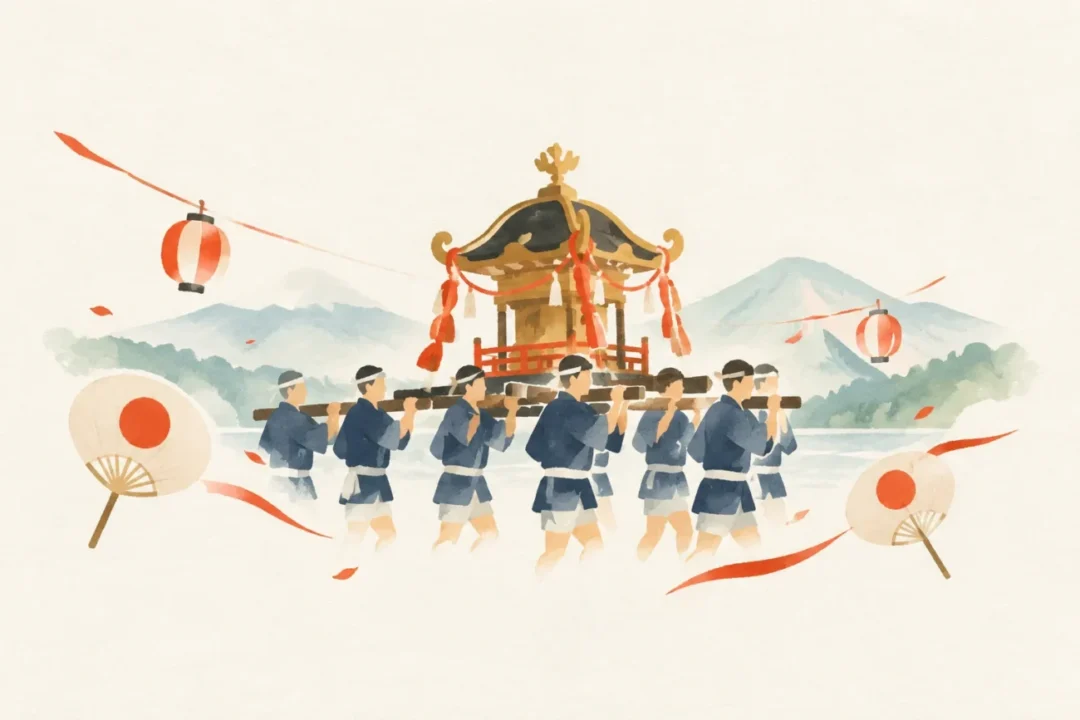
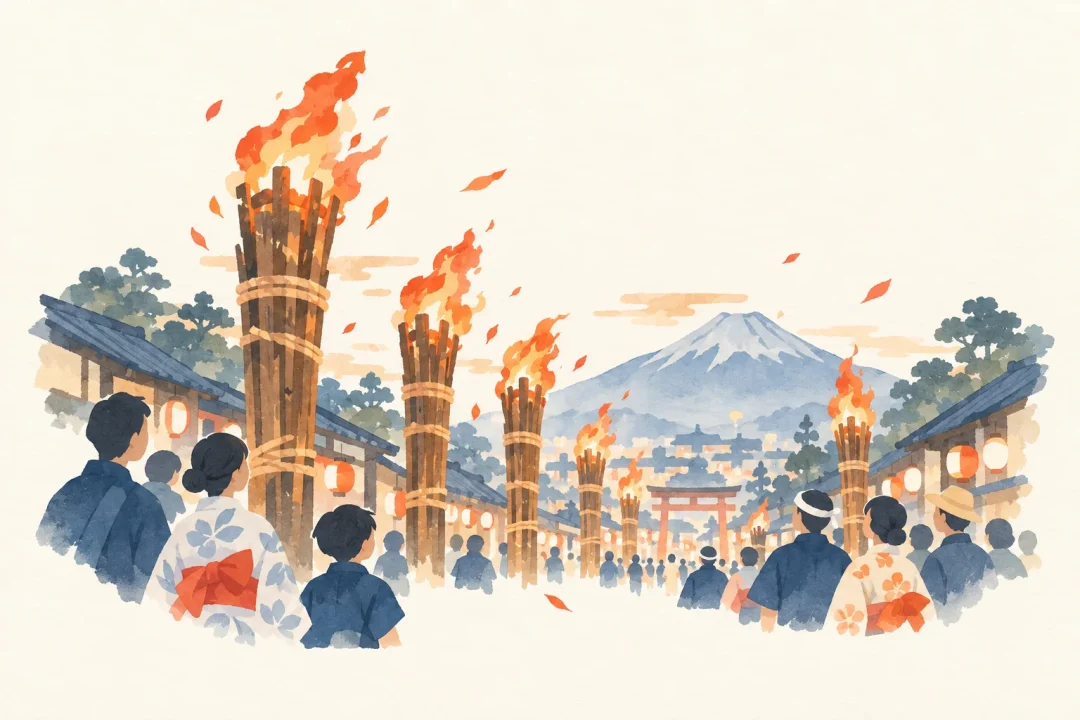
A festival in Hanasaki featuring sekihan throwing and a monkey performer being pursued
Katashina Saruoi Festival

Festival information
EVENT INFORMATION- Season / frequency
- On the Day of the Monkey during lunar calendar: September each year (at the time of designation) / Every year
- Location
- Hotaka Shrine
- Area
- Gunma Prefecture・Katashina Village(From Tokyo: approx. 50 min–1 h · bullet train)Prefecture-level estimate to a main station or airport, not the venue. Airport access, check-in and onward travel are extra; remote areas and islands can take much longer.
- Features
- Highlights and activities
- Last updated
- 2026/11/11
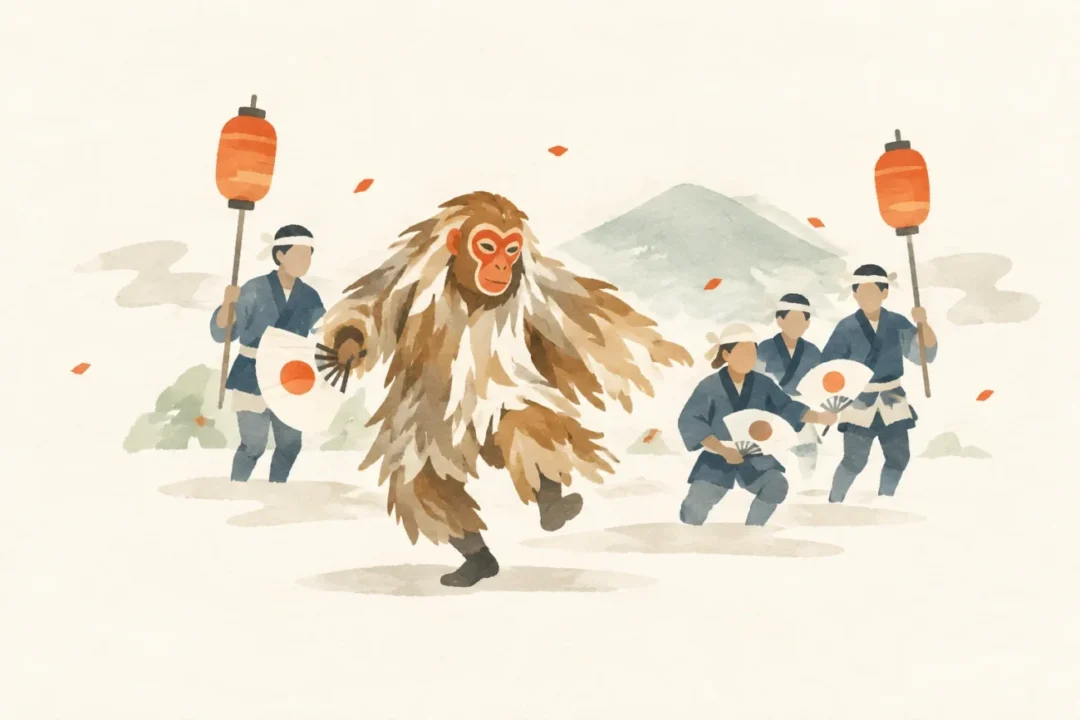
The Katashina Saruoi Festival, passed down in Hanasaki, Katashina Village, is an Important Intangible Folk Cultural Property known for the throwing of sekihan and an event in which a performer dressed in white as a monkey circles the shrine buildings three times.
About Katashina Saruoi Festival
The Katashina Saruoi Festival, passed down in Hanasaki, Katashina Village, is an intangible folk cultural property held with the village divided into east and west.
It is known for having one of the few Miyaza organizations in eastern Japan and for featuring a monkey performer carrying a heisoku.
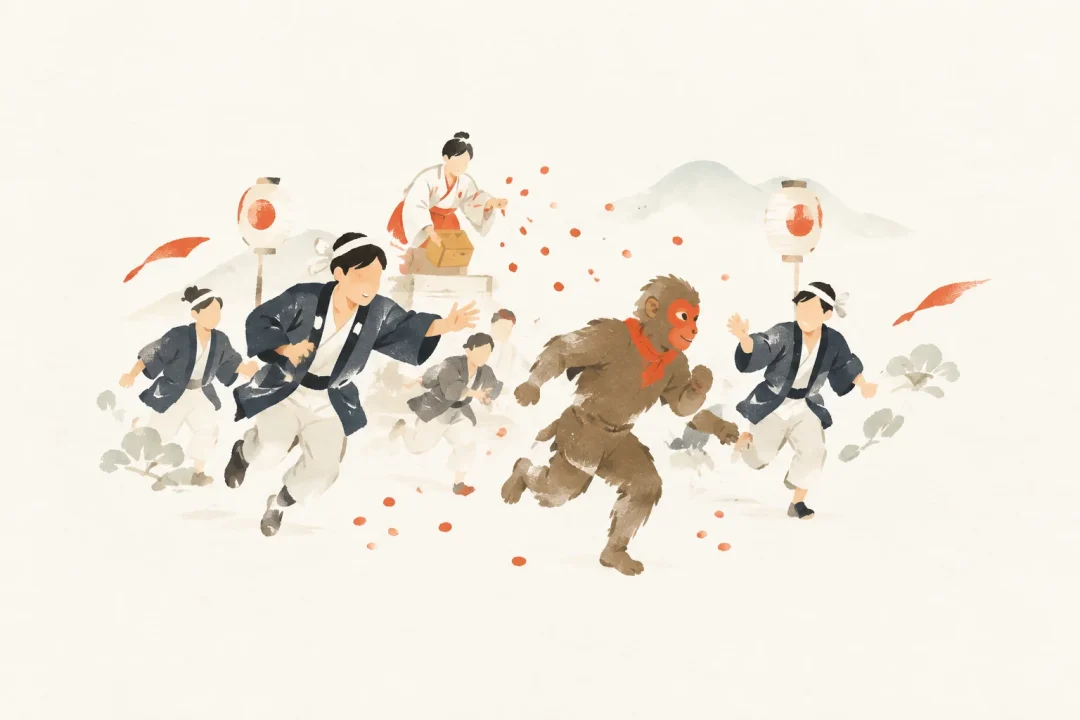
The festival’s traditions include throwing sekihan, songs performed by the eastern and western groups, and the monkey performer being pursued around the shrine buildings for three circuits.
Festival highlights
A highlight is the throwing of sekihan, with the village divided into east and west.
Roles such as Sakaban and Hitsuban are assigned, and the East and West Zashiki also perform songs.
At the end, a performer dressed in white as a monkey appears and, pursued by the Sakaban and Hitsuban, circles the shrine buildings three times.
The festival has a distinctive structure, with sekihan, songs, and the monkey performer’s movements unfolding in sequence.
A festival in Hanasaki featuring sekihan throwing and a monkey performer being pursued
What to expect
At the festival, roles such as Sakaban and Hitsuban are assigned first.
The Hitsuban throw sekihan at one another, and the East and West Zashiki perform songs. Then a performer dressed in white as a monkey appears.
Pursued by the Sakaban and Hitsuban, the monkey performer circles the shrine buildings three times.
The festival unfolds through events associated with each role and the monkey performer’s movements.
Location and access
- Venue and address
Hotaka Shrine, Hanasaki, Katashina Village
Address Hanasaki, Katashina Village
Dates and season
- Season
On the Day of the Monkey during lunar calendar: September each year (at the time of designation)
- Frequency
Every year
Accommodation and hotels PR
Showing nearby accommodation.
Prices and availability are current at the time of retrieval. For multi-night stays, only the first night’s price is shown. Confirm the final price and directions to the venue with the booking provider. Select your dates again when using the area search link. Search area: within 3 km of Central Gunma Prefecture / Katashina Village (the search is not centered on the festival venue)
Origins and History of Katashina Saruoi Festival
According to tradition, a monkey living at Saruiwa at the foot of Mount Hotaka ravaged crops in the fields. The villagers discussed making the monkey a god and chased it around; this is said to be how the festival began.
The festival is described as having continued for approximately 300 years.
In 1978, it was selected as an intangible folk cultural property for which measures such as documentation should be undertaken, under the name “Katashina Saru Festival,” and was designated an Important Intangible Folk Cultural Property on December 27, 2000.
Katashina Saruoi Festival at a Glance
At the Katashina Saruoi Festival, Hanasaki is divided into east and west, and events include throwing sekihan, songs performed by the eastern and western groups, and a monkey performer circling the shrine buildings three times. It is an intangible folk cultural property.
It is said to originate in a legend about a monkey at the foot of Mount Hotaka, and is described as having continued for approximately 300 years.
It was selected in 1978 as an intangible folk cultural property for which measures such as documentation should be undertaken, and designated an Important Intangible Folk Cultural Property in 2000.
Sources and references
Japanese Festivals.jp Editorial Team
Celebrating local culture and helping you discover a side of Japan you never knew.
Article updated: 2026/11/11