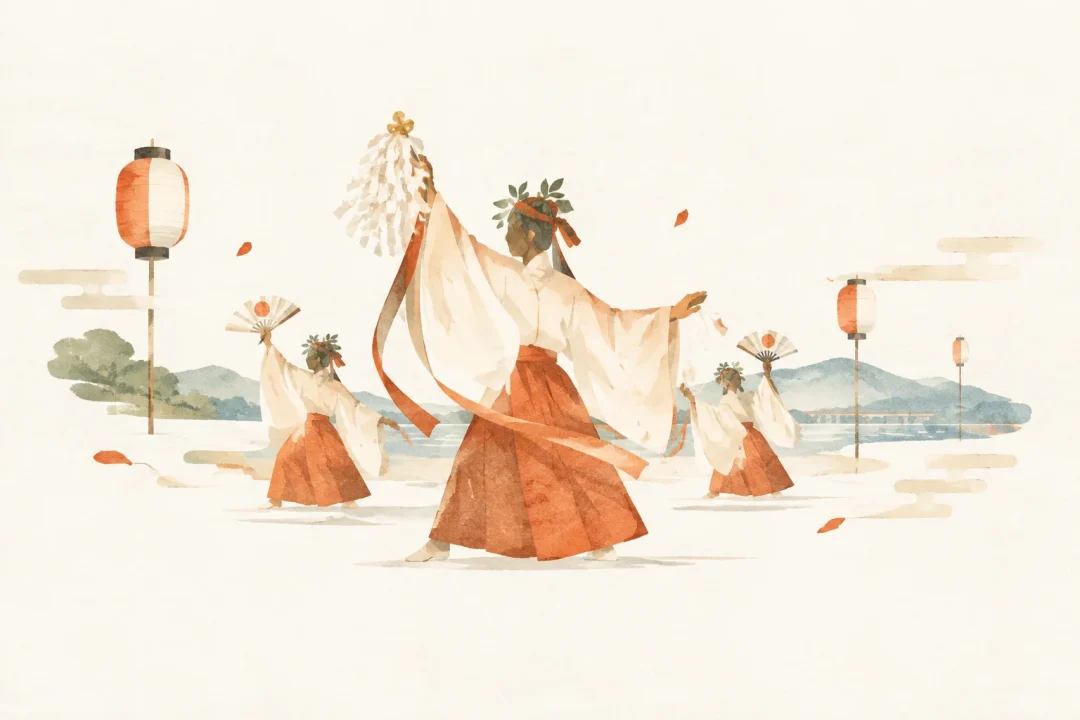
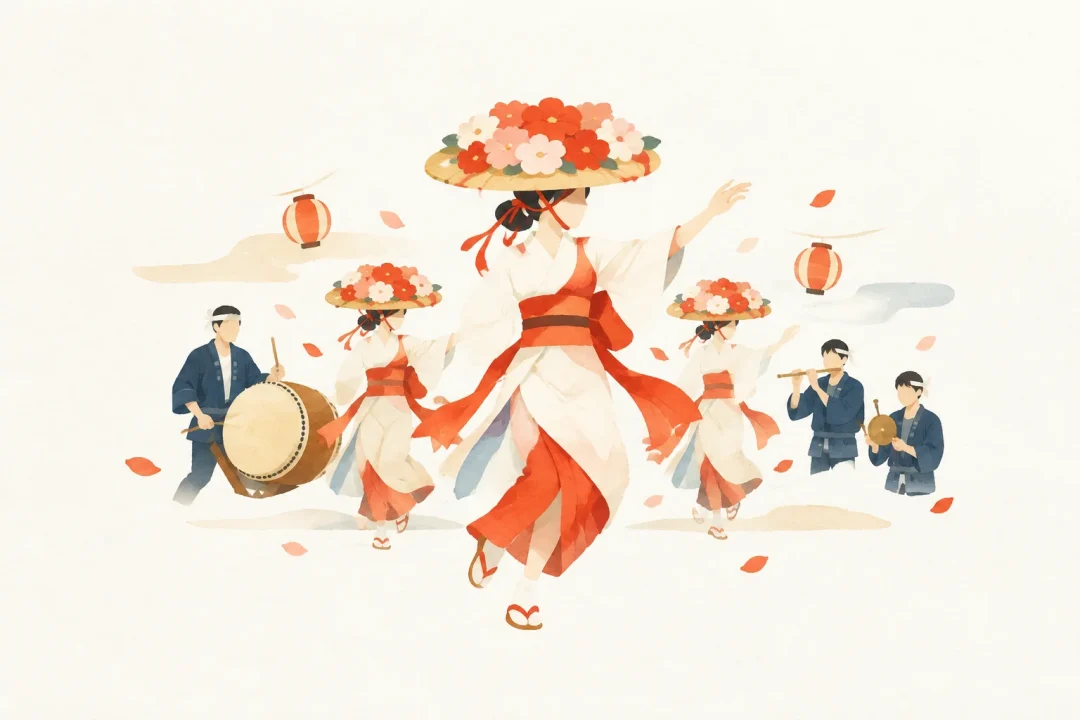
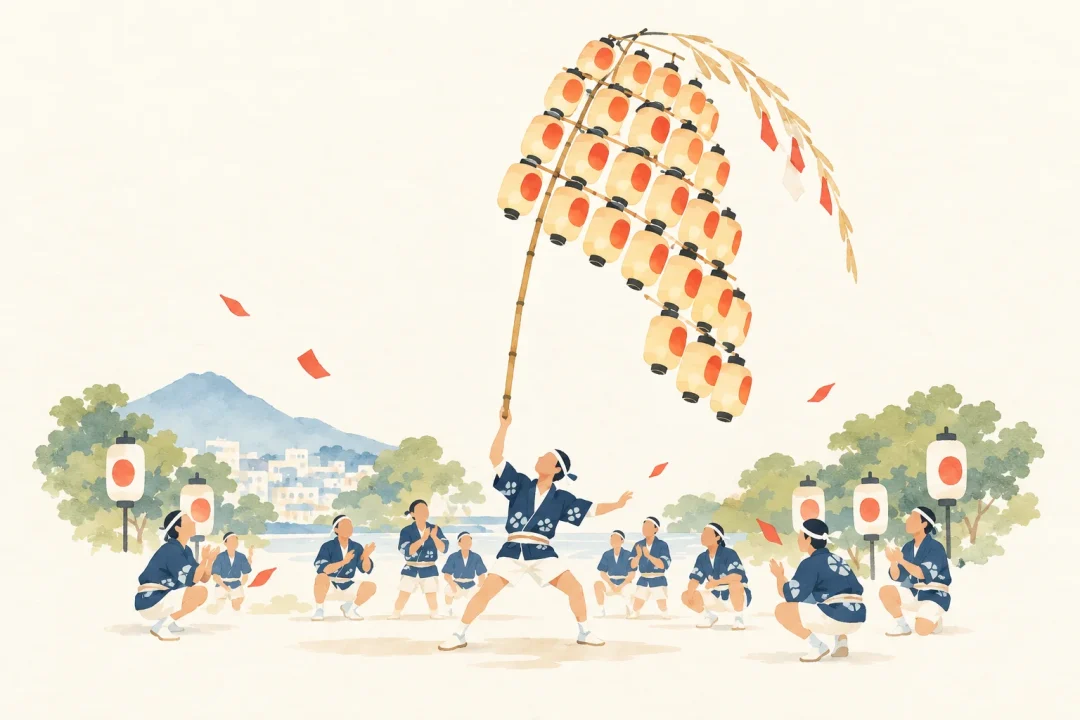
Ato’s traditional festival music, played by the three niwa communities with an oni leading the way
Kameyama Hachiman Festival Music Event
Festival information
EVENT INFORMATION- Season / frequency
- Sunday close to October 19 / An event said to be held every year
- Location
- Kameyama Hachiman Shrine
- Area
- Hiroshima Prefecture・Hiroshima City(From Tokyo: approx. 3 h 50 min–4 h 20 min · bullet train)Prefecture-level estimate to a main station or airport, not the venue. Airport access, check-in and onward travel are extra; remote areas and islands can take much longer.
- Highlights and activities
- Participation / viewing
- Open to public participation
- Age restrictions
- Children who wish to take part
- Last updated
- 2026/10/26
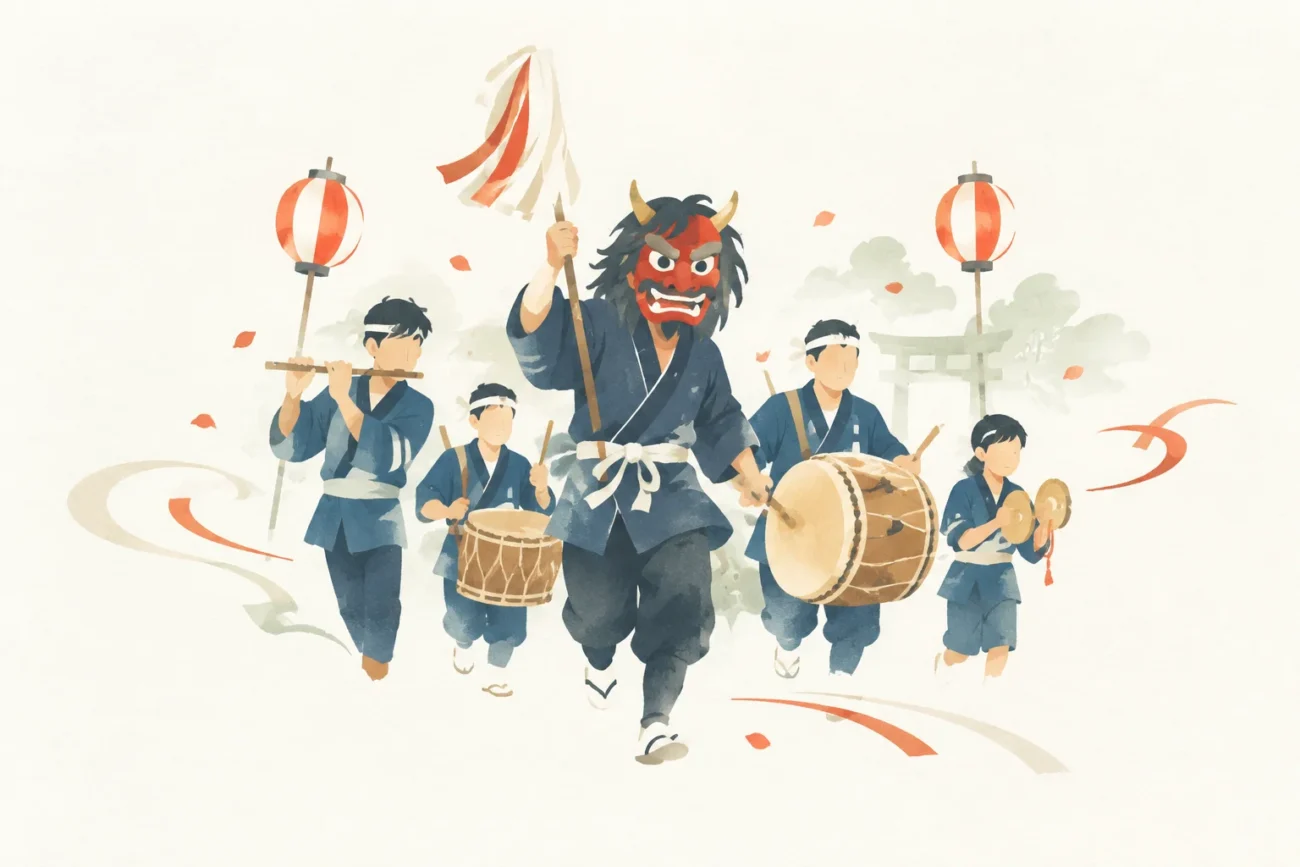
With the oni leading the way and the sounds of transverse flutes, , and kane ringing out, the three “niwa” communities of Ato-chō dedicate festival music to Kameyama Hachiman Shrine. This event, designated an Important Intangible Folk Cultural Property by Hiroshima City, brings together local religious groups and the passing down of traditions to children.
About Kameyama Hachiman Festival Music Event
The Kameyama Hachiman Festival Music Event is a festival in which the three “niwa” communities of Ato-chō, Aki-ku, Hiroshima City, dedicate festival music to Kameyama Hachiman Shrine.
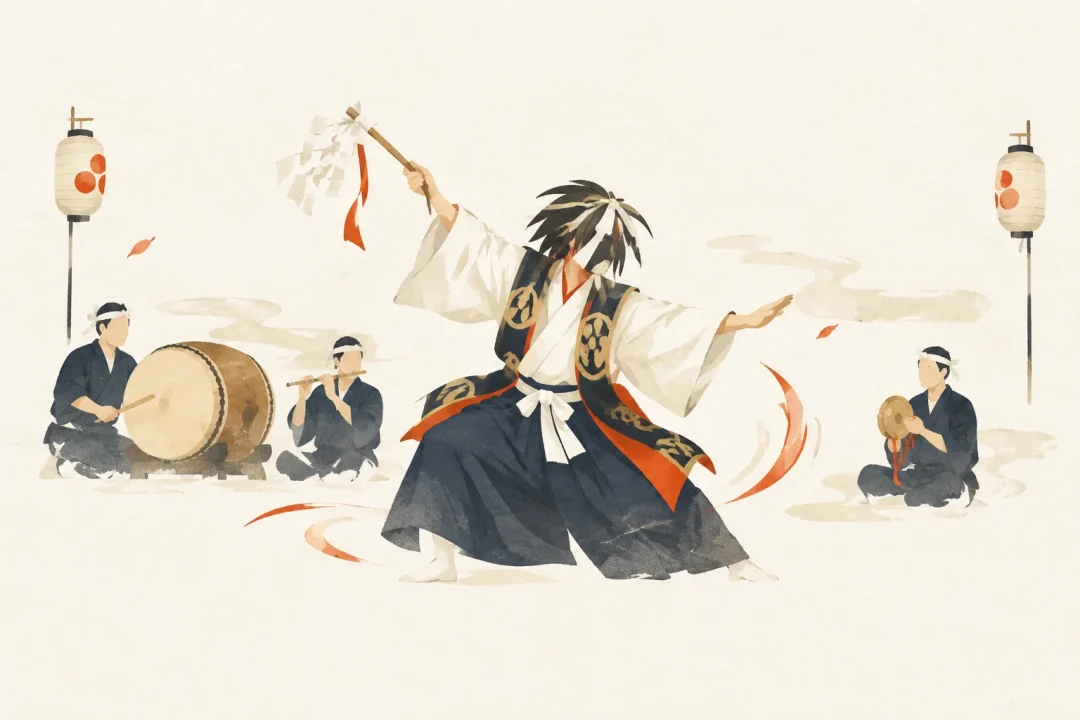
Centered on decorated umbrella sleeves and led by the oni, adults play transverse flutes while children play large and small taiko and kane.
As an event that carries on the character of religious groups and communities connected with local Kōjin Shrines, it was designated an Important Intangible Folk Cultural Property by Hiroshima City in Heisei 26.
Festival highlights
A highlight is seeing the three local groups—Uwaniwa, Nakaniwa, and Shimoniwa—dedicate festival music as distinct communities.
Led by the oni and centered on decorated umbrella sleeves, adults play transverse flutes while children perform the melodies on large and small taiko and kane.
On the morning of the festival, as a remnant of an early-modern custom of making a circuit through the community, the oni alone visit every home of of each Kōjin Shrine.
Ato’s traditional festival music, played by the three niwa communities with an oni leading the way
What to expect
On the day of the festival, the oni first visit the homes of ujiko of each Kōjin Shrine during the morning.
After that, Uwaniwa, Nakaniwa, and Shimoniwa in Ato each dedicate the festival music handed down in their area to Kameyama Hachiman Shrine.
Adults play the transverse flutes, while children play the large and small taiko and kane; the three niwa communities take responsibility for the local festival.
The event as it is held today retains traces of an older custom in which the music was played at Kōjin Shrines, followed by a procession through the ujiko areas before everyone gathered at the shrine.
How to take part
Children who wish to take part can now join the festival music performance.
It was once limited to boys from families that had lived in Ato for generations, but the way it is preserved and passed on changed as the number of participating children fell due to the declining birthrate.
No information is provided here on whether general visitors can join the performance or procession.
Children who wish to take part may join the festival music.
No information is provided about how to register to join the performance, advance applications, or participation fees.
Location and access
- Venue and address
Kameyama Hachiman Shrine (2910 Miyanogo, Ato-chō, Aki-ku, Hiroshima City)
Address 2910 Miyanogo, Ato-chō, Aki-ku, Hiroshima City
Dates and season
- Season
Sunday close to October 19
- Frequency
An event said to be held every year
Accommodation and hotels PR
Showing nearby accommodation.
Prices and availability are current at the time of retrieval. For multi-night stays, only the first night’s price is shown. Confirm the final price and directions to the venue with the booking provider. Select your dates again when using the area search link. Search area: within 3 km of Central Hiroshima Prefecture / Hiroshima City (the search is not centered on the festival venue)
Nearby attractions

お好み村
広島県広島市中区にあるフードテーマパーク
写真:Taisyo ; Uploaded to Commons by Nihonjoe / CC BY 3.0
Photo source ·
ひろしま美術館
広島県広島市中区にある美術館
写真:Taisyo at Japanese Wikipedia / CC BY 3.0
Photo source ·
マツダミュージアム
広島市南区にある企業博物館

尾長天満宮
広島県広島市東区にある神社

平和記念公園
広島市にある公園

広島市こども文化科学館
広島市中央公園内にある科学館
写真:Taisyo at Japanese Wikipedia / CC BY 3.0
Photo source ·
広島市交通科学館
広島県の博物館・美術館のスポットです。

広島市安佐動物公園
広島県の観光名所のスポットです。
写真:Taisyo at Japanese Wikipedia / CC BY 3.0
Photo source ·
広島市植物公園
広島県広島市佐伯区倉重にある都市公園

広島市江波山気象館
Museums

広島市現代美術館
広島県広島市南区にある美術館
写真:Taisyo at Japanese Wikipedia / CC BY 3.0
Photo source ·Origins and History of Kameyama Hachiman Festival Music Event
The festival music is said to have begun during the Kyōhō era.
It is thought to have been influenced by the shinshin procession at -yama Hachiman Shrine in Kazahaya, Akitsu-chō, Higashihiroshima, where the Tominaga family, then serving as priests of Kameyama Hachiman Shrine, also held that role.
The three “niwa” communities are connected with Edo-period Kōjin groves and local divisions, and a preservation society was formed in Heisei 20.
Over the 2 years starting in Heisei 20, a booklet and video documenting the state of the festival music were also produced.
Kameyama Hachiman Festival Music Event at a Glance
The Kameyama Hachiman Festival Music Event is a dedication featuring flutes, taiko, and other instruments, performed by the three “niwa” communities of Ato-chō.
The oni’s visits to homes and the festival music centered on decorated umbrella sleeves retain traces of an early-modern custom of making a circuit through the community starting from Kōjin Shrines.
The event is said to have begun during the Kyōhō era and was designated an Important Intangible Folk Cultural Property by Hiroshima City in Heisei 26.
Today, the tradition is passed on through instruction for children and the creation of records, led by the preservation society.
Japanese Festivals.jp Editorial Team
Celebrating local culture and helping you discover a side of Japan you never knew.
Article updated: 2026/10/26
Submit information or a correction Submit photos of this festival