Tracing the yabusame of Iimori Shrine, passed down through parishioners
Iimori Shrine Yabusame Ritual
Festival information
EVENT INFORMATION- Season / frequency
- October 9
- Location
- Iimori Shrine
- Area
- Fukuoka Prefecture・Fukuoka City(From Tokyo: approx. 1 h 50 min–2 h 10 min · flight time only)Prefecture-level estimate to a main station or airport, not the venue. Airport access, check-in and onward travel are extra; remote areas and islands can take much longer.
- Wishes behind the festival
- Last updated
- 2026/10/25
The Iimori Shrine Ritual is a traditional event offered during the autumn grand festival at Iimori Shrine. The passing down of the archer’s family role and the sacred horse provided by parishioners reflects the bond between the local community and the festival.
About Iimori Shrine Yabusame Ritual
The Iimori Shrine Yabusame Ritual has been held during the autumn grand festival of Iimori Shrine, which drew worshippers from across the former Sawara District.
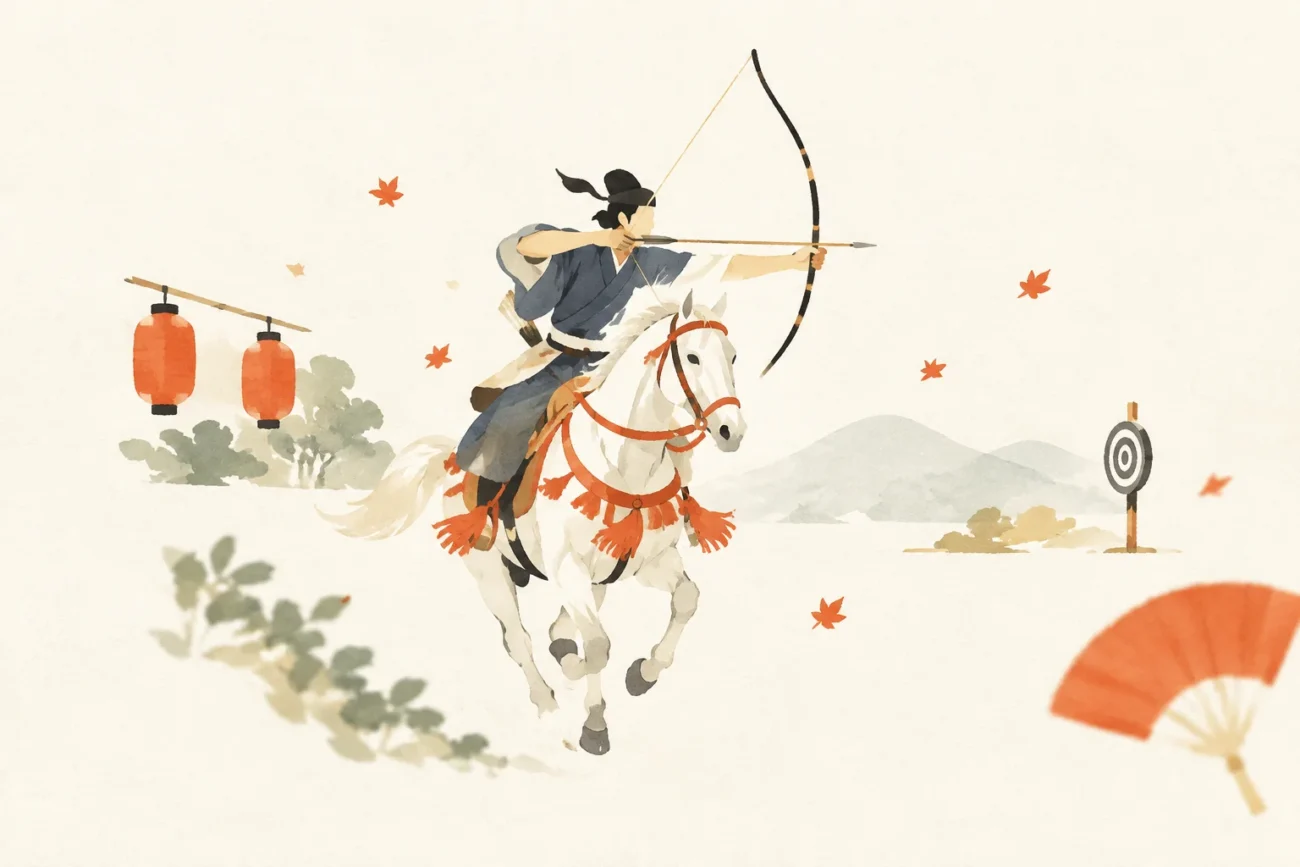
This offering ritual prays for abundant harvests, lasting success in battle, and freedom from illness. Even today, parishioners provide the sacred horse, and a leading family continues to carry on the yabusame tradition.
The custom of making an offering on behalf of the parishioners remains at Iimori Shrine, formerly the tutelary shrine of the 7 villages of Sawara District.
Source: 福岡市の文化財
Festival highlights
Highlights include families of archers who have passed down yabusame for generations, and the sacred horse provided by parishioners.
The sacred horse is no longer used as a mount, but the practice of having parishioners provide it continues.
The roles of the archer and sacred horse offer insight into the local customs that have preserved this offering ritual.
Tracing the yabusame of Iimori Shrine, passed down through parishioners
What to expect
The event is offered during Iimori Shrine’s autumn grand festival.
Originally, the archers came from parishioner families whose profession was mounted archery, and a leading family continues to carry on the yabusame tradition today.
In the past, the sacred horse was chosen from the village responsible for that year’s duties. Although it is no longer used as a mount, the custom of having parishioners provide it continues.
Location and access
- Venue and address
Iimori Shrine, 609 Oaza Iimori, Nishi Ward, Fukuoka City
Address 609 Oaza Iimori, Nishi Ward, Fukuoka City
Dates and season
- Season
October 9
Accommodation and hotels PR
Showing nearby accommodation.
Prices and availability are current at the time of retrieval. For multi-night stays, only the first night’s price is shown. Confirm the final price and directions to the venue with the booking provider. Select your dates again when using the area search link. Search area: within 3 km of Central Fukuoka Prefecture / Fukuoka City (the search is not centered on the festival venue)
Nearby attractions


Sumiyoshi Shrine
福岡県福岡市博多区住吉にある神社

博多ポートタワー
博多港にあるタワー

Ohori Park
福岡市中央区の公園
写真:Tzuhsun Hsu from Taipei, Taiwan / CC BY-SA 2.0
Photo source ·
志賀海神社
福岡県福岡市東区にある神社

海の中道海浜公園
福岡県福岡市東区にある国営公園

福岡アジア美術館
福岡市博多区にある美術館

福岡タワー
福岡市早良区の電波塔

福岡城
福岡市中央区にある城

福岡市動植物園
福岡市の動物園及び植物園

福岡市博物館
福岡市早良区にある博物館

福岡市美術館
福岡市中央区の大濠公園にある美術館
Origins and History of Iimori Shrine Yabusame Ritual
The Iimori Shrine Yabusame Ritual appears in an old document from Genki 4 (1573), preserved at Iimori Shrine, and is also mentioned in early modern regional gazetteers.
A manual from Tenpo 9 (1838) also survives, giving the event a long history of written records.
The practice of having a family of archers or parishioners provide the sacred horse has also been handed down as a local offering ritual.
Official information
Fukuoka City Cultural Property: “Iimori Shrine Yabusame Ritual”
Iimori Shrine Yabusame Ritual at a Glance
The Iimori Shrine Yabusame Ritual is a traditional event offered during the autumn grand festival at Iimori Shrine in Nishi Ward, Fukuoka City.
Prayers are made for abundant harvests, lasting success in battle, and freedom from illness, and the event is distinguished by the passing down of the archer’s role within a family and the provision of a sacred horse by parishioners.
It is a city-designated intangible folk cultural property, recorded in an old document from Genki 4 (1573) and a manual from Tenpo 9 (1838).
Japanese Festivals.jp Editorial Team
Celebrating local culture and helping you discover a side of Japan you never knew.
Article updated: 2026/10/25
Submit information or a correction Submit photos of this festival