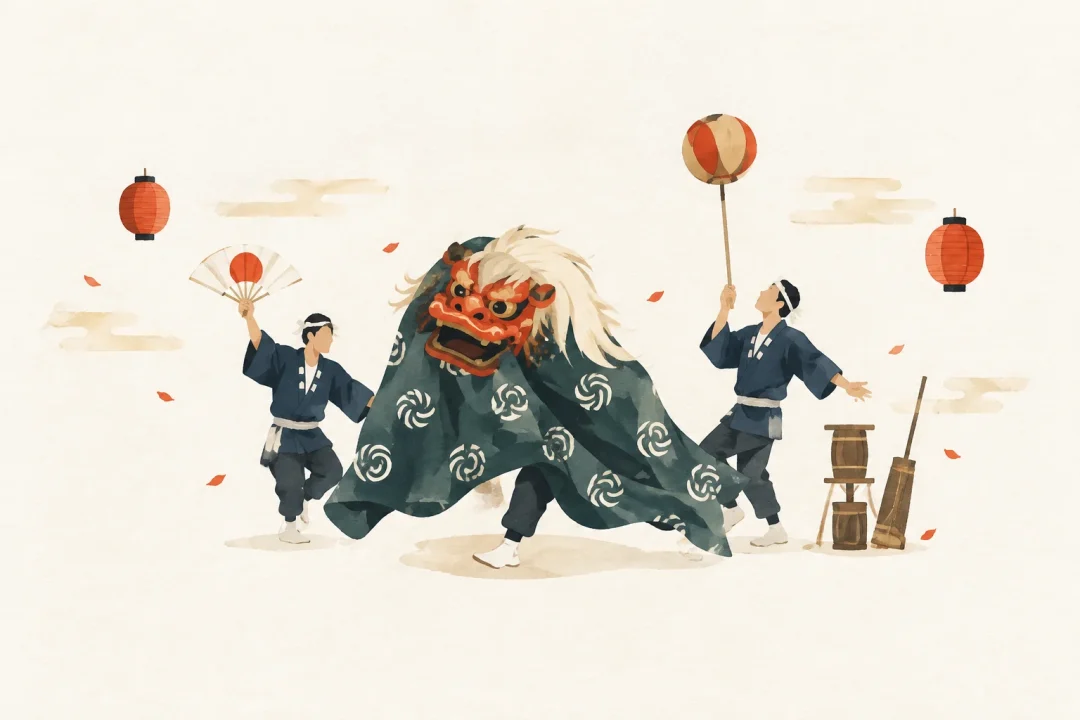
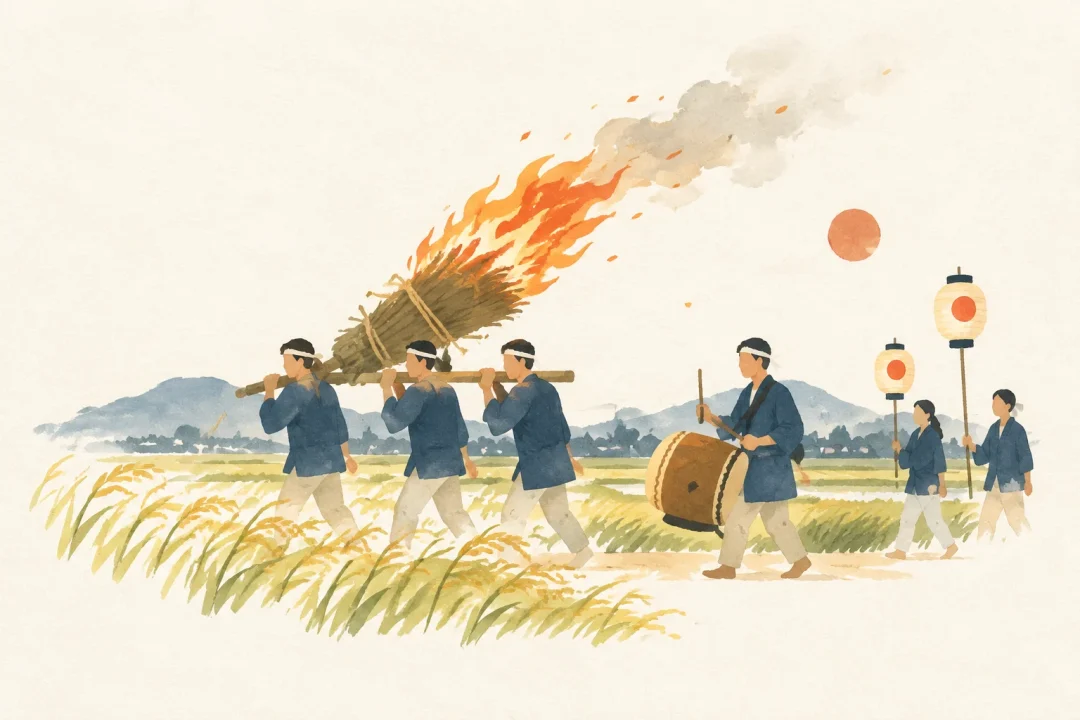
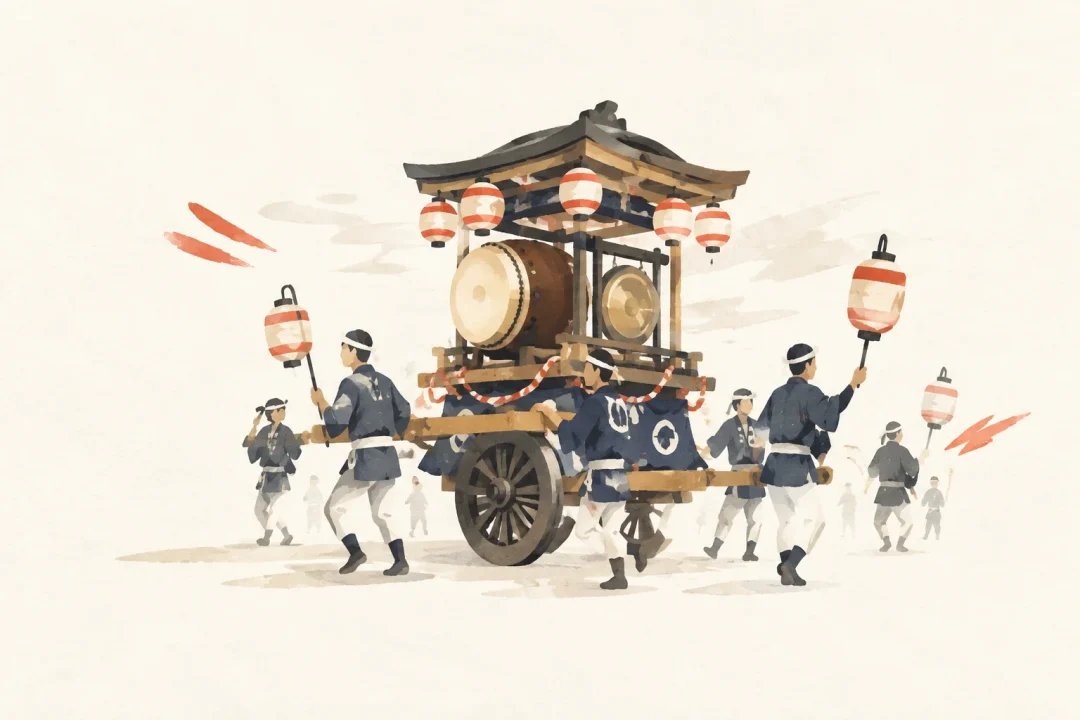
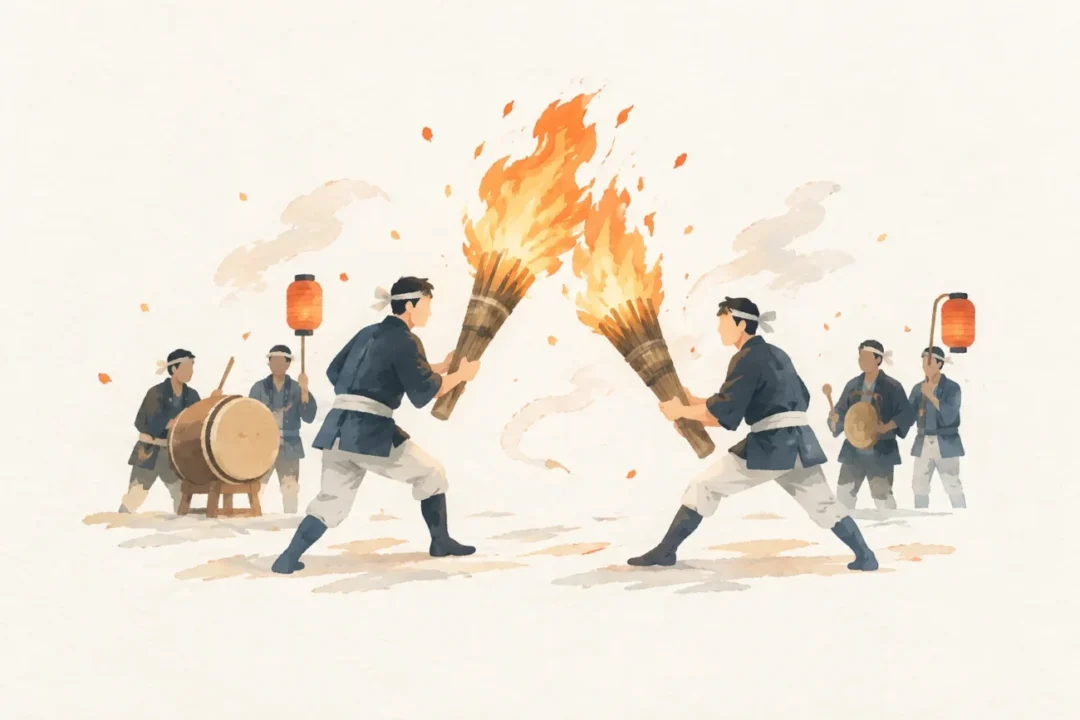
A prayer procession linking Higashi-Hino and Nishi-Hino with the sound of large drums and gongs
The Dainenbutsu of Higashi-Hino and Nishi-Hino
Festival information
EVENT INFORMATION- Season / frequency
- Evenings on August 13 and the 15th each year / Every year
- Location
- Higashi-Hino Town and Nishi-Hino Town (Saikakuji Temple, Kenshoji Temple, Hino Shrine)
- Area
- Mie Prefecture・Yokkaichi City(From Tokyo: approx. 2 h 30 min–3 h · bullet train + connecting train)Prefecture-level estimate to a main station or airport, not the venue. Airport access, check-in and onward travel are extra; remote areas and islands can take much longer.
- Features
- Highlights and activities
- Wishes behind the festival
- Last updated
- 2026/11/12
A Buddhist invocation ceremony held during the period, linking Higashi-Hino Town and Nishi-Hino Town with the sound of large drums and gongs. The two towns form processions and pray for protection from evil forces and an abundant harvest.
About The Dainenbutsu of Higashi-Hino and Nishi-Hino
The Dainenbutsu passed down in Higashi-Hino Town and Nishi-Hino Town is a Buddhist invocation ceremony held during the Obon period each year.
The two towns preserve the tradition of forming processions, beating large drums and gongs as they head toward one another’s town.
Designated an Intangible Folk Cultural Property by the prefecture, it has been protected and passed down by local people as a community event.
It continues to share the region’s culture as a ceremony praying for protection from evil forces and an abundant harvest.
Festival highlights
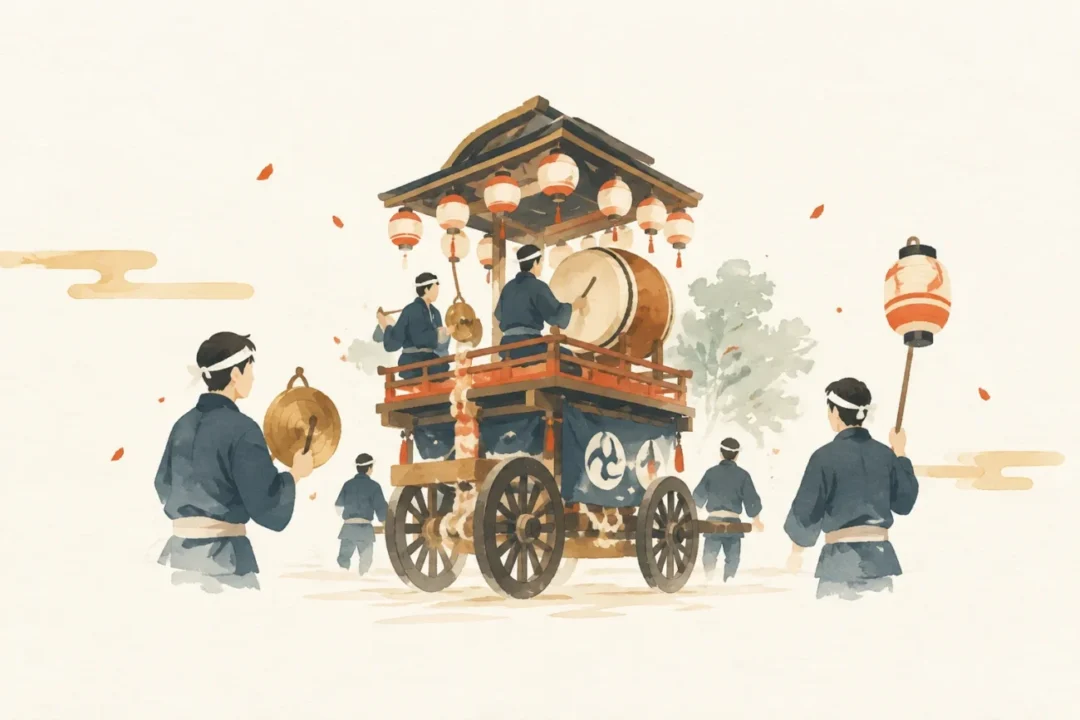
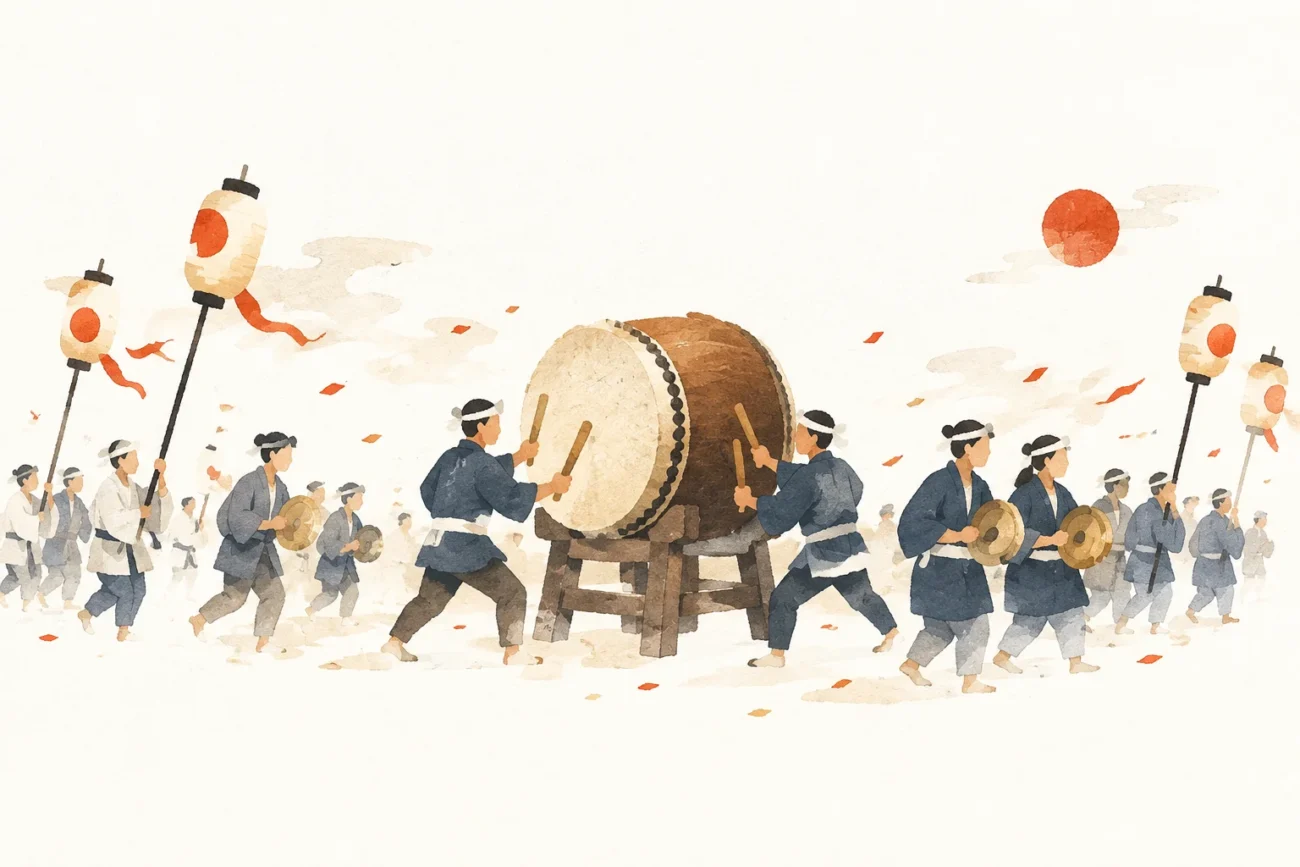
A highlight is the procession featuring a large taiko drum about 2 meters in diameter and 3 meters long, and a large gong about 1 meter in diameter.
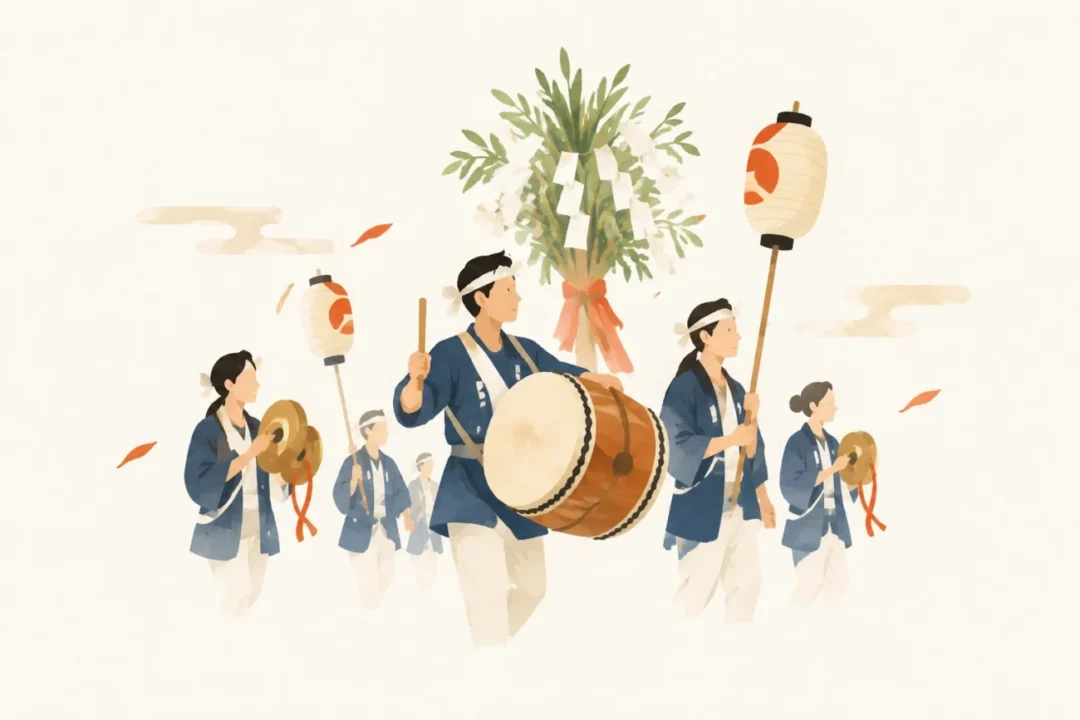
Following the town representatives at the head are tall lanterns, banners, a large taiko drum, conch shells, flutes, and gongs. About 100 people take part in the procession.
Along the route, 9 strikes of the gong and drum followed by 1 conch-shell blast form a sequence; within the , the sequence is 10 strikes and 1 conch-shell blast. The different numbers of strikes represent words of the Buddhist invocation.
The welcome and farewell rites held at the boundary between the two towns, as well as a gesture called “Yose,” are also distinctive features.
A prayer procession linking Higashi-Hino and Nishi-Hino with the sound of large drums and gongs
What to expect
On August 13, the procession winds from Saikakuji Temple in Higashi-Hino Town to Kenshoji Temple in Nishi-Hino Town; on the 15th, it winds from Hino Shrine in Nishi-Hino Town to Saikakuji Temple in Higashi-Hino Town.
The procession includes town representatives, tall chochin lanterns, banners, a large taiko drum, conch shells, flutes, and gongs, with about 100 people from both towns taking on various roles.
The Buddhist invocation is not spoken aloud; it is expressed through 9 strikes along the route, 10 strikes within the temple grounds, and 1 conch-shell blast.
Prefectural materials also describe the division of roles for the drums, gongs, transverse flutes, and other instruments, as well as an organization in which young and middle-aged men take on the physically demanding roles.
Location and access
- Venue and address
Higashi-Hino Town and Nishi-Hino Town, Yokkaichi City / Saikakuji Temple, Kenshoji Temple, Hino Shrine
Address Higashi-Hino Town and Nishi-Hino Town, Yokkaichi City, Mie Prefecture
Dates and season
- Season
Evenings on August 13 and the 15th each year
- Frequency
Every year
Accommodation and hotels PR
Showing nearby accommodation.
Prices and availability are current at the time of retrieval. For multi-night stays, only the first night’s price is shown. Confirm the final price and directions to the venue with the booking provider. Select your dates again when using the area search link. Search area: within 3 km of Central Mie Prefecture / Yokkaichi City (the search is not centered on the festival venue)
Nearby attractions

四日市市立博物館
三重県の博物館・美術館のスポットです。

澄懐堂美術館
三重県四日市市にある美術館

鳥出神社
三重県四日市市富田にある神社
Origins and History of The Dainenbutsu of Higashi-Hino and Nishi-Hino
According to the Kaizo Osho Kinenroku, the tradition is said to have begun in Genko 1 (1321), when Master Kokan performed a secret Shingon rite at the grounds of Saimyoji Temple in Hino to ward off evil forces.
It is said that originally, monks led a procession carrying an image of Amida Nyorai and paraded for 7 days with gongs, drums, and conch shells.
The event later evolved into its present form and has been passed down by villagers in Higashi-Hino Town and Nishi-Hino Town.
On March 25, 2013, it was designated an Intangible Folk Cultural Property by the prefecture.
Official information
Yokkaichi City Hall, “The Dainenbutsu of Higashi-Hino and Nishi-Hino” / Mie Prefectural Board of Education, “The Dainenbutsu of Higashi-Hino and Nishi-Hino”
The Dainenbutsu of Higashi-Hino and Nishi-Hino at a Glance
The Dainenbutsu of Higashi-Hino and Nishi-Hino is a Buddhist invocation ceremony held during the Obon period, when Higashi-Hino Town and Nishi-Hino Town form processions and head toward one another to the sound of large taiko drums and gongs.
On the 13th, the procession winds from Saikakuji Temple to Kenshoji Temple, and on the 15th, from Hino Shrine to Saikakuji Temple. The Buddhist invocation is expressed through different numbers of beats along the route and within the temple grounds.
Said to have begun in 1321, it has been passed down as a local cultural heritage event praying for protection from evil forces and an abundant harvest.
Sources and references
Japanese Festivals.jp Editorial Team
Celebrating local culture and helping you discover a side of Japan you never knew.
Article updated: 2026/11/12