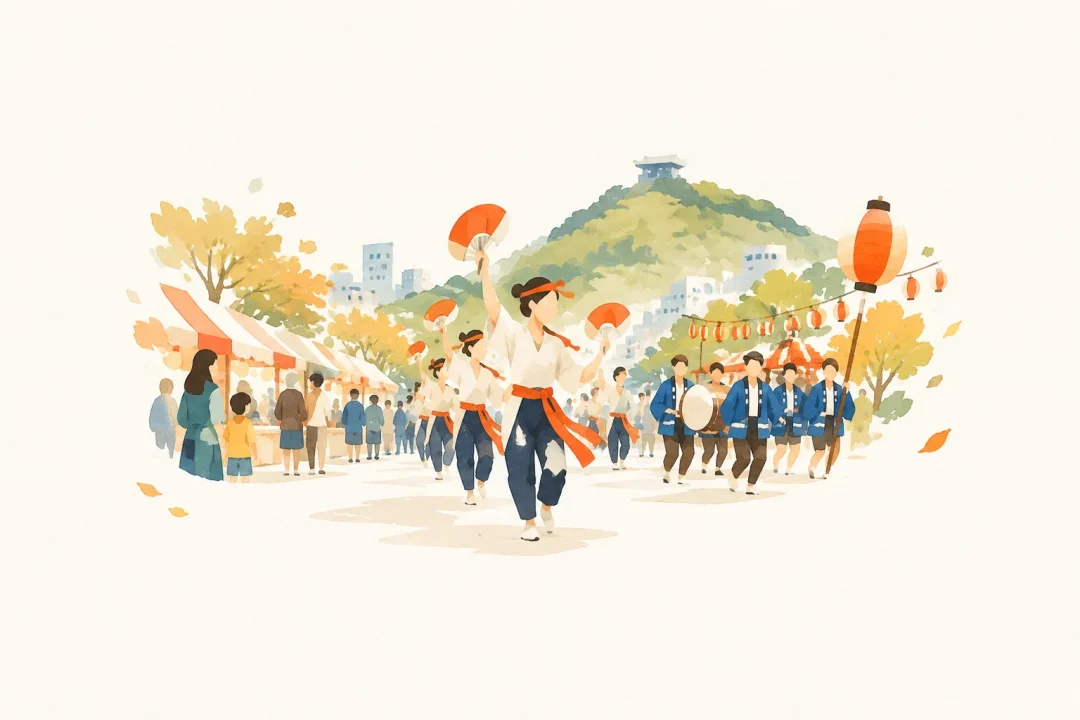
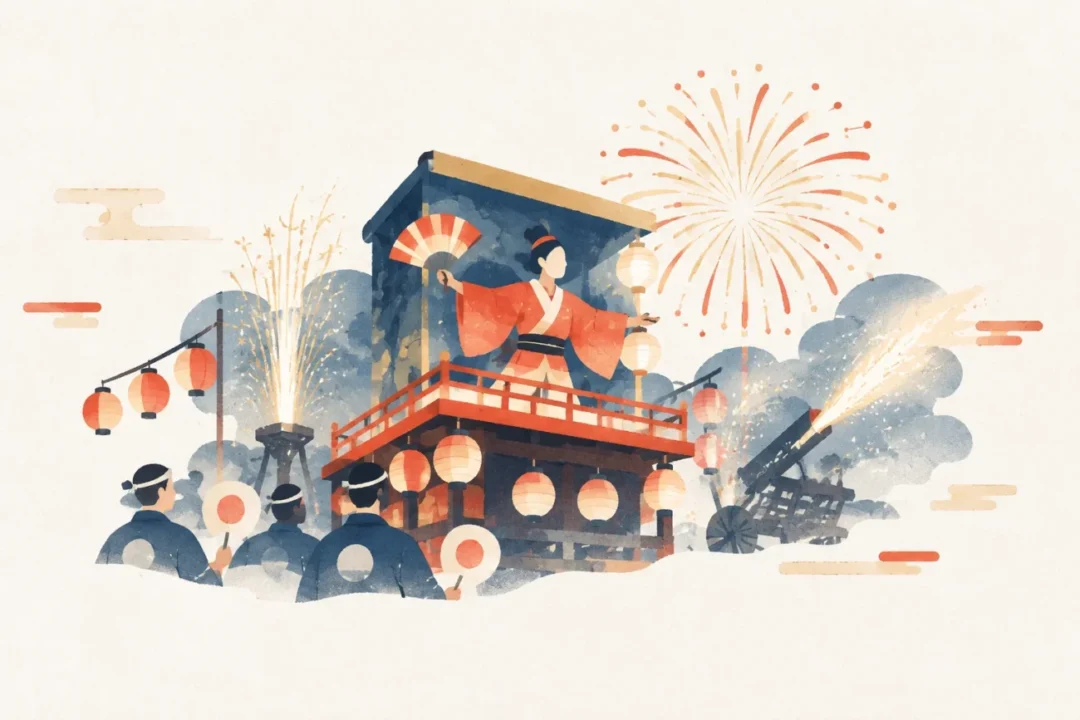
A traditional performing art of Higashitsukumi, passed down through drums and dance, with performers carrying horo
Higashitsukumi no Kamakura Odori
Festival information
EVENT INFORMATION- Season / frequency
- April 29
- Area
- Gifu Prefecture・Ibigawa Town(From Tokyo: approx. 2 h–2 h 30 min · bullet train + connecting train)Prefecture-level estimate to a main station or airport, not the venue. Airport access, check-in and onward travel are extra; remote areas and islands can take much longer.
- Highlights and activities
- Wishes behind the festival
- Last updated
- 2026/10/19
A folk performing art passed down in Ibigawa Town, Gifu Prefecture, by the Kamakura Odori Preservation Society. Dancers carrying brightly colored horo perform to the accompaniment of drums, shoko gongs, transverse flutes, and singing.
About Higashitsukumi no Kamakura Odori
Higashitsukumi no Kamakura Odori is a folk performing art passed down in Ibigawa Town, Gifu Prefecture.
Designated an Important Intangible Folk Cultural Property by Gifu Prefecture, its performance techniques are carried on by the Kamakura Odori Preservation Society.
Performed as an offering at the festival of Shirahige Shrine, it keeps the region’s traditional culture alive today.
Festival highlights
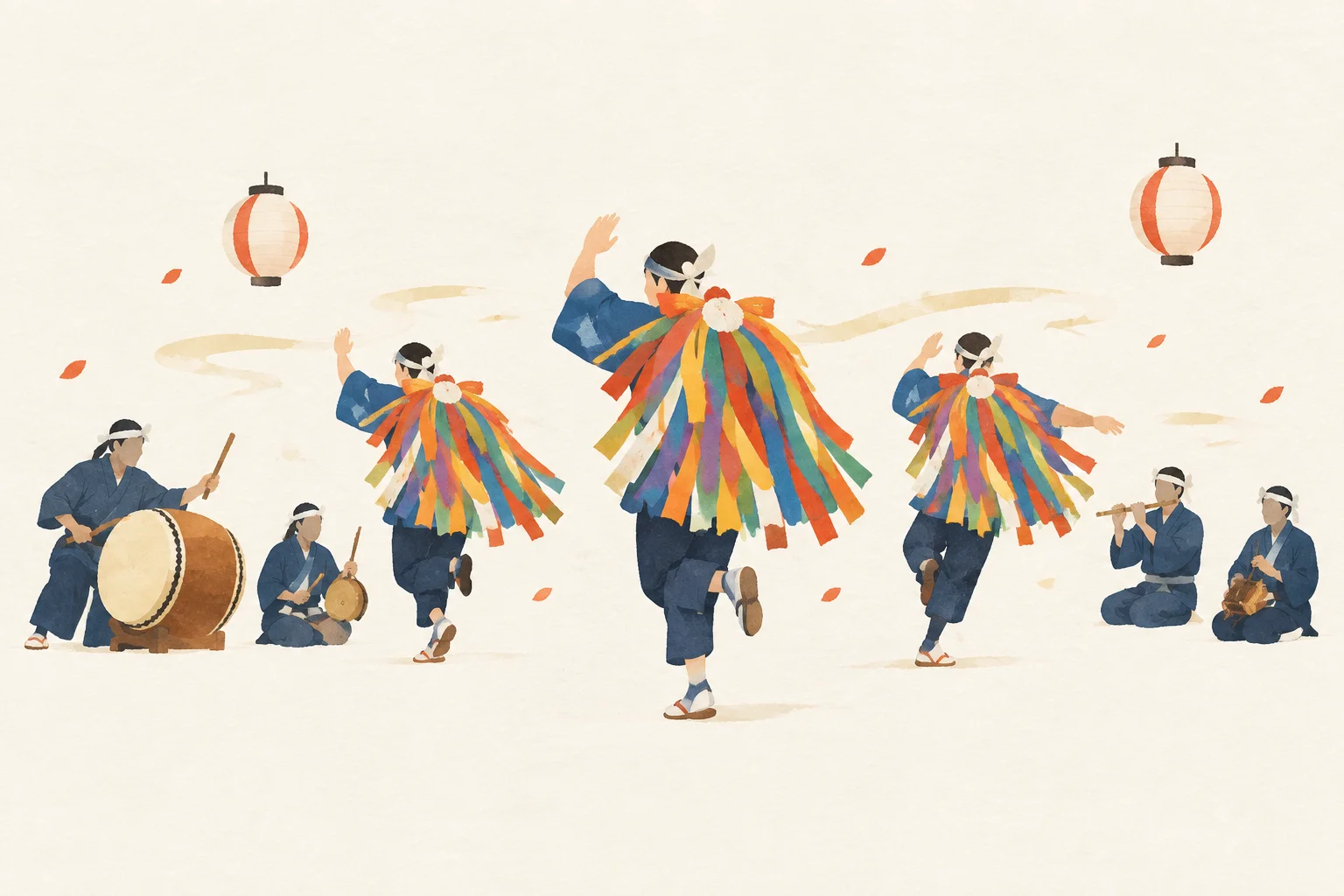
A highlight is the large ornament called a “horo,” carried on the backs of the drum dancers.
The horo is a three-colored ornament modeled on peacock feathers. It is said to be about 2.6 meters long and weigh about 14 kilograms.
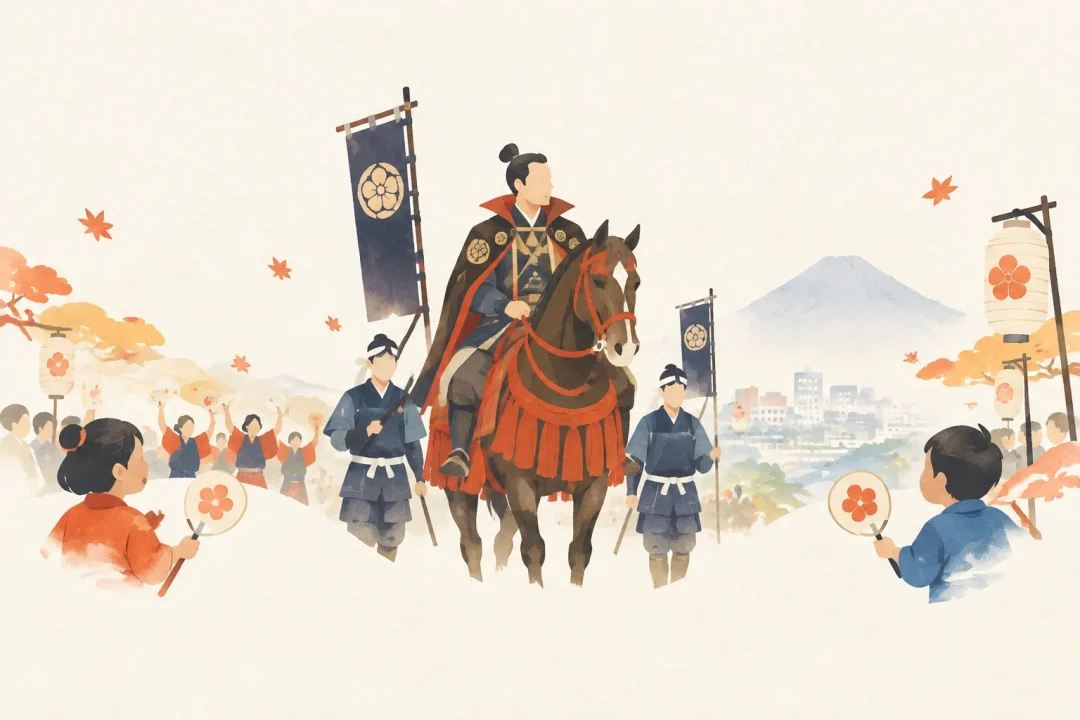
Another distinctive feature is the performance arrangement, in which dancers—including armored warriors—perform to the accompaniment of drums, shoko gongs, transverse flutes, and singing.
A traditional performing art of Higashitsukumi, passed down through drums and dance, with performers carrying horo
What to expect
The program begins with michiyuki, followed by hyoshi-daiko and yaku-odori.
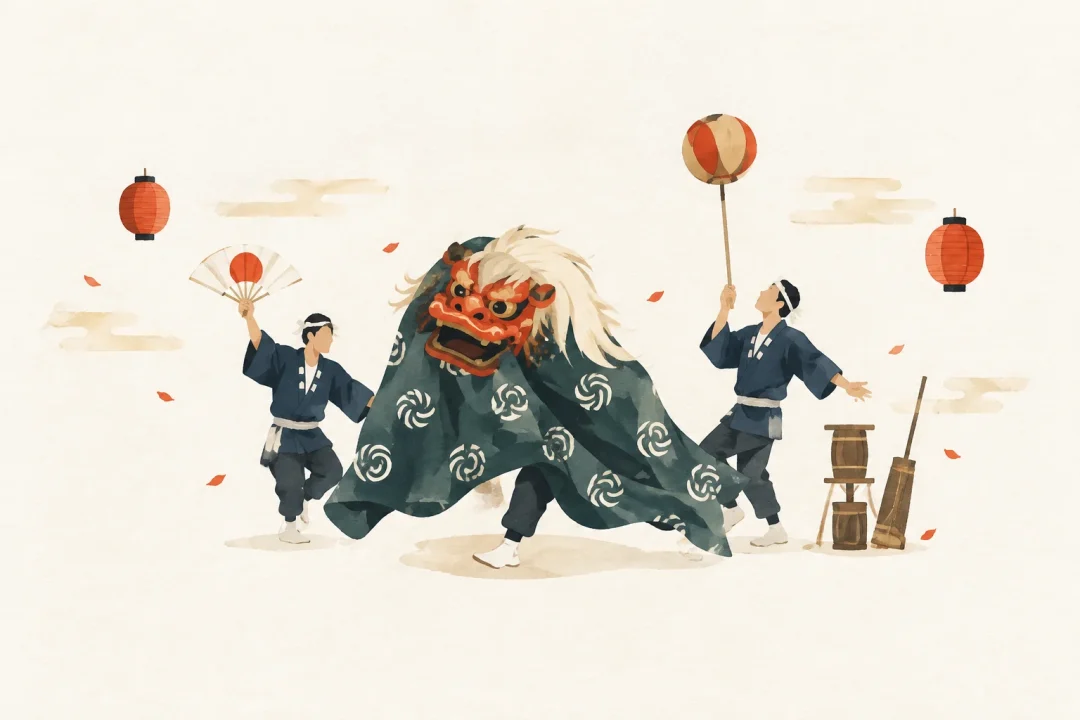
Drums, shoko gongs, transverse flutes, clappers, and singing each have their roles, while performers including armored warriors and zai dancers present the dance.
The group is described as comprising a total of 32 people, centered around the preservation society.
Location and access
- Address
Ibigawa Town
Host municipality 岐阜県揖斐川町
This map shows the surrounding area, not the exact venue location.
Dates and season
- Season
April 29
Accommodation and hotels PR
Showing nearby accommodation.
Prices and availability are current at the time of retrieval. For multi-night stays, only the first night’s price is shown. Confirm the final price and directions to the venue with the booking provider. Select your dates again when using the area search link. Search area: within 3 km of Central Gifu Prefecture / Ibigawa Town (the search is not centered on the festival venue)
Nearby attractions

三輪神社
岐阜県揖斐川町にある神社

徳山民俗資料収蔵庫
岐阜県揖斐川町にある民俗資料収蔵展示施設

藤橋城
岐阜県揖斐川町にあるプラネタリウム
Origins and History of Higashitsukumi no Kamakura Odori
One tradition in Higashitsukumi says that Kamakura Odori developed from a warrior dance performed by samurai who fled the capital and settled here during the Jokyu era.
However, it is difficult to believe that the dance performed today preserves exactly the form it had around the Jokyu era. Another theory about the name’s origin points to the dance pieces or the rhythms of the music.
Its origins and transmission are unclear, and connections with rainmaking dances and warrior dances in the Ibi River basin and elsewhere have also been suggested.
Official information
The Gifu Prefecture official website’s Cultural Heritage Transmission Division page provides information such as its designation category, location, preservation organization, place of dedication, sequence of dances, props, and number of performers.
Higashitsukumi no Kamakura Odori and the Kamakura Odori Preservation Society are also listed in the Agency for Cultural Affairs’ Database of Nationally Designated Cultural Properties.
Source: 国指定文化財等データベース
Higashitsukumi no Kamakura Odori at a Glance
Higashitsukumi no Kamakura Odori is a folk performing art designated as an Important Intangible Folk Cultural Property, passed down in Ibigawa Town.
The program moves from michiyuki to hyoshi-daiko and yaku-odori, performed to the accompaniment of drums, flutes, and singing by dancers carrying horo and armored warriors.
Several traditions tell of its origins, and it has been passed down as a performing art preserved by the local community.
Japanese Festivals.jp Editorial Team
Celebrating local culture and helping you discover a side of Japan you never knew.
Article updated: 2026/10/19
Submit information or a correction Submit photos of this festival