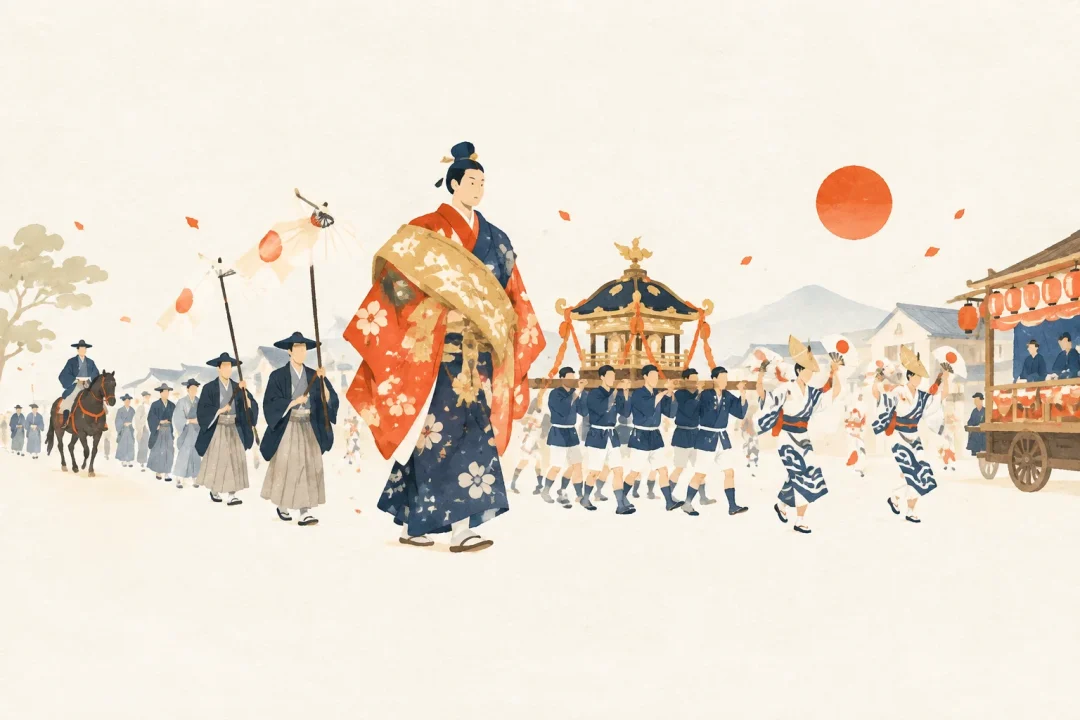
Shizuoka Sengen Shrine’s spring festival, brought to life by a procession and five pieces of gagaku
The child dances of the Hatsukae Festival
The 2026 edition of The child dances of the Hatsukae Festival has ended.
Festival information
EVENT INFORMATION- Dates
- 2026/04/05Ended
- Season / frequency
- Early April every year / Every year
- Location
- Shizuoka Sengen Shrine
- Area
- Shizuoka Prefecture・Shizuoka City(From Tokyo: approx. 1 h–1 h 30 min · bullet train)Prefecture-level estimate to a main station or airport, not the venue. Airport access, check-in and onward travel are extra; remote areas and islands can take much longer.
- Highlights and activities
- Wishes behind the festival
- Participation / viewing
- Spectators welcome
- Last updated
- 2026/10/19
A procession centered on child dancers and traditional gagaku are offered at the Hatsukae Festival at Shizuoka Sengen Shrine.
About The child dances of the Hatsukae Festival
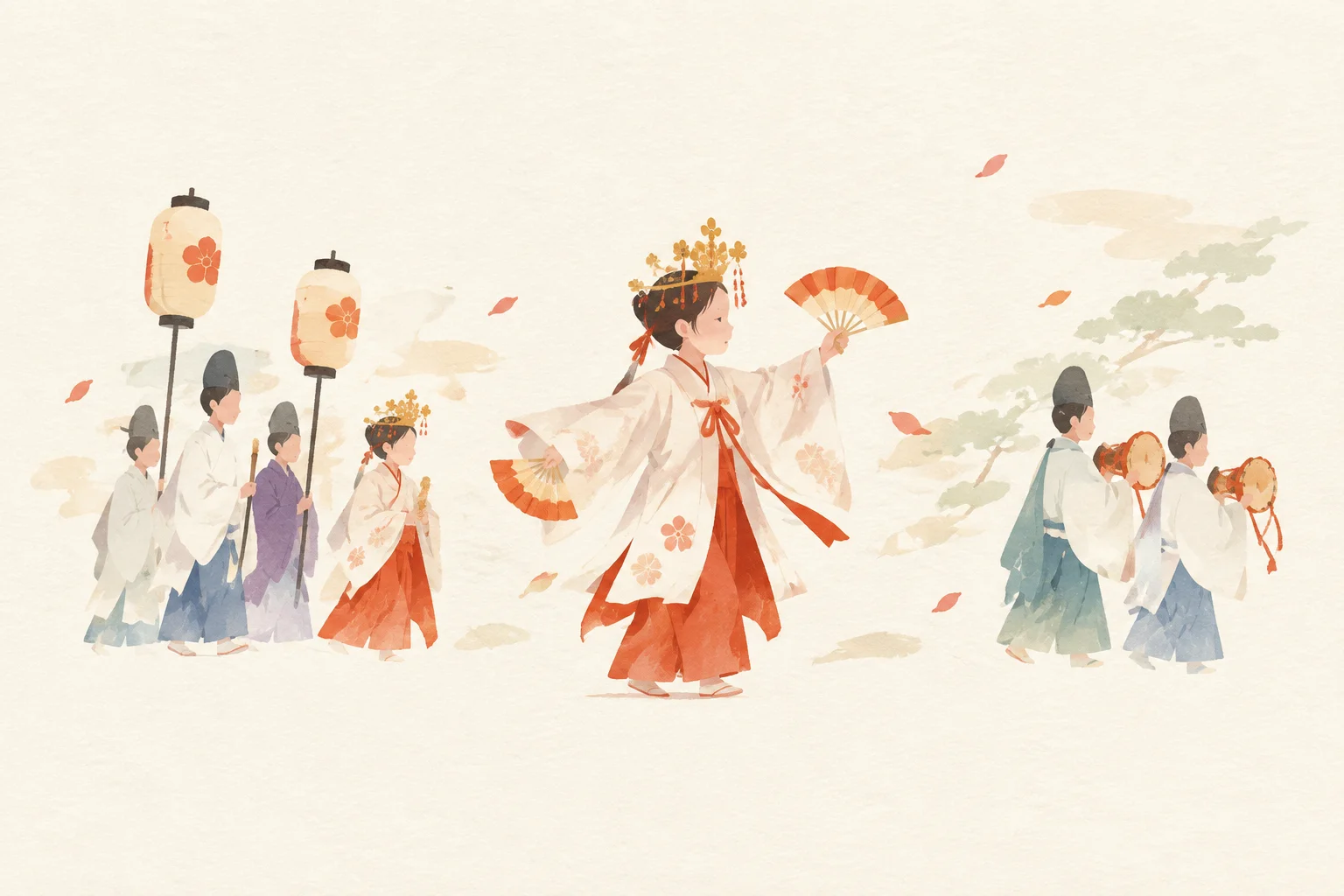
The child dances of the Hatsukae Festival are gagaku dances performed as offerings during the Hatsukae Festival at Shizuoka Sengen Shrine.
A procession centered on child dancers makes its way through the city, and after arriving at the shrine, the dances are performed in the dance pavilion.
The five pieces still passed down today are “Enbu,” “Nasori,” “Ama and Nino Mai,” “Genjoraku,” and “Taiheiraku.”
In 2022, they were designated a National Important Intangible Folk Cultural Property.
Source: 静岡浅間神社廿日会祭の稚児舞楽:静岡市公式ホームページ / 文化遺産データベース
Festival highlights
Highlights include the graceful gagaku court dances performed by child dancers and the “Nino Mai,” performed around them.
In “Ama,” two child dancers perform, and partway through, adults wearing masks of an old man and an old woman make comic movements that seem to imitate the children’s dance.
There is also a local saying that if a child dancer smiles, the year will bring a poor harvest, adding a distinctive charm to this formal court dance.
Shizuoka Sengen Shrine’s spring festival, brought to life by a procession and five pieces of gagaku
What to expect
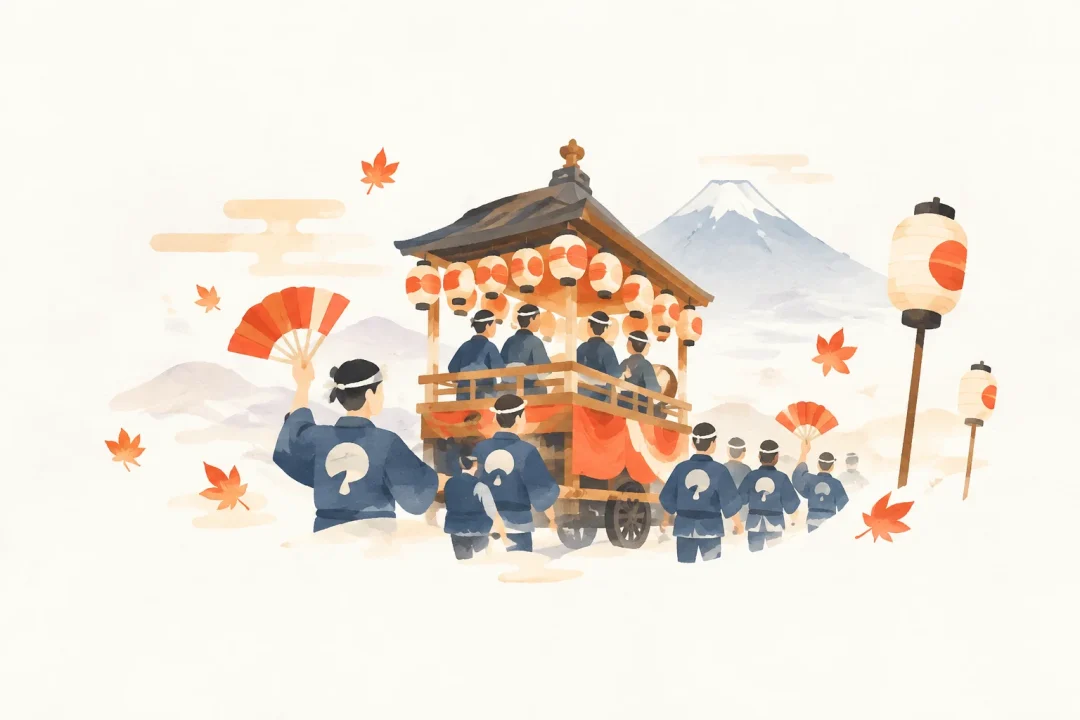
During the festival, palanquins carrying child performers make their way through the city, accompanied by floats, costumed processions, and other Oneri processions.
Upon arriving at the shrine, entertainment accompanying the Oneri procession is performed before the child dancers, followed by gagaku after the grand festival rites.
The dances are accompanied by three wind instruments—ryuteki flute, sho mouth organ, and hichiriki oboe—and three drums—gakudaiko, kakko, and shoko.
How to take part
Visitors can watch the event.
Location and access
- Venue and address
Shizuoka Sengen Shrine (102-1 Miyagasakicho, Aoi Ward, Shizuoka City).
- Train and bus
From JR Shizuoka Station, take the Abe Line bus and get off at Aka .
- Parking
Parking is available.
According to the 2026 information, there is free parking for 90 vehicles, but using public transportation or paid parking in central Shizuoka is also recommended.
Address 102-1 Miyagasakicho, Aoi Ward, Shizuoka City, Shizuoka Prefecture
Dates and season
2026 Event Information (The listed dates have passed)
In 2026, the Hatsukae Festival was scheduled to run from April 1 through the 5th, with the child dancers’ gagaku scheduled to be offered on the final day, April 5.
After the procession of child dancers arrives at the shrine, gagaku is performed following the grand festival rites.
The Hatsukae Festival is held in early April each year, and the child dancers’ gagaku takes place on April 5.
Source: 廿日会祭<静岡浅間神社>[静岡市葵区]|静岡新聞アットエス / しずおか文化財ナビ 静岡浅間神社廿日会祭の稚児舞|静岡県公式ホームページ
Accommodation and hotels PR
Showing nearby accommodation.
Prices and availability are current at the time of retrieval. For multi-night stays, only the first night’s price is shown. Confirm the final price and directions to the venue with the booking provider. Select your dates again when using the area search link. Search area: within 3 km of Central Shizuoka Prefecture / Shizuoka City (the search is not centered on the festival venue)
Nearby attractions

久能山東照宮
静岡市駿河区にある神社

静岡市歴史博物館
静岡市の博物館

Shizuoka Sengen Shrine
静岡県静岡市にある神社
写真:Yoshizumi Endo from Tokyo, JAPAN / CC BY-SA 2.0
Photo source ·
静岡県立美術館
静岡県静岡市にある美術館
写真:江戸村のとくぞう (Edomura no Tokuzo) / CC BY-SA 4.0
Photo source ·
駿府城
静岡市にあった城
Origins and History of The child dances of the Hatsukae Festival
The child dancers’ gagaku originated as dances from Tampoji Temple, formerly in what is now Tampo, Aoi Ward, Shizuoka City, which came to be performed at Sengen Shrine’s festival as well.
Historical records confirm that it was already being performed by the mid-16th century, and note that the court noble Yamashina Tokitsugu, who lived during the Warring States period, watched it.
Since the early modern period, the role of child dancer has been passed down from the sons of shogunate retainers and townspeople to children selected from among the today.
Official information
You can check the event date, venue, access, program, and highlights on the Shizuoka City official website page “Gagaku Dances by Child Performers at the Shizuoka Sengen Shrine Hatsukae Festival.”
The Shizuoka Prefecture cultural property guide also provides the location and public viewing information, listing the dances as a prefecture-designated intangible folk cultural property.
The child dances of the Hatsukae Festival at a Glance
The child dances of the Hatsukae Festival are gagaku dances passed down through the Hatsukae Festival at Shizuoka Sengen Shrine.
Following a procession carrying children performers in palanquins and the Oneri procession’s entertainment, five pieces of gagaku court music and the “Nino Mai” are dedicated.
The child dancers’ gagaku was scheduled for April 5 at Shizuoka Sengen Shrine in 2026. From JR Shizuoka Station, take the Abe Line and get off at Aka Torii.
Japanese Festivals.jp Editorial Team
Celebrating local culture and helping you discover a side of Japan you never knew.
Article updated: 2026/10/19
Submit information or a correction Submit photos of this festival