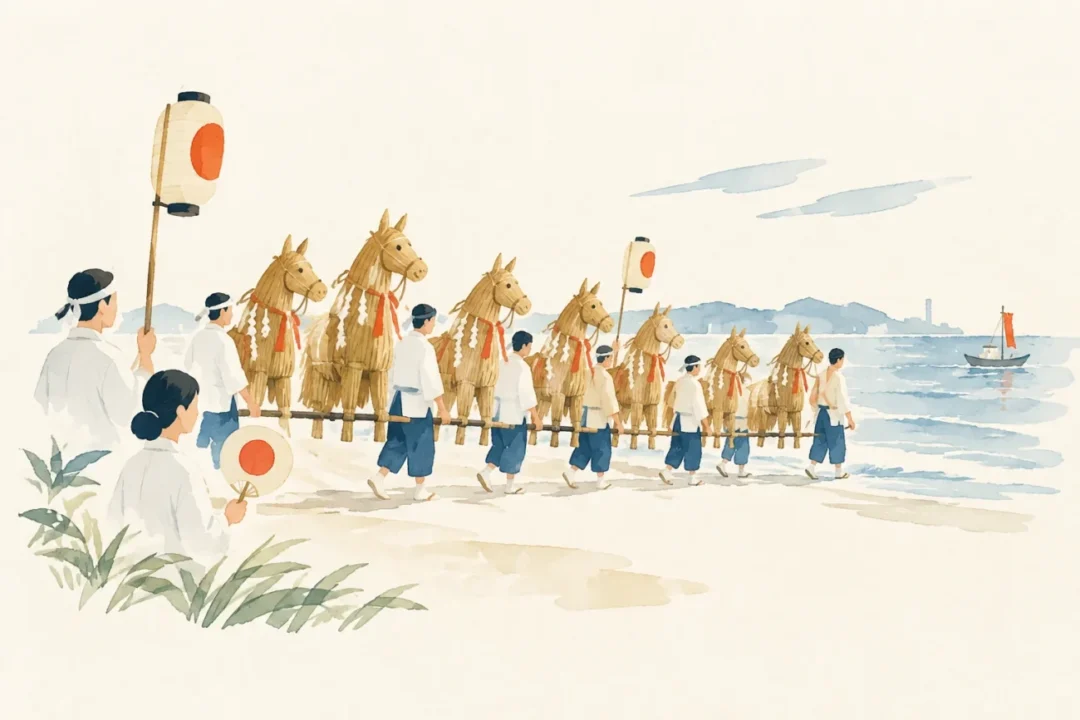
Tomioka’s summer purification rite, entrusting prayers to a boat of green茅 and sending it out to sea
Gion-bune
The 2026 edition of Gion-bune has ended.
Festival information
EVENT INFORMATION- Dates
- 2026/07/12Ended
- Season / frequency
- Gion-bune is held on the Sunday closest to July 15, during the annual grand festival.
- Location
- Tomioka Hachimangu Shrine
- Area
- Kanagawa Prefecture・Yokohama City(From Tokyo: approx. 30 min–1 h · train)Prefecture-level estimate to a main station or airport, not the venue. Airport access, check-in and onward travel are extra; remote areas and islands can take much longer.
- Features
- Highlights and activities
- Wishes behind the festival
- Participation fee
- Gion-bune purification rite: offerings from ¥1,000
- Last updated
- 2026/11/11
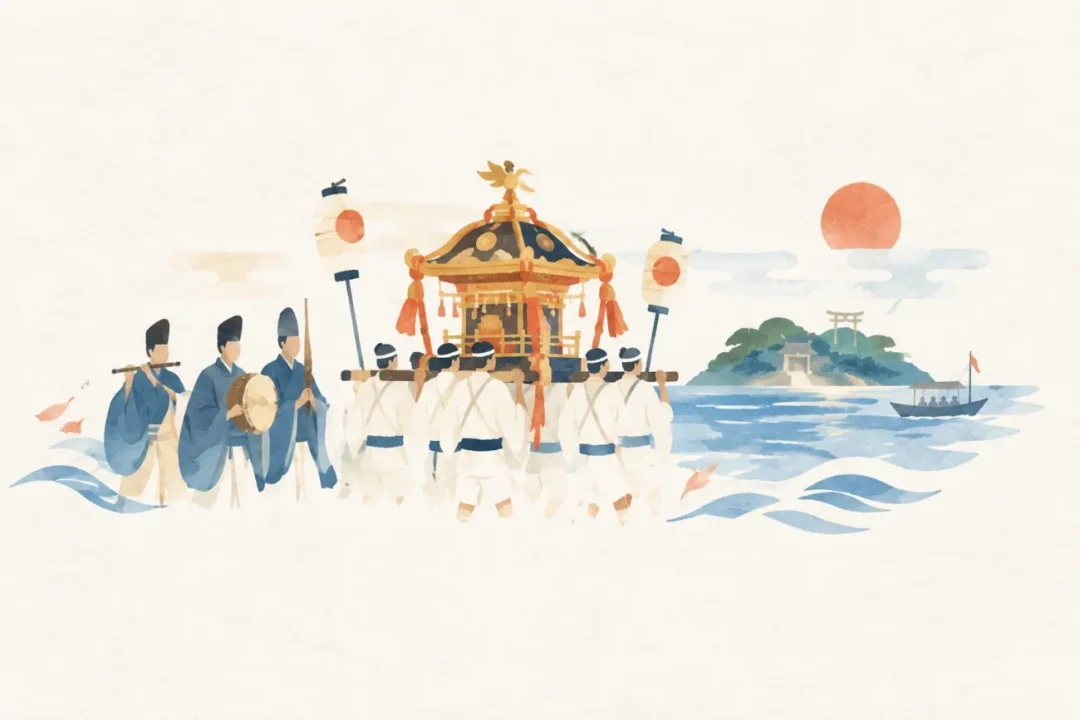
Gion-bune, passed down at Tomioka Hachimangu Shrine for more than 800 years, is a summer rite in which sins and impurities are entrusted to a boat of green茅 and sent out to sea, while the first ears of wheat are offered to the sea deity. Two traditional wooden Japanese boats and the race back form part of this long-standing ritual of prayer.
About Gion-bune
Gion-bune is a distinctive rite held after the annual grand festival at Tomioka Hachimangu Shrine.
It has been passed down for more than 800 years and was designated Yokohama City’s first Intangible Cultural Property.
Sins and impurities accumulated over the year are entrusted to a boat made of green茅, which is sent out to sea as part of the summer purification rite.
The prayers also include offering the first ears of wheat to the sea deity and expressing gratitude for abundant crops and a plentiful catch of seafood.
Festival highlights
Highlights include the boat made of green茅 and the 12 , one for each month of the year, lined along its edge.
The boat is offered grains of wheat, dumplings made from barley flour, and amazake brewed with barley koji, with a large gohei set upright in the center.
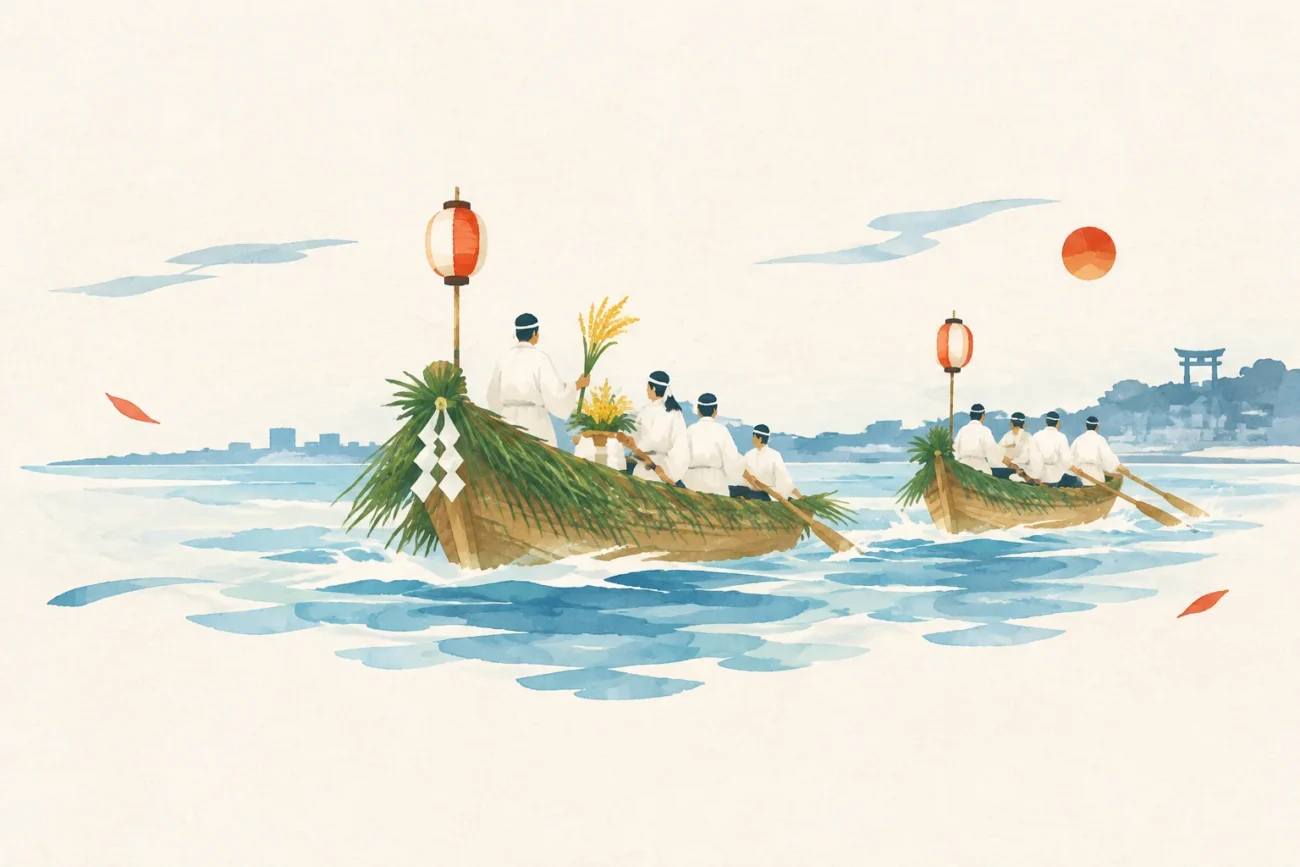
The boat made of茅 is transferred to two traditional wooden Japanese boats, Hachiman-maru and Yasaka-maru, and sent out to sea. The traditional boats with five-oared rigs then race back to shore.
This traditional rite unfolds to the sound of gagaku, with the race back as its highlight.
Tomioka’s summer purification rite, entrusting prayers to a boat of green茅 and sending it out to sea
What to expect
At the annual grand festival, the grand festival ceremony is held first, followed by the Gion-bune rite.
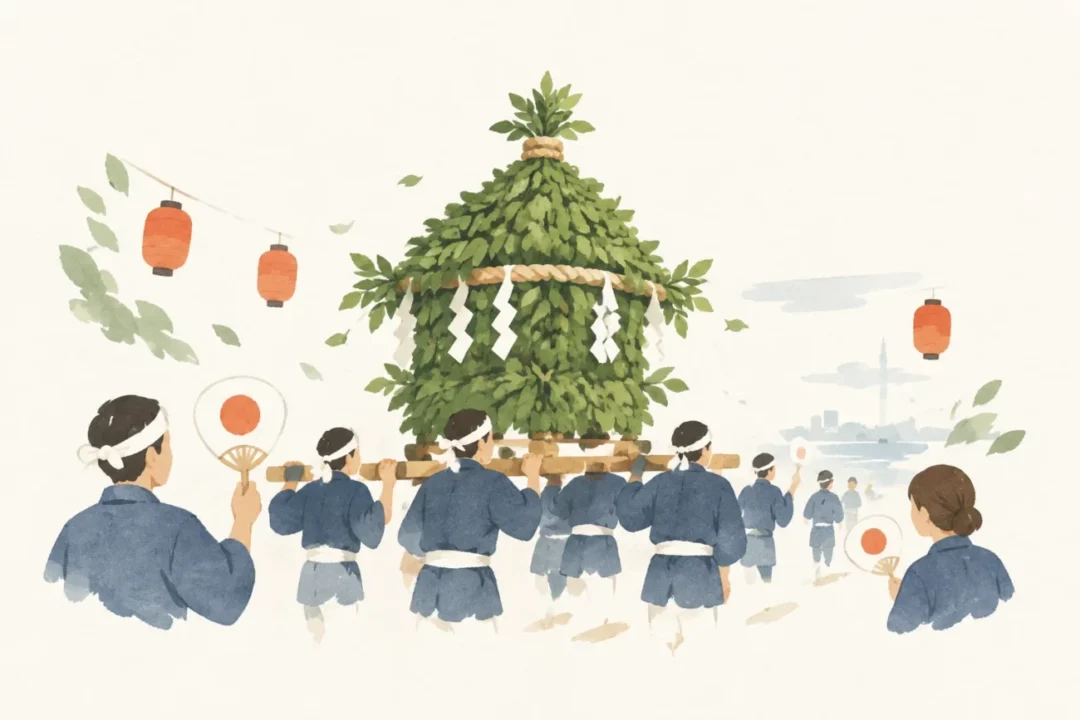
After being purified, the boat made of茅 is carried by young men to the beach by the boat basin, where a beachside rite is held at the water’s edge.
After the is recited, the boat made of茅 is transferred to Hachiman-maru and Yasaka-maru, which head to a spot with favorable tides before sending it out to sea.
After the boat is sent off, traditional wooden boats with five-oared rigs race back to shore.
How to take part
No information is provided on how to apply to watch, participate in, or set up a stall at the Gion-bune rite itself.
“Gion-bune purification,” in which personal sins and impurities are entrusted to a boat-shaped paper offering, can be applied for at the shrine from about 1 month before the annual festival.
You can write your address and name on a boat-shaped paper offering and bring it to the shrine office with an offering of ¥1,000 or more, or make a postal transfer and then mail in the paper offering.
Location and access
- Venue and address
Tomioka Hachimangu Shrine, 4-5-41 Tomioka Higashi, Kanazawa Ward, Yokohama
- Train and bus
Keikyu Line: 8 minutes on foot from Keikyu Tomioka Station / Yokohama Seaside Line: 10 minutes on foot from Namiki-kita Station
Address 4-5-41 Tomioka Higashi, Kanazawa Ward, Yokohama
Dates and season
2026 event information (the listed dates have passed)
July 12, 2026 (Sun)
10:00~ 例大祭 大祭式
11:00頃~ 祇園舟神事
Held rain or shine
Accommodation and hotels PR
Showing nearby accommodation.
Prices and availability are current at the time of retrieval. For multi-night stays, only the first night’s price is shown. Confirm the final price and directions to the venue with the booking provider. Select your dates again when using the area search link. Search area: within 3 km of Central Kanagawa Prefecture / Yokohama City (the search is not centered on the festival venue)
Nearby attractions

よこはまコスモワールド
横浜市の遊園地

よこはま動物園ズーラシア
神奈川県横浜市にある動物園

コスモクロック21
神奈川県横浜市にある観覧車

三溪園
神奈川県横浜市中区にある庭園

安藤百福発明記念館横浜
横浜市にある博物館

山下公園
横浜市にある公園

新横浜ラーメン博物館
神奈川県横浜市港北区にあるフードテーマパーク

横浜みなと博物館
横浜港をテーマにした海事博物館

横浜マリンタワー
横浜港にあるタワー

横浜・八景島シーパラダイス
神奈川県横浜市金沢区にあるテーマパーク

横浜市歴史博物館
神奈川県横浜市都筑区にある歴史博物館

横浜美術館
神奈川県横浜市にある美術館
Origins and History of Gion-bune
Gion-bune is said to have been passed down for more than 800 years, since the founding of Tomioka Hachimangu Shrine.
The festival is held in two seasons, July and September, and distinctive rites such as Gion-bune and yudate have been passed down.
Gion-bune brings together the summer purification rite, in which a boat of green茅 and gohei carry the sins and impurities of the past year, and gratitude for abundant crops and a plentiful catch, expressed by offering the first ears of wheat to the sea deity.
Even after the coast at Miyamae was reclaimed, the traditional form of the rite has continued at the boat basin.
Official information
富岡八幡宮公式サイト:Official Tomioka Hachimangu Shrine website
問い合わせ:富岡八幡宮 045-776-3838
Gion-bune at a Glance
Gion-bune is a distinctive rite passed down at Tomioka Hachimangu Shrine for more than 800 years and designated a Yokohama City Intangible Cultural Property.
A boat made of green茅 carries gohei and offerings of wheat, along with the sins and impurities entrusted to it, before being sent out to sea.
The grand festival ceremony and beachside rite are followed by a boat departure in traditional Japanese boats, then a race back using boats with five-oared rigs.
The rite expresses not only summer purification but also gratitude for abundant crops and a plentiful catch of seafood.
Sources and references
Japanese Festivals.jp Editorial Team
Celebrating local culture and helping you discover a side of Japan you never knew.
Article updated: 2026/11/11