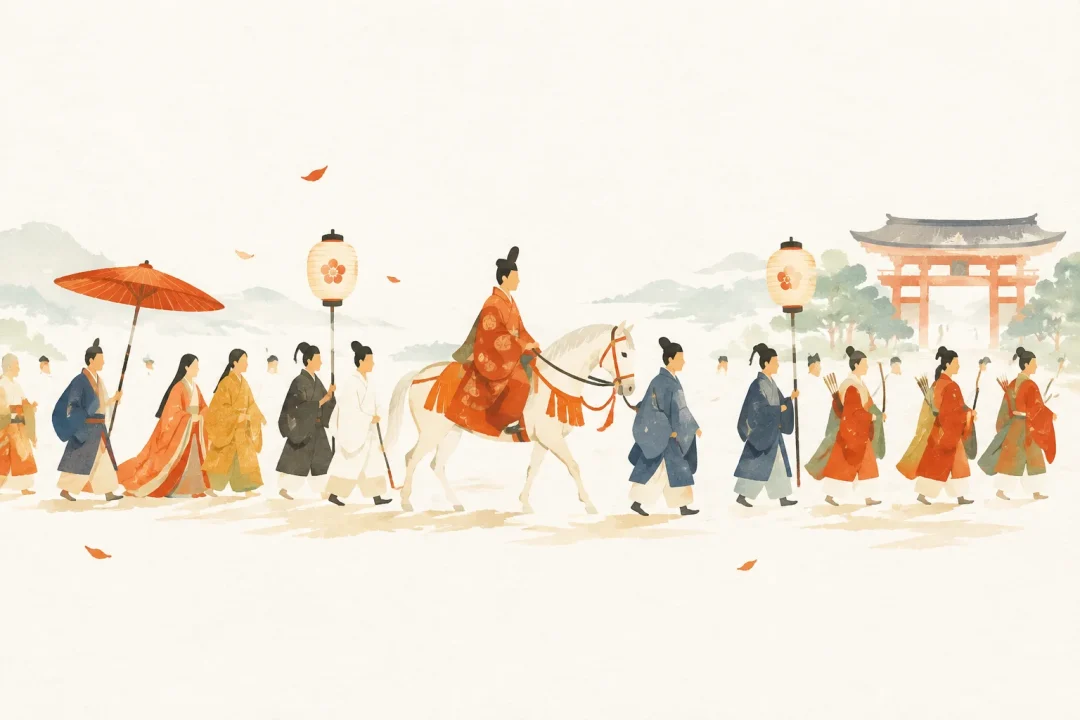
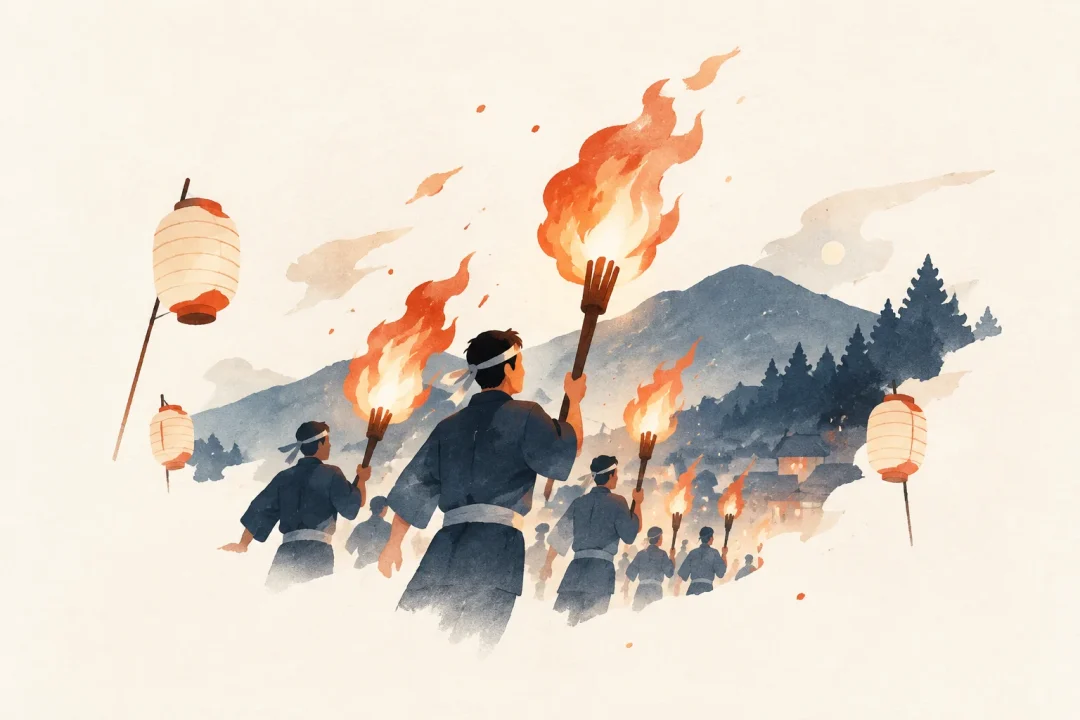
Ancient rites of farming and prayer, preserved by 8 miyaza
The Miyaza Ceremonies of Wakedonomiya
Festival information
EVENT INFORMATION- Season / frequency
- Every year, February15–17, March 21, September 30, and October16 and 17 / Multiple times throughout the year
- Location
- Wakede-no-miya (Wakiimasu Amenofukime Shrine)
- Area
- Kyoto Prefecture・Kizugawa City(From Tokyo: approx. 2 h 10 min–2 h 40 min · bullet train)Prefecture-level estimate to a main station or airport, not the venue. Airport access, check-in and onward travel are extra; remote areas and islands can take much longer.
- Features
- Wishes behind the festival
- Last updated
- 2026/10/19
The Miyaza Ceremonies of Wakedonomiya are rites maintained by 8 miyaza at Wakedonomiya in Yamashiro-cho, Kizugawa City. Events connected with agriculture and local beliefs are held throughout the year, including the Igomori Festival, the Ota no Shiki, the Onna-za Festival, the Aeno Sumo, and Hyakumi no Onjiki.
About The Miyaza Ceremonies of Wakedonomiya
The Miyaza Ceremonies of Wakedonomiya are rites held at Wakedonomiya in Kizugawa City, Kyoto Prefecture, and supported by 8 miyaza.
Events are held throughout the year, including the Igomori Festival, the dedication of a kanjo rope, the Ota no Shiki, the Onna-za Festival, the Aeno Sumo, and Hyakumi no Onjiki.
The event is designated a National Important Intangible Folk Cultural Property for preserving the traditional form of rites conducted by shrine parishioner organizations.
Source: 国指定文化財等データベース
Festival highlights
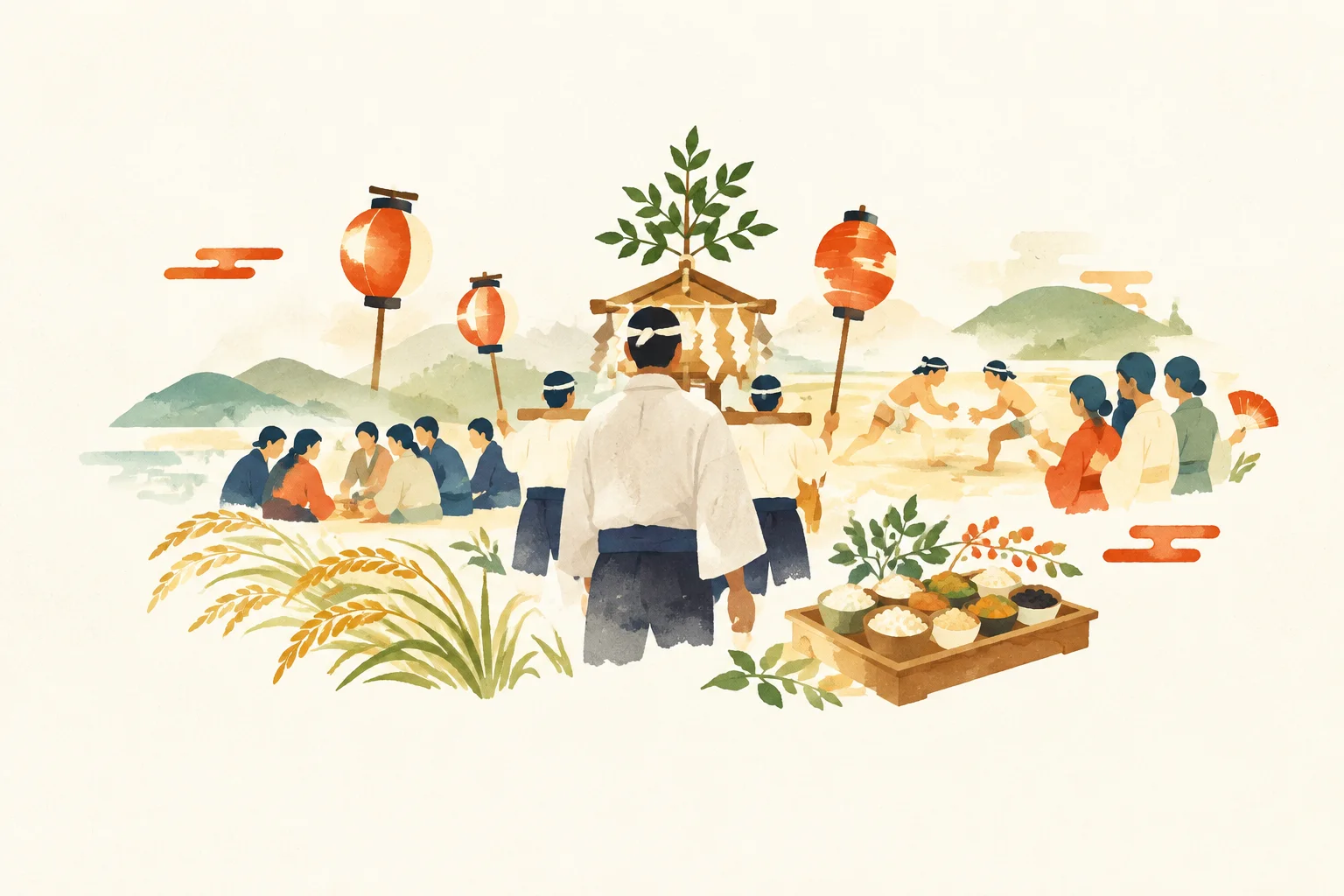
Highlights include the Igomori Festival, which welcomes the deity; the Ota no Shiki, which depicts the process from sowing seeds to transplanting rice seedlings; and the Onna-za Festival, led by women.
In autumn, the Aeno Sumo, in which children’s sumo matches are dedicated before the deity, and Hyakumi no Onjiki, in which produce from the mountains and fields is offered, are also held.
Distinct practices associated with each event, including torches, a kanjo rope, fieldwork tools, and , have been passed down.
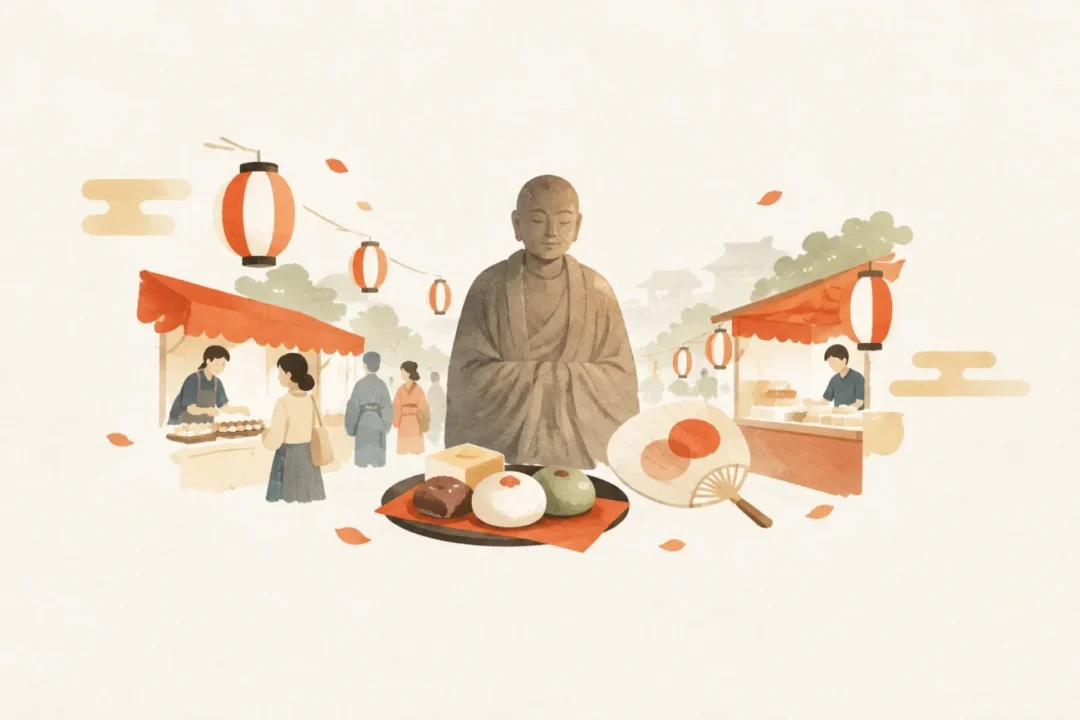
Ancient rites of farming and prayer, preserved by 8 miyaza
What to expect
The miyaza divide responsibilities for the events according to the time of year.
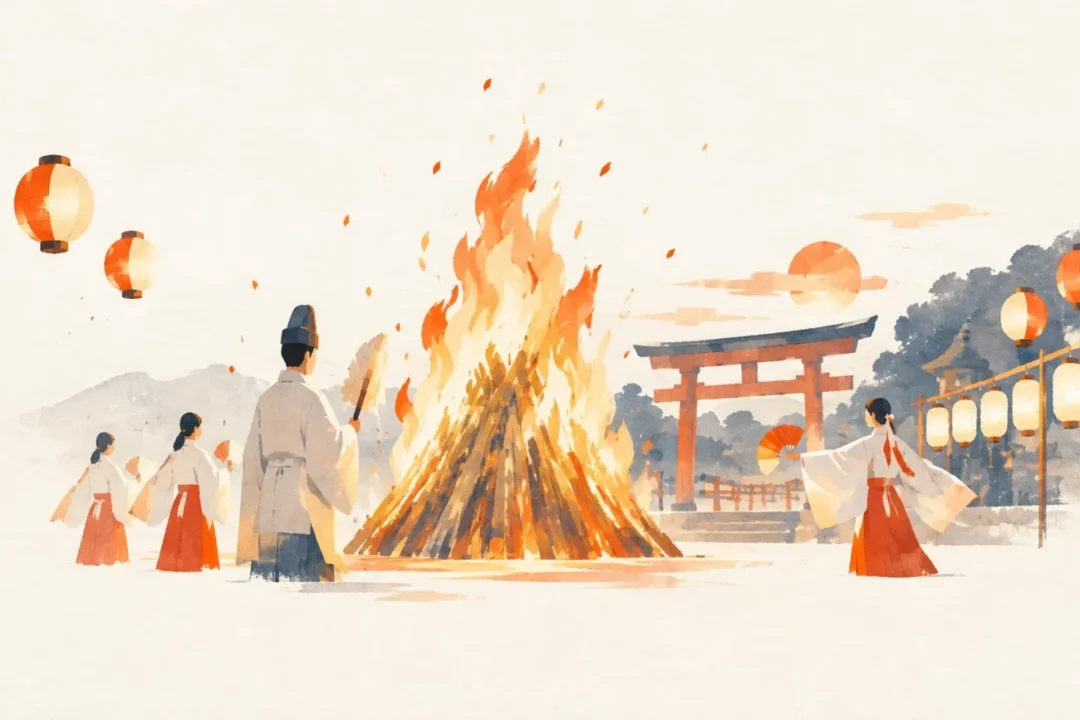
During the Igomori Festival, they welcome the deity, prepare chopsticks, torches, and tools used for the field rites, and dedicate a kanjo rope.
The Ota no Shiki depicts the process from the start of farm work through rice planting; the Onna-za Festival features dedications and kagura; and offerings of produce are made at Hyakumi no Onjiki in autumn.
Location and access
- Venue and address
Wakede-no-miya (Wakiimasu Amenofukime Shrine), 69-1 Satoyashiki, Hirao, Yamashiro-cho, Kizugawa City
Address 69-1 Satoyashiki, Hirao, Yamashiro-cho, Kizugawa City, Kyoto Prefecture
Dates and season
- Season
Every year, February15–17, March 21, September 30, and October16 and 17
- Frequency
Multiple times throughout the year
Accommodation and hotels PR
Showing nearby accommodation.
Prices and availability are current at the time of retrieval. For multi-night stays, only the first night’s price is shown. Confirm the final price and directions to the venue with the booking provider. Select your dates again when using the area search link. Search area: within 3 km of Central Kyoto Prefecture / Kizugawa City (the search is not centered on the festival venue)
Tips for your visit
Some rites of the Igomori Festival take place from late at night until early morning, so visits to some events involve going to the shrine at night.
At the site of the rites, please be considerate and avoid disturbing the quiet or the proceedings.
Dates and public access vary by event, so check information from Kizugawa City or other sources before visiting.
Source: 涌出宮の居籠祭(いごもりまつり) | 木津川市
Origins and History of The Miyaza Ceremonies of Wakedonomiya
Wakedonomiya is a long-established common name; its formal name is Wakizaniimasu Amanofukime Shrine. It is considered an ancient shrine listed in the Engishiki.
The miyaza rites preserve the traditional form of shrine parishioner organizations found in Omi, Yamashiro, and Yamato in the Kinki region.
There are theories that the Igomori Festival dates back to the beginnings of agriculture, as well as one that it began to pacify the spirits of those killed in battle.
Official information
Kizugawa City’s guide to traditional events introduces the Igomori Festival at Wakedonomiya.
For an overview of the cultural property and details of each event, see the Agency for Cultural Affairs’ Database of Nationally Designated Cultural Properties.
The Miyaza Ceremonies of Wakedonomiya at a Glance
The Miyaza Ceremonies of Wakedonomiya are events in which 8 miyaza (shrine parishioner groups) share responsibility for the annual rites and pass down rituals connected with farming and the harvest.
The program changes with the season and includes the Igomori Festival to welcome the deity, the Ota no Shiki to pray for a good harvest, the women-led Onna-za Festival, children’s sumo, and offerings of produce.
This Important Intangible Folk Cultural Property offers a chance to experience local beliefs and cultural traditions at Wakedonomiya in Yamashiro-cho, Kizugawa City.
Japanese Festivals.jp Editorial Team
Celebrating local culture and helping you discover a side of Japan you never knew.
Article updated: 2026/10/19
Submit information or a correction Submit photos of this festival