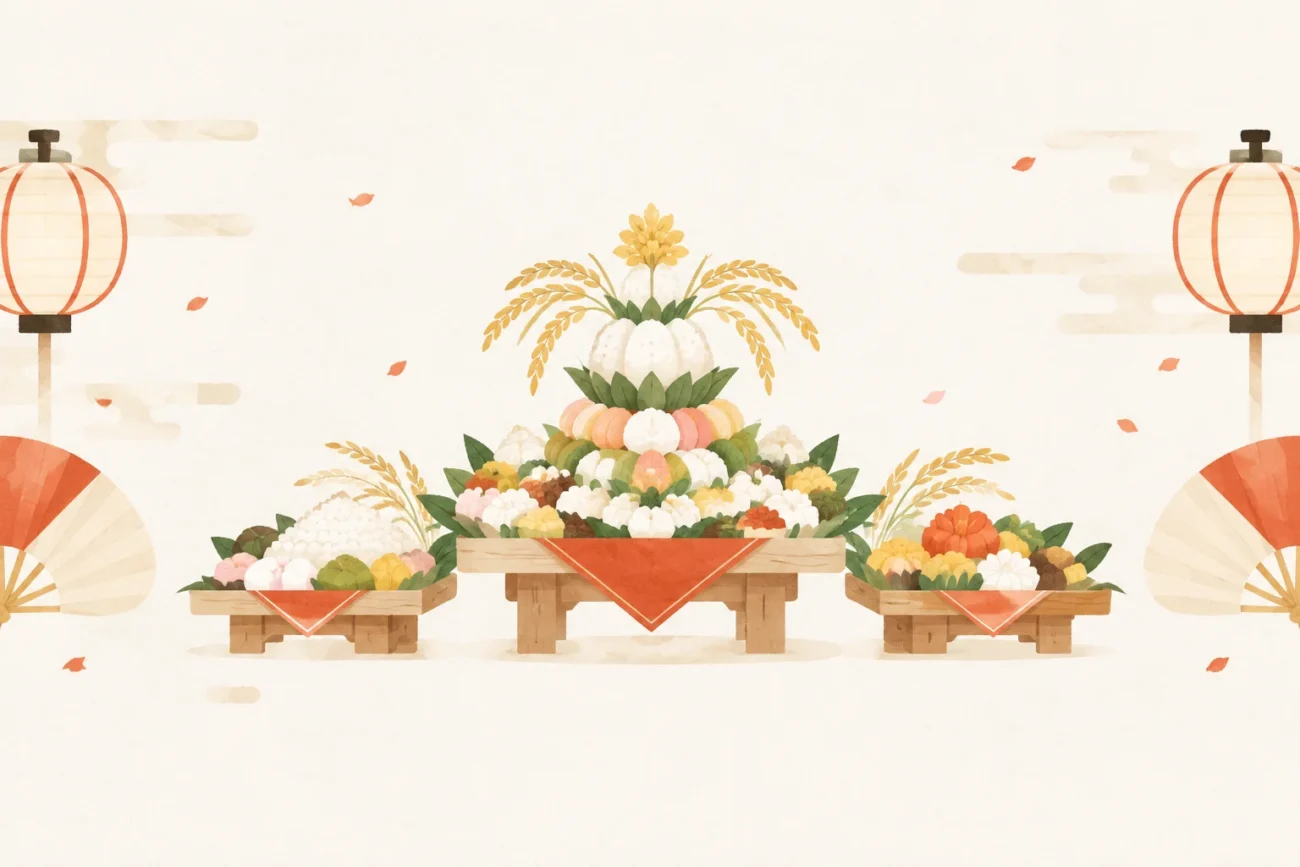
A prayerful design unique to the Kakitsu Festival, crafted from glutinous rice and rice ears
The sacred offering “Hyakumi no O-mike” at Tanzan Shrine’s Kakitsu Festival
Festival information
EVENT INFORMATION- Location
- Tanzan Shrine
- Area
- Nara Prefecture・Sakurai City(From Tokyo: approx. 3 h–3 h 30 min · bullet train + connecting train)Prefecture-level estimate to a main station or airport, not the venue. Airport access, check-in and onward travel are extra; remote areas and islands can take much longer.
- Highlights and activities
- Last updated
- 2026/11/16
At Tanzan Shrine’s Kakitsu Festival, parishioners present “Hyakumi no O-mike,” a distinctive sacred offering carefully arranged in color and form, before the deity. The festival’s origins live on in the intricate designs made with glutinous rice and rice ears.
About The sacred offering “Hyakumi no O-mike” at Tanzan Shrine’s Kakitsu Festival
At Tanzan Shrine’s Kakitsu Festival, parishioners carefully arrange and decorate a distinctive offering called “Hyakumi no O-mike” and present it before the deity.
The Kakitsu Festival is said to have originated as a celebration of the return of Fujiwara no Kamatari’s enshrined spirit to Mount Tōnomine in Kakitsu 1 (1441), after it was temporarily moved to Tachibana-dera to escape the ravages of war.
The festival is distinctive for its artistic food offerings, including rice, rice plants, and offerings arranged on bamboo skewers.
Festival highlights
A highlight is the fine detail of “Hyakumi no O-mike,” made with carefully arranged colors and shapes.
Wain is made by stacking glutinous rice dyed in 4 colors with food coloring, with 42 grains per tier and 70 tiers, forming a decorative crest pattern.
White, black, and red ears are used for the wild rice offering. Acorns are attached to the white ears, while ginkgo nuts are attached to the red and black ears, with a ground cherry placed at the top.
A prayerful design unique to the Kakitsu Festival, crafted from glutinous rice and rice ears
What to expect
For the festival, parishioners prepare sacred food offerings to present before the deity.
The Mori-mike offering is threaded onto bamboo skewers and piled high in the shape of a tower, then placed on a tall-footed offering stand.
The Meshi-mike offering is made with 2 sho of steamed glutinous rice and is also known as “Kamatari’s lunchbox.”
Location and access
- Venue and address
Tanzan Shrine
Event venue 奈良県桜井市 談山神社
This map uses the venue name. Check the official guide for the event area and entrances.
Accommodation and hotels PR
Showing nearby accommodation.
Prices and availability are current at the time of retrieval. For multi-night stays, only the first night’s price is shown. Confirm the final price and directions to the venue with the booking provider. Select your dates again when using the area search link. Search area: within 3 km of Central Nara Prefecture / Sakurai City (the search is not centered on the festival venue)
Nearby attractions

Omiwa Shrine
奈良県桜井市にある神社

Tanzan Shrine
奈良県桜井市にある神社

長谷寺
奈良県桜井市にある仏教寺院
Origins and History of The sacred offering “Hyakumi no O-mike” at Tanzan Shrine’s Kakitsu Festival
The Kakitsu Festival is said to have originated as a celebration of the return of Fujiwara no Kamatari’s enshrined spirit to Mount Tōnomine in Kakitsu 1 (1441), after it was temporarily moved to Tachibana-dera to escape the ravages of war.
The festival preserves “Hyakumi no O-mike,” offerings presented by parishioners and made from combinations of glutinous rice, rice ears, nuts, ginkgo nuts, and ground cherries.
In fiscal year Heisei 18, video materials documenting these offerings were also produced as part of the Intangible Cultural Heritage program.
The sacred offering “Hyakumi no O-mike” at Tanzan Shrine’s Kakitsu Festival at a Glance
The sacred offering “Hyakumi no O-mike” at Tanzan Shrine’s Kakitsu Festival is a festival where parishioners present carefully crafted offerings before the deity.
The festival is said to have originated as a celebration of Fujiwara no Kamatari’s enshrined spirit returning to Mount Tōnomine in Kakitsu 1 (1441). Its distinctive offerings include Wain, made by stacking glutinous rice in 4 colors; Arain, made with rice ears in 3 colors; and Mori-mike, piled into a tower shape on bamboo skewers.
Sources and references
Japanese Festivals.jp Editorial Team
Celebrating local culture and helping you discover a side of Japan you never knew.
Article updated: 2026/11/16