An autumn festival in Ujitawara where the mikoshi processions of 3 shrines converge at the otabisho
Tahara Festival (Sansha Festival)
Festival information
EVENT INFORMATION- Location
- Okurisu Shrine, Ōmiya Shrine, Sannomiya Shrine, and the
- Area
- Kyoto Prefecture・Ujitawara Town(From Tokyo: approx. 2 h 10 min–2 h 40 min · bullet train)Prefecture-level estimate to a main station or airport, not the venue. Airport access, check-in and onward travel are extra; remote areas and islands can take much longer.
- Highlights and activities
- Wishes behind the festival
- Participation / viewing
- Spectators welcome
- Last updated
- 2026/10/23
An autumn festival celebrating an abundant harvest, where 3 from the 3 shrines of Ujitawara Town head for the otabisho and process in the Shinkō-sai and -sai.
About Tahara Festival (Sansha Festival)
The Tahara Festival (Sansha Festival) is an autumn festival in Ujitawara Town celebrating an abundant harvest.
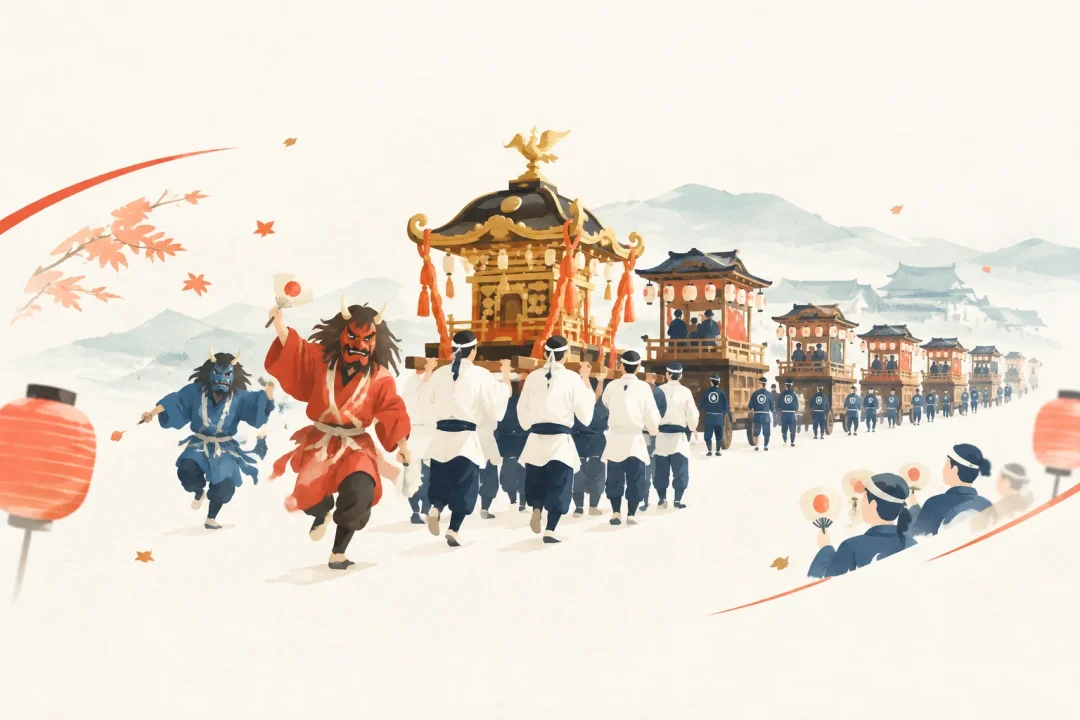
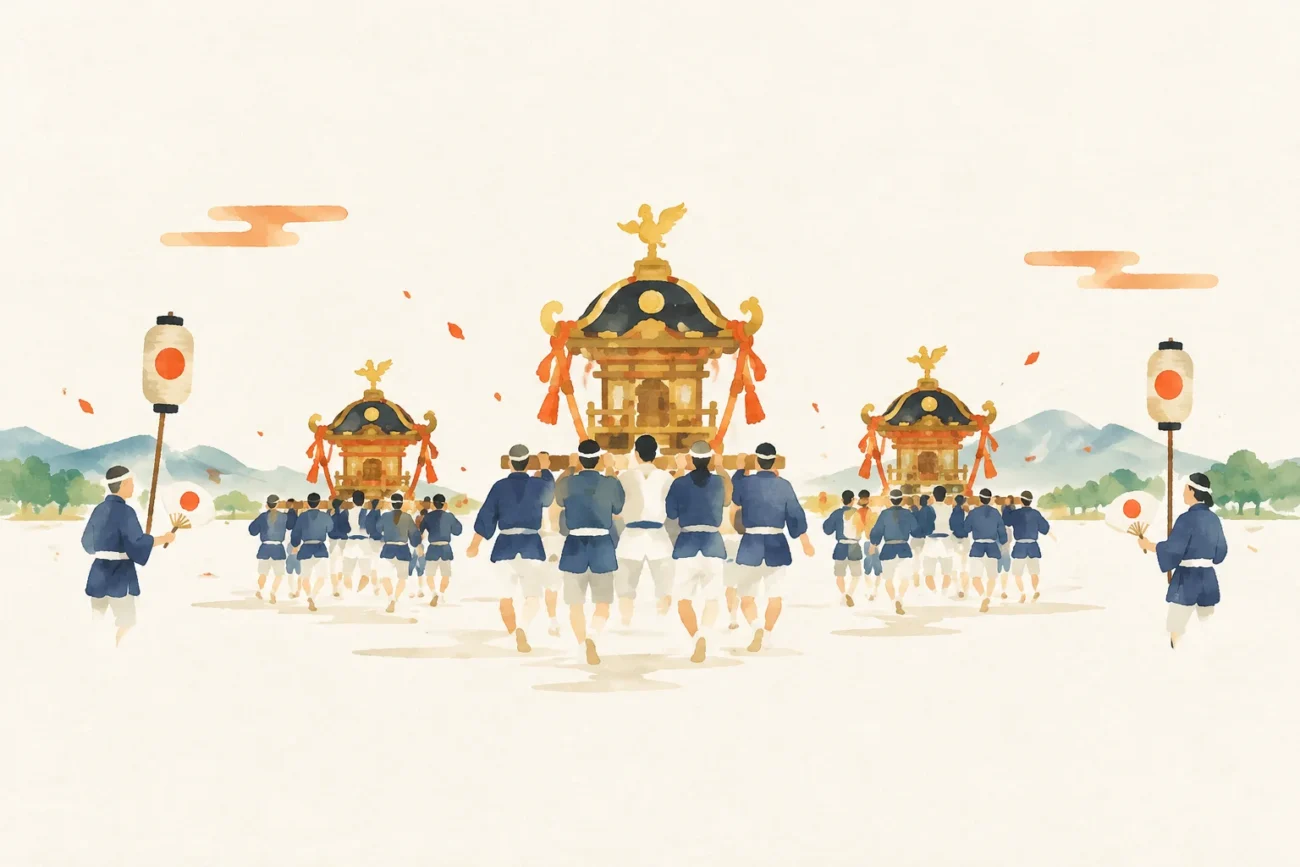
Three mikoshi depart from the shrines of Ichinomiya, Ōmiya, and Sannomiya and process toward the otabisho in Gōnokuchi.
The festival consists of the Shinkō-sai, when the mikoshi head to the otabisho, and the Kangyō-sai, when they return to their original shrines. It is also known as the “Sansha Festival.”
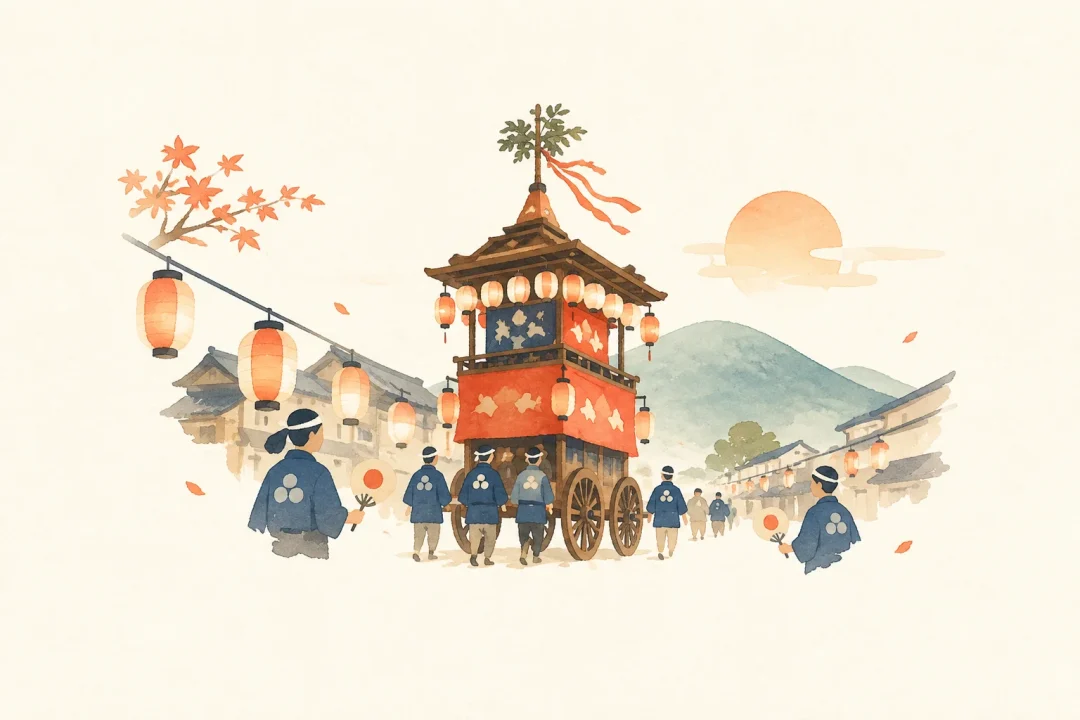
The procession linking the 3 shrines and the otabisho is a defining feature of the festival.
Source: 田原祭(三社祭) | イベント一覧 | 京都府観光連盟公式サイト
Festival highlights
The highlights are the 3 mikoshi that depart from the shrines corresponding to Ichinomiya, Ōmiya, and Sannomiya.
Each mikoshi makes its way toward the otabisho in Gōnokuchi, forming the procession at the heart of the festival.
During the Shinkō-sai, the mikoshi head to the otabisho; during the Kangyō-sai, they return to their original shrines, so the festival offers a chance to enjoy both the outward and return processions.
An autumn festival in Ujitawara where the mikoshi processions of 3 shrines converge at the otabisho
What to expect
The festival consists of the Shinkō-sai, when 3 mikoshi from the 3 shrines head to the otabisho in Gōnokuchi, and the Kangyō-sai, when the mikoshi return to their original shrines.
The outward procession from the shrines to the otabisho and the return procession from the otabisho together shape the course of the festival.
Okurisu Shrine, Ōmiya Shrine, Sannomiya Shrine, and the otabisho are listed as venues.
How to take part
Visitors can watch the procession of mikoshi from the 3 shrines.
There have also been cases of local children being invited to the Shinkō-sai to watch the mikoshi.
However, no information is provided about conditions for general visitors to take part in running the festival, such as carrying a mikoshi.
Source: 田原祭の出前授業(2年) | 宇治田原町立田原小学校
Location and access
- Venue and address
Okurisu Shrine, Ōmiya Shrine, Sannomiya Shrine, and the otabisho / Ujitawara Town, Tsuzuki District, Kyoto Prefecture
- Train and bus
From Uji Station on the Keihan Uji Line, Uji Station on the JR Nara Line, or Shin-Tanabe Station on the Kintetsu Kyoto Line, take a Kyoto Keihan Bus bound for Ichūmae, Ryokuen-zaka, or the industrial park. Get off at Shimomachi; the otabisho is a 3-minute walk away.
Address Ujitawara Town, Tsuzuki District, Kyoto Prefecture
Dates and season
The festival is listed as taking place in 2026 on October 8 (Thursday) and October 11 (Sunday).
It takes place from October 8 through the 11th, and an opportunity to watch the mikoshi during the Shinkō-sai is listed for the first day.
The festival venues are Okurisu Shrine, Ōmiya Shrine, Sannomiya Shrine, and the otabisho.
Accommodation and hotels PR
Showing nearby accommodation.
Prices and availability are current at the time of retrieval. For multi-night stays, only the first night’s price is shown. Confirm the final price and directions to the venue with the booking provider. Select your dates again when using the area search link. Search area: within 3 km of Central Kyoto Prefecture / Ujitawara Town (the search is not centered on the festival venue)
Tips for your visit
The festival consists of processions linking Okurisu Shrine, Ōmiya Shrine, Sannomiya Shrine, and the otabisho, so the scenes you can see vary by venue.
For the otabisho, directions are provided from Shimomachi bus stop, a 3-minute walk away.
Nearby attractions
Nearby attractions listed include Okurisu Shrine, a hōkyōintō pagoda, Ryūō Falls, the story of Emperor Tenmu in the Uji Shūi Monogatari, and JA Kyoto Yamashiro Uji Tea Village.
Okurisu Shrine, one of the festival venues, is also listed as a nearby attraction.
Origins and History of Tahara Festival (Sansha Festival)
According to the shrine’s records, Okurisu Shrine, one of the shrines involved in the Tahara Festival, originated when it was established as a branch shrine of Ōmiya Shrine in Araki in Kōan 6 (1283).
However, records also show that a local powerful family donated land before that, so the exact founding date is uncertain.
Local accounts say the shrine’s name comes from nearby chestnut groves and traditions about chestnuts offered to the imperial court, but the groves have now been replaced by tea fields.
Source: 御栗栖神社(みくるすじんじゃ) | 宇治田原町 観光情報サイト
Official information
The Tahara Festival (Sansha Festival) is listed on the Kyoto Prefecture Tourism Federation’s official event page.
The page provides the venue, address, transportation information, and contact details for Okurisu Shrine, Sannomiya Shrine, and Ōmiya Shrine.
Webサイトとして「ujitawara-kyoto.com」が案内されています。
Tahara Festival (Sansha Festival) at a Glance
The Tahara Festival (Sansha Festival) is an autumn festival in Ujitawara Town, where 3 mikoshi from the shrines of Ichinomiya, Ōmiya, and Sannomiya head to the otabisho in Gōnokuchi.
The festival celebrates an abundant harvest and consists of the Shinkō-sai and the Kangyō-sai, when the mikoshi return to their original shrines.
Okurisu Shrine, Ōmiya Shrine, Sannomiya Shrine, and the otabisho are listed as venues.
Japanese Festivals.jp Editorial Team
Celebrating local culture and helping you discover a side of Japan you never knew.
Article updated: 2026/10/23
Submit information or a correction Submit photos of this festival