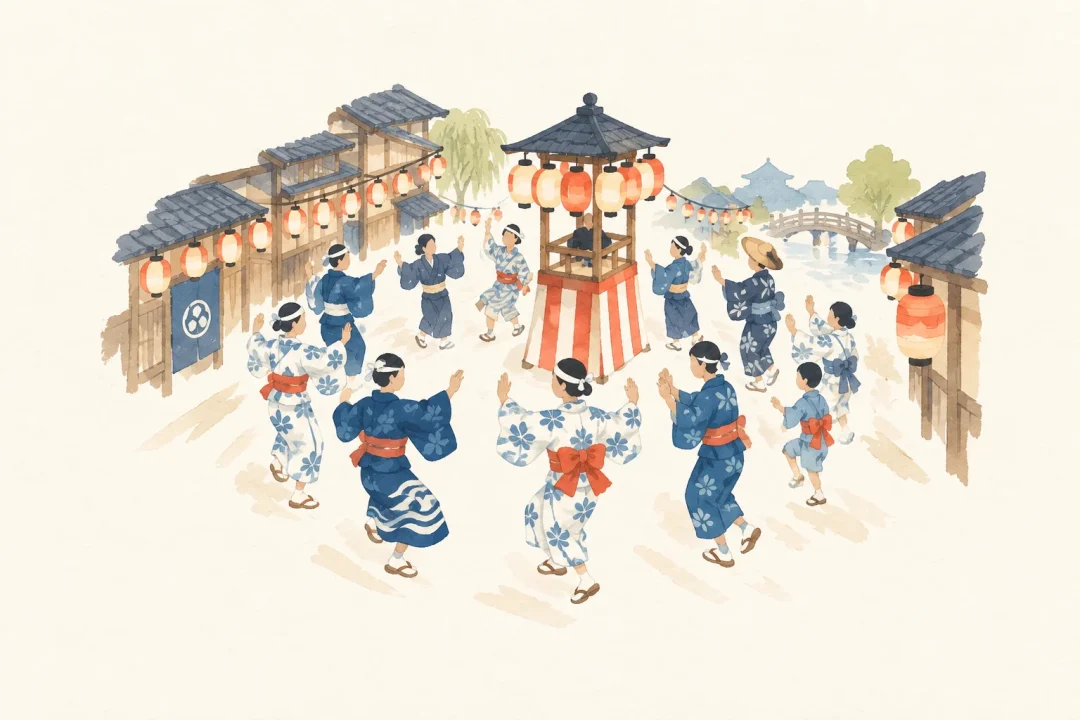
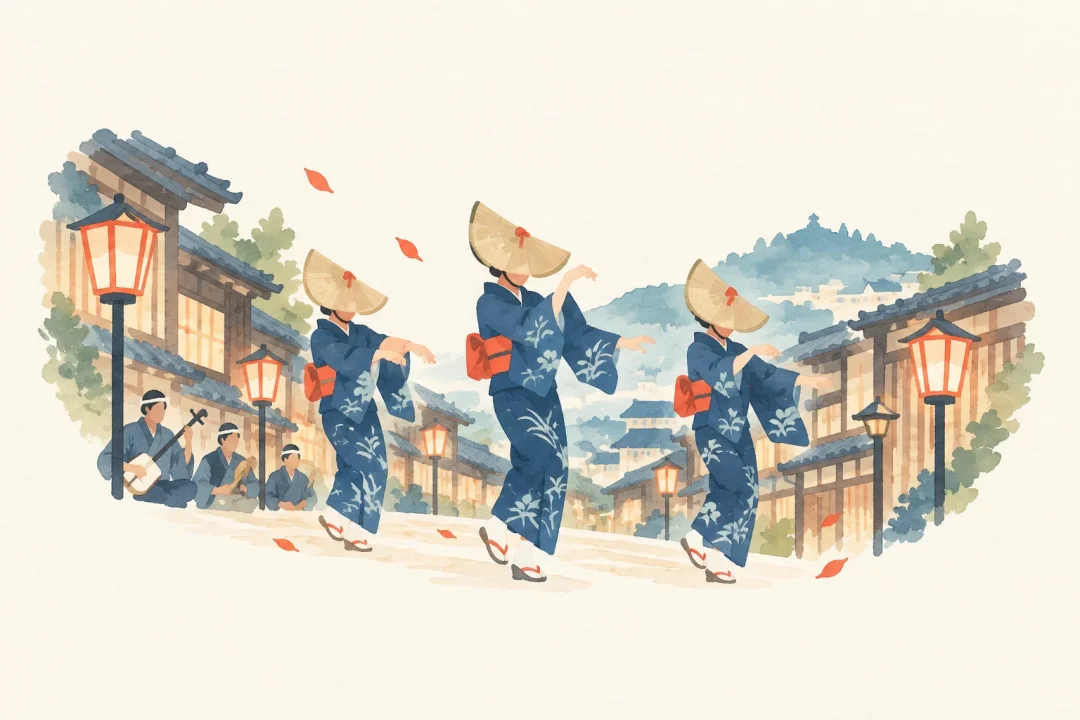
Satsuma’s offering performance, with decorated horses and dancers
The Tradition of Satsuma Horse Dancing
Festival information
EVENT INFORMATION- Season / frequency
- Every year, the Sunday after day 18 of lunar month 1, among other occasions / Every year
- Area
- Kagoshima Prefecture(From Tokyo: approx. 1 h 50 min–2 h 20 min · flight time only)Prefecture-level estimate to a main station or airport, not the venue. Airport access, check-in and onward travel are extra; remote areas and islands can take much longer.
- Highlights and activities
- Wishes behind the festival
- Last updated
- 2026/10/19
A horse-dancing tradition handed down in Kagoshima Prefecture, in which decorated horses and dancers perform to shamisen, kane bells, and drums.
About The Tradition of Satsuma Horse Dancing
The Tradition of Satsuma Horse Dancing is a folk event passed down in various parts of Kagoshima Prefecture.
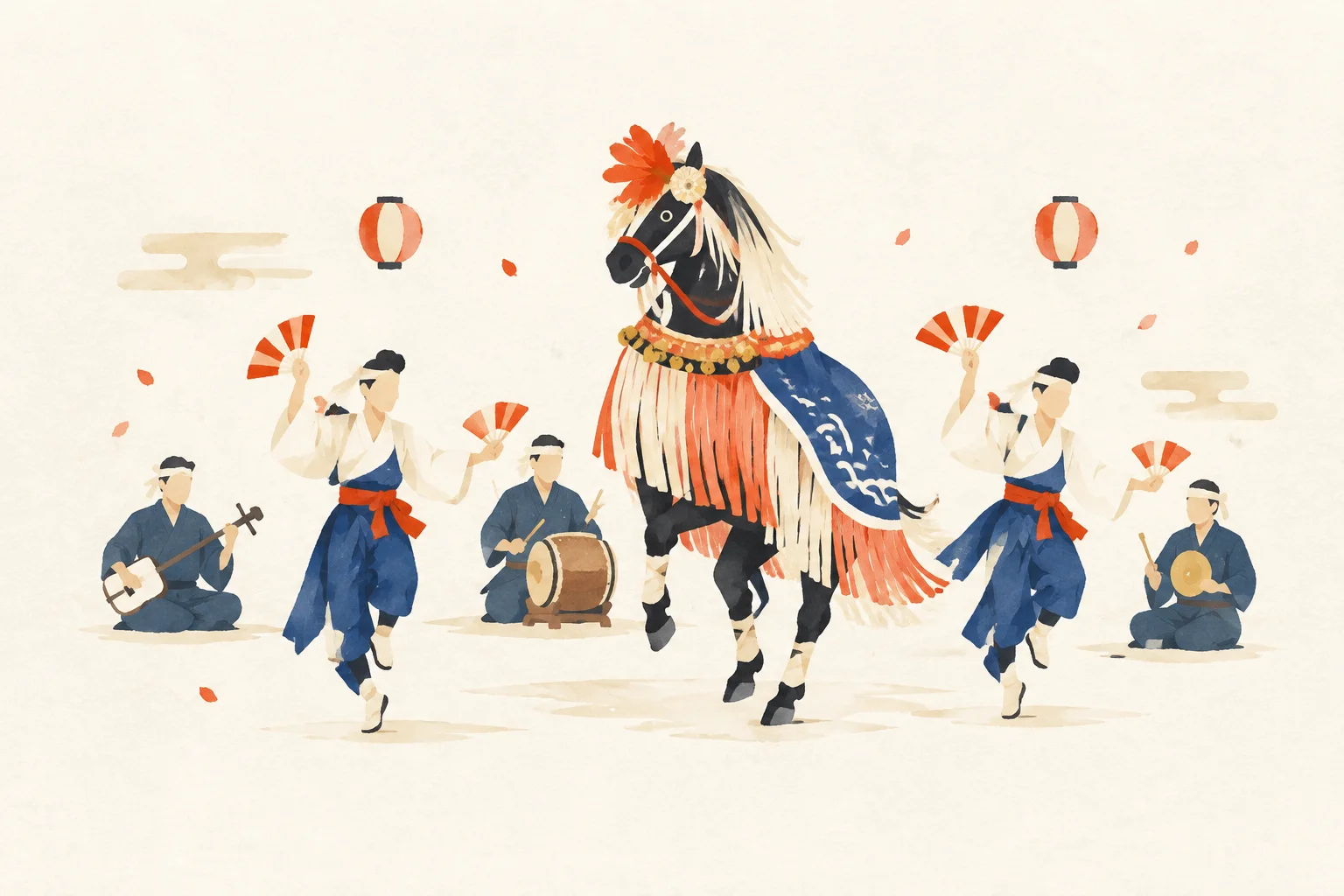
Decorated with streamers, banners, artificial flowers, and other ornaments, the horses dance to shamisen, kane bells, and taiko drums, accompanied by numerous dancers in matching costumes.
Also known as uma-odori or suzukake-uma, the tradition has been passed down as part of local festivals and offerings.
Source: 国指定文化財等データベース
Festival highlights
A highlight is watching the brilliantly decorated horses dance with nimble steps as their bells ring.
The horses bob their heads and take light steps to the sounds of shamisen, kane bells, and taiko drums.
Numerous dancers follow behind, creating an offering performance in which the horses, music, and dancing come together.
Satsuma’s offering performance, with decorated horses and dancers
What to expect
During the event, decorated horses dance to the accompanying music, followed by the dancers.
At the Hatsuuma Festival at Kagoshima Shrine, horses visit Hoke Shrine to receive banners and gohei streamers. These are placed in the horses’ saddles, and they perform dances at the horse-dancing grounds in the shrine precincts or in front of the main hall.
Traditions also include kadozuke, in which performers visit private homes after making an offering, and horse dancing performed by dancers alone, without horses.
Location and access
Host prefecture Kagoshima Prefecture
This map shows the surrounding area, not the exact venue location.
Dates and season
It is generally held each year on the Sunday after day 18 of lunar month 1.
At the Hatsuuma Festival at Kagoshima Jingu, it is held on the Sunday after day 18 of lunar month 1.
Because the places where offerings are made and the schedules vary by region, you should check with the relevant municipal or town board of education before visiting.
Origins and History of The Tradition of Satsuma Horse Dancing
This tradition is said to have spread to various areas from the suzukake-uma dance at the Hatsuuma Festival held at Kagoshima Shrine in Hayato Town, Aira District.
There are different theories about its origins: one dates it to the Muromachi period, while another says it began when people who cared for the shrine’s sacred horses presented the shrine with horses they had raised to maturity.
As the number of horses used for farming declined, the practice shifted to offerings made by people in their unlucky years, neighborhood associations, companies, and others.
Official information
The Agency for Cultural Affairs’ Database of Nationally Designated Cultural Properties introduces the Tradition of Satsuma Horse Dancing as an “intangible folk cultural property for which measures such as documentation should be undertaken.”
The selected date is February 12, 2002, and it is listed as a tradition located in Kagoshima Prefecture.
The Tradition of Satsuma Horse Dancing at a Glance
The Tradition of Satsuma Horse Dancing is a folk event handed down in Kagoshima Prefecture, where decorated horses and dancers move to shamisen, kane bells, and taiko drums.
The event began as a way to pray for horses’ health and fertility, and for bountiful harvests. Today, it is also offered in prayers for protection from misfortune, milestone birthdays, and business prosperity.
As the destination for offerings and the dates vary by area, check local information for the venue you plan to visit.
Japanese Festivals.jp Editorial Team
Celebrating local culture and helping you discover a side of Japan you never knew.
Article updated: 2026/10/19
Submit information or a correction Submit photos of this festival