Otsu’s autumn festival, featuring 13 dashi and mechanical performances
Otsu Festival
The 2026 edition of Otsu Festival has ended.
Festival information
EVENT INFORMATION- Dates
- 2026/10/10 〜 2026/10/11Ended
- Season / frequency
- Every year in October / Every year
- Location
- Around JR Otsu Station and Chuo Odori, and Tenson Shrine
- Area
- Shiga Prefecture・Otsu City(From Tokyo: approx. 2 h 20 min–3 h · bullet train + connecting train)Prefecture-level estimate to a main station or airport, not the venue. Airport access, check-in and onward travel are extra; remote areas and islands can take much longer.
- Highlights and activities
- Wishes behind the festival
- Participation / viewing
- Open to public participation / spectators welcome
- Participation fee
- General viewing is free. Paid viewing seats cost 2,000 yen for the morning session, 5,000 yen for the afternoon session, and 11,000 yen for the set including a goshuincho stamp book.
- Official website / social media
- Official website
- Last updated
- 2026/10/19
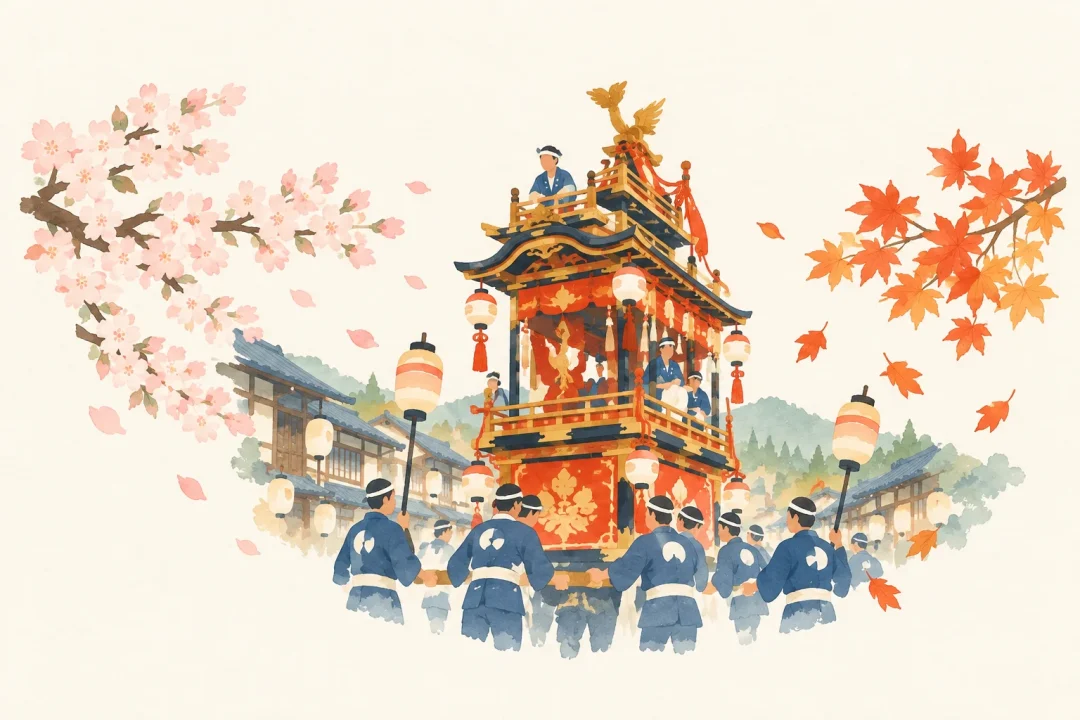
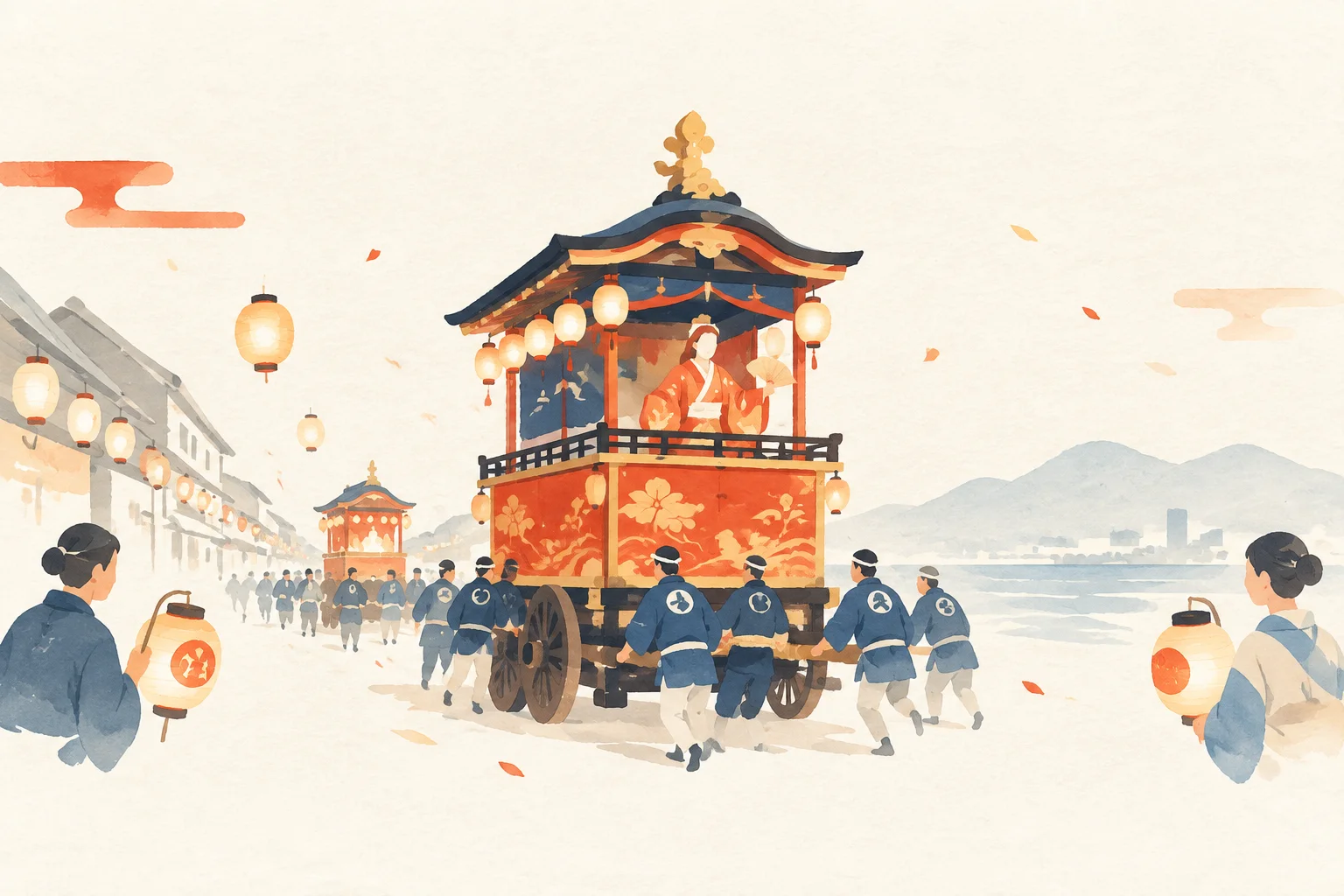
A traditional festival in which 13 parade through Otsu, each presenting its own distinct mechanical performance. The lanterns and festival music of Yoimiya, along with the main festival parade and the throwing of lucky-charm chimaki rice cakes to ward off misfortune, bring Otsu to life in autumn.
About Otsu Festival
Photo credits and terms of use
Photographer: ja:User:Sunen File:Otsu matsuri-Chimaki.JPG / Wikimedia Commons / CC BY 3.0 作成者撮影Display size only adjusted.May differ from the event currently featured.Photo credits and terms of use
Photographer: ja:User:Sunen File:Keihan800 with OtsuMatsuri.JPG / Wikimedia Commons / CC BY 3.0 作成者撮影Display size only adjusted.May differ from the event currently featured.The Otsu Festival is a major autumn event in Otsu, held as a festival of Tenson Shrine since the early Edo period.
Set in Otsu-juku, once a prosperous post town on the 53 Stations of the Tokaido, 13 dashi parade through the town.
It is a National Important Intangible Folk Cultural Property and was also inscribed on UNESCO’s Intangible Cultural Heritage list in December 2025.
Experience the history and culture passed down through the community through the dashi, festival music, and mechanical performances.
Source: 湖国三大祭『大津祭』2026 | びわ湖大津トラベルガイド / 大津祭について/大津市
Festival highlights
Highlights include 13 dashi adorned with lavish decorations and the mechanical performances staged aboard them.
Each dashi features a different mechanical performance, drawing on themes such as Noh and Chinese legends.
During the main festival, the dashi stop along the route to present feats known as shozai at various locations.
On Yoimiya, lanterns are lit, and the dashi displayed at traditional townhouses and the festival music brighten the town at night.
Source: 広報おおつ テキスト版(令和8年9月)/大津市
Otsu’s autumn festival, featuring 13 dashi and mechanical performances
What to expect
During the Yoimiya, the hikiyama move through town in the afternoon; lanterns are lit at dusk, and hayashi music is performed.
The main festival begins with 13 hikiyama gathering in front of Tenson and setting off, accompanied by hayashi music as they process through the streets of Otsu.
Karakuri performances are presented at various points along the procession, and there are also moments when chimaki rice cakes for protection from misfortune are tossed to the crowd.
Related tours also offer activities that provide an inside look at the festival, such as visits to traditional townhouses, the first pulling of the dashi, and hayashi music experiences.
How to take part
General visitors can see the dashi displayed at traditional townhouses, lanterns, and hear the festival music during Yoimiya, and watch 13 dashi parade through the town on the main festival day.
Related tours are also planned for 2026, including Yoimiya dashi-pulling and festival music experiences.
If you would like to enjoy the dashi parade at your leisure, you can use the paid viewing seats.
In 2026, related tours are being offered that include visits to traditional townhouses (meeting places), viewing the dashi assembly and their first pull, festival music experiences, and Yoimiya dashi-pulling experiences.
To take part, check the information for each tour and apply.
Paid viewing seats can be booked online; viewing times and locations, as well as whether mechanical performances are included, vary by seat type.
Location and access
- Venue and address
Around JR Otsu Station and Chuo Odori, and Tenson Shrine.
The procession also travels through the city, including Hamadori, Nakamachi-dori, Kyomachi-dori, and Hyakkokumachi-dori in the Central 2-chome area.
- Train and bus
JR Otsu Station, Keihan Biwako-Hamaotsu Station, and Shimanoseki Station are listed.
Traffic restrictions related to the procession are announced for festival days.
Address Around Chuo 2-chome, Otsu City, including Hamadori, Nakamachi-dori, Kyomachi-dori, and Hyakukoku-machi-dori
Dates and season
2026 Event Information (the listed dates have passed)
In 2026, the event was scheduled to include the construction of the dashi on October 4 (Sunday), the Yoimiya from early evening on October 10 (Saturday), and the main festival on October 11 (Sunday).
Yoimiya is scheduled to continue until around 9 p.m., and the main festival from 9 a.m. to around 5:30 p.m.
Highlights include the lantern-lit dashi during Yoimiya and the parade of 13 dashi and their mechanical performances on the main festival day.
Accommodation and hotels PR
Showing nearby accommodation.
Prices and availability are current at the time of retrieval. For multi-night stays, only the first night’s price is shown. Confirm the final price and directions to the venue with the booking provider. Select your dates again when using the area search link. Search area: within 3 km of Central Shiga Prefecture / Otsu City (the search is not centered on the festival venue)
Tips for your visit
The event is scheduled to proceed even in rainy weather. If it rains, bring rain gear such as a full-length raincoat rather than an umbrella.
Umbrellas and parasols are not permitted in the paid viewing area because they can obstruct the view and pose safety concerns.
Seats are not assigned, and adjacent seats may not always be available, so it is best to check the booking terms if you plan to watch with others.
Nearby attractions
The Otsu Festival is set in Otsu-juku, once the largest post town on the 53 Stations of the Tokaido.
Related tours for the main festival include a walk through the post town in addition to viewing the dashi parade.
You can also enjoy a walk through the historic townscape along the dashi route as part of your visit to the festival.

びわこ文化公園
滋賀県大津市にある都市公園

三橋節子美術館
滋賀県大津市の長等公園にある美術館

唐崎神社
滋賀県大津市にある神社

大津市歴史博物館
滋賀県大津市にある博物館

大津市科学館
滋賀県大津市にある科学館

建部大社
滋賀県大津市神領にある神社

日吉大社
滋賀県大津市にある神社

日吉東照宮
滋賀県大津市坂本にある神社

旧竹林院庭園
滋賀県大津市にある日本庭園

滋賀県立琵琶湖文化館
滋賀県大津市にある博物館

滋賀県立美術館
滋賀県大津市にある美術館

矢橋帰帆島
滋賀県の琵琶湖にある人工島
Origins and History of Otsu Festival
The Otsu Festival is a festival of Tenson Shrine that has been held since the early Edo period.
Some of the 13 dashi in the main festival parade were made during the Edo period and have been protected and passed down by the local community over many years.
In 2016, it became the first event in Otsu City to be designated a National Important Intangible Folk Cultural Property. It was later inscribed on UNESCO’s Intangible Cultural Heritage list in 2025.
A picture scroll depicting the festival as it was about 350 years ago is also on display.
Official information
Official information about the Otsu Festival is available on the website of the Otsu Festival Hikiyama Federation.
Information on the 2026 schedule, dashi parade, paid viewing seats, and related tours is also available from the Biwako Otsu Travel Guide.
For inquiries, contact the Otsu Festival Hikiyama Federation at 077-525-0505.
Otsu Festival at a Glance
The Otsu Festival is an autumn festival in which 13 dashi parade through Otsu, each presenting its own distinct mechanical performance.
During Yoimiya, lanterns and festival music brighten the town at night. On the main festival day, the dashi parade and lucky-charm chimaki rice cakes are thrown to ward off misfortune.
In 2026, October 10 is Yoimiya and October 11 is the main festival day.
The festival can be watched for free, while paid viewing seats let you watch the mechanical performances while seated.
Japanese Festivals.jp Editorial Team
Celebrating local culture and helping you discover a side of Japan you never knew.
Article updated: 2026/10/19
Submit information or a correction Submit photos of this festival