A festival at Otani Shrine preserving an old tradition of offering five trays late at night
Otani Shrine Traditional Festival
Festival information
EVENT INFORMATION- Season / frequency
- day 14 of lunar month 6–15
- Location
- Otani Shrine
- Area
- Kochi Prefecture・Konan City(From Tokyo: approx. 1 h 20 min–1 h 40 min · flight time only)Prefecture-level estimate to a main station or airport, not the venue. Airport access, check-in and onward travel are extra; remote areas and islands can take much longer.
- Features
- Last updated
- 2026/10/19
The Traditional Festival, passed down at Otani Shrine in Konan City, is a in which five trays of offerings are presented at the main sanctuary late at night. It keeps alive the history of ancient records and the local parishioners connected with the shrine.
About Otani Shrine Traditional Festival
The Traditional Festival at Otani Shrine is a shrine festival held from the 14th to the 15th day of the sixth month in the old lunar calendar.
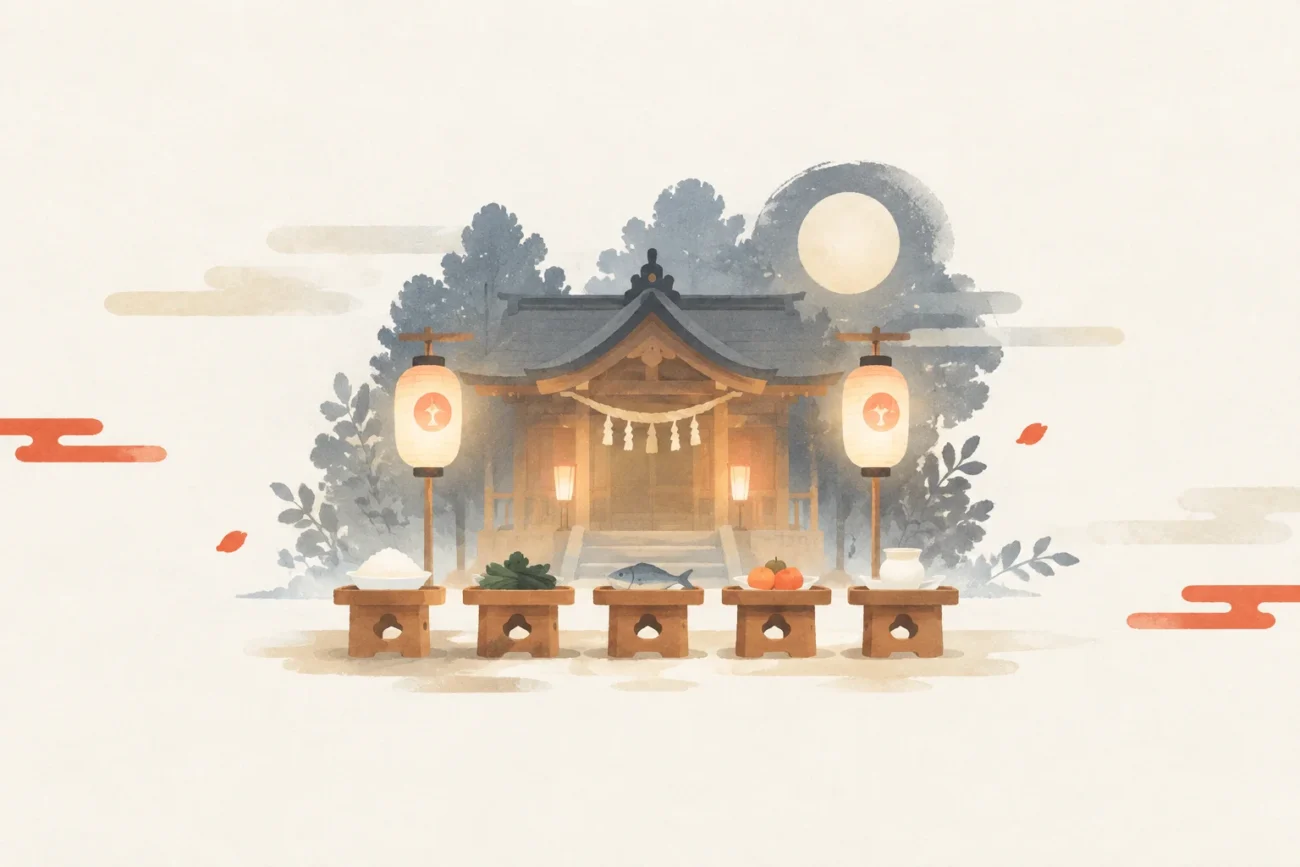
A ritual in which five trays of offerings are presented at the main sanctuary late at night has been passed down.
Otani Shrine is located in Otani, Noichi-cho, Konan City, Kochi Prefecture, and is a former village shrine enshrining Ame-no-Iwato-wake-no-Mikoto.
As a festival closely connected with local parishioners, it keeps the faith of this historic shrine alive today.
Source: 大谷神社 | 子供とお出かけ情報「いこーよ」 / 大谷神社(おおたにじんじや)とは? 意味や使い方 - コトバンク
Festival highlights
The highlight is a traditional Shinto ritual in which five trays of offerings are presented at the main sanctuary late at night.
Rather than being known for large-scale, spectacular events, it is known as a festival centered on offerings before the deities, a tradition passed down through the generations.
Historical records also describe a custom in which parishioners on duty prepared food and welcomed those not on duty as guests.
Please check the current visiting arrangements and areas open to the public before your visit.
A festival at Otani Shrine preserving an old tradition of offering five trays late at night
What to expect
During the festival, a Shinto ritual is performed in which five trays of offerings are presented at the main sanctuary late at night.
Old records note that parishioners divided into eastern and western groups across the Karasu River took part, with responsibility for the festival alternating each year.
It is also said that the household on duty prepared steamed rice dishes, welcomed those not on duty as guests, and shared a meal with them in the dance hall.
These records offer clues to the festival’s historical form.
Location and access
- Venue and address
Otani Shrine (482 Otani, Noichi-cho, Konan City, Kochi Prefecture).
- Train and bus
The shrine is about a 17-minute walk from Noichi Station on the Gomen-Nahari Line.
It is about a 7-minute walk from the Gosuiden bus stop and an 11-minute walk from the Kyodaibashi-kita bus stop.
- By car
Take Prefectural Route 234 from Nankoku IC.
- Parking
There is no parking at the shrine; visitors are advised to use a nearby paid parking lot.
Source: 大谷神社 [400000055100] | 『日本歴史地名大系』施設・地点項目データセット
Address 482 Otani, Noichi-cho, Konan City, Kochi Prefecture
Dates and season
- Season
day 14 of lunar month 6–15
Accommodation and hotels PR
Showing nearby accommodation.
Prices and availability are current at the time of retrieval. For multi-night stays, only the first night’s price is shown. Confirm the final price and directions to the venue with the booking provider. Select your dates again when using the area search link. Search area: within 3 km of Central Kochi Prefecture / Konan City (the search is not centered on the festival venue)
Tips for your visit
The Traditional Festival is described as a Shinto ritual in which five trays of offerings are presented at the main sanctuary late at night, so it takes place at a different time from usual daytime sightseeing.
Please check with the shrine or the people involved to confirm whether visitors may observe and which areas are open.
There is no parking at the venue, so those arriving by car are advised to use a nearby paid parking lot.
If visiting at night, please be considerate of those around you and keep noise to a minimum.
Nearby attractions
The Karasu and Monobe rivers are near Otani Shrine.
Nearby attractions include Kochi Prefectural Noichi Zoological Park, Shikoku Automobile Museum, and Soso Hiroba Actland.
The Kami City Yanase Takashi Memorial Hall and Anpanman Museum are also listed as nearby destinations.
If you plan to visit nearby attractions along with the festival, please check each facility’s opening status and visitor information.

四国自動車博物館
高知県香南市野市町にある自動車とオートバイの博物館

絵金蔵
高知県の博物館・美術館のスポットです。
写真:京浜にけ at Japanese Wikipedia / CC BY-SA 3.0
Photo source ·
高知県立のいち動物公園
高知県香南市にある動物園

Origins and History of Otani Shrine Traditional Festival
Otani Shrine is identified with the ancient deity Otani-no-Kami mentioned in historical records.
The Shoku Nihongi records are said to mention rank promotions for Otani-no-Kami in Jogan 12 (870) and Gangyo 3 (879).
Old records and ridge plaques are said to have been lost in a fire.
Accounts of the traditional festival describe a celebration on the 15th day of the sixth month, parishioners divided into eastern and western groups, and a custom of sharing meals between those on duty and their guests.
Otani Shrine Traditional Festival at a Glance
The Otani Shrine Traditional Festival is held from the 14th to the 15th day of the sixth month in the old lunar calendar, with a Shinto ritual in which five trays of offerings are presented at the main sanctuary late at night.
Otani Shrine is in Otani, Noichi-cho, Konan City, and is a historic shrine mentioned in ancient records.
Old accounts also remain of parishioners divided into eastern and western groups and meals shared by those on duty.
The specific date for the 2026 festival needs to be confirmed.
Japanese Festivals.jp Editorial Team
Celebrating local culture and helping you discover a side of Japan you never knew.
Article updated: 2026/10/19
Submit information or a correction Submit photos of this festival