A Nantan ritual that entrusts a legend of a giant snake to a rope to divine the harvest
The tug-of-war at Daishō Shrine
Festival information
EVENT INFORMATION- Season / frequency
- Around mid-January, near Little New Year / Every year
- Location
- Daishō Shrine
- Area
- Kyoto Prefecture・Nantan City(From Tokyo: approx. 2 h 10 min–2 h 40 min · bullet train)Prefecture-level estimate to a main station or airport, not the venue. Airport access, check-in and onward travel are extra; remote areas and islands can take much longer.
- Wishes behind the festival
- Last updated
- 2026/10/19
The tug-of-war at Daishō Shrine is a in Nantan City, Kyoto Prefecture, where people pull against each other on a rope representing a giant snake, with the outcome used to divine the harvest.
About The tug-of-war at Daishō Shrine
The tug-of-war at Daishō Shrine is a Shinto tug-of-war ritual held in Hioki, Yagi-cho, Nantan City, Kyoto Prefecture.
Based on a legend about slaying a giant snake, the ritual uses a rope representing the snake’s body and a target representing its eye.
It is designated an Intangible Folk Cultural Property of Kyoto Prefecture and continues as a New Year event passed down through the community.
Source: 大送神社の綱引き - Wikipedia
Festival highlights
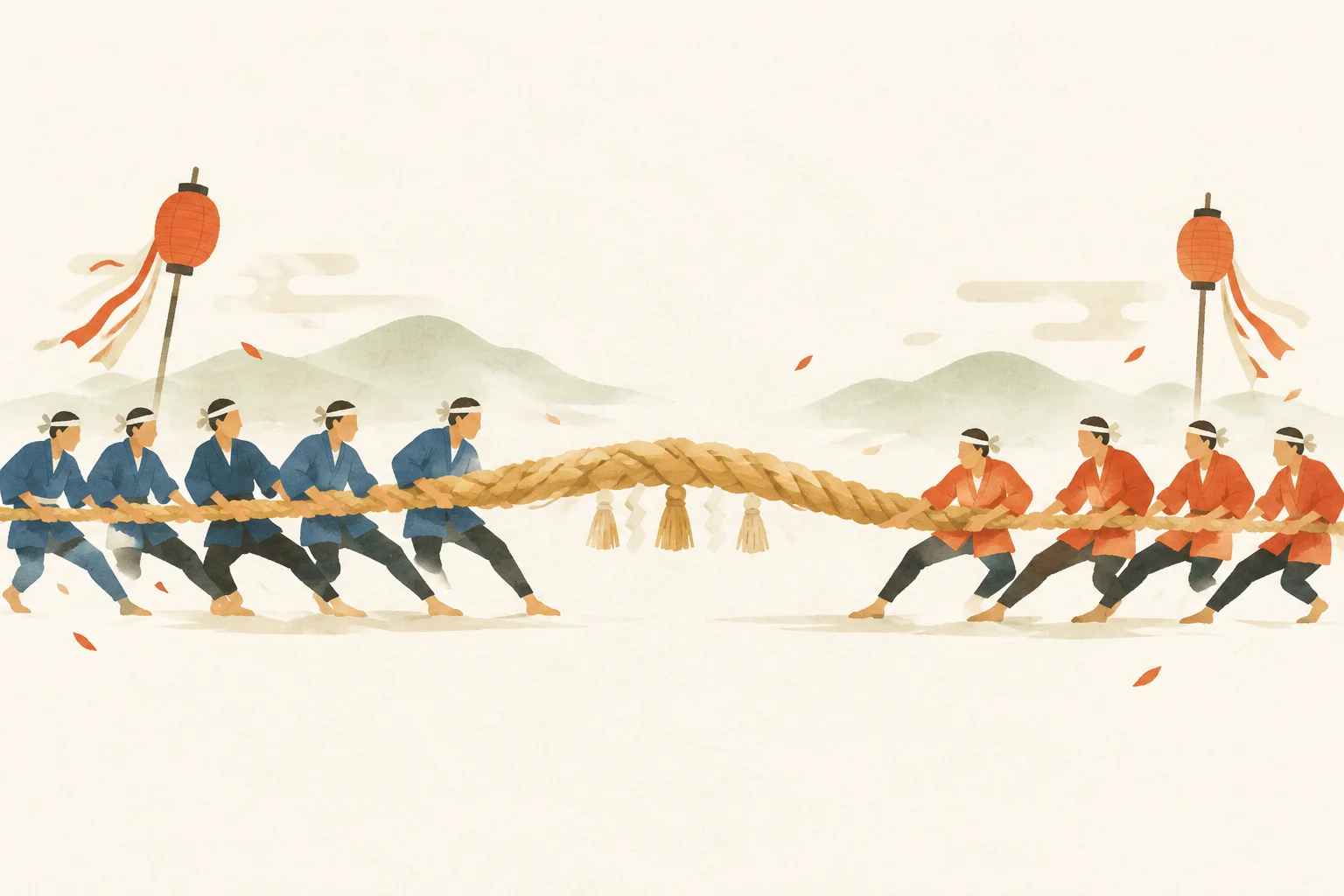
The highlight is the scene where people split into north and south sides and pull against each other on a rope about 14 meters long, representing a giant snake.
The coiled rope and target represent the snake’s body and eye, respectively, making this a distinctive festival ritual that brings a myth to life.
It is said that a southern victory foretells a good rice harvest, while a northern victory foretells a good wheat harvest, making the tug-of-war’s outcome a way to divine the year’s crops.
Source: 大送神社の綱引き | 南丹市 | 子供とお出かけ情報「いこーよ」
A Nantan ritual that entrusts a legend of a giant snake to a rope to divine the harvest
What to expect
During the ritual, a coiled rope and a target are first made to represent the body and eye of a giant snake.
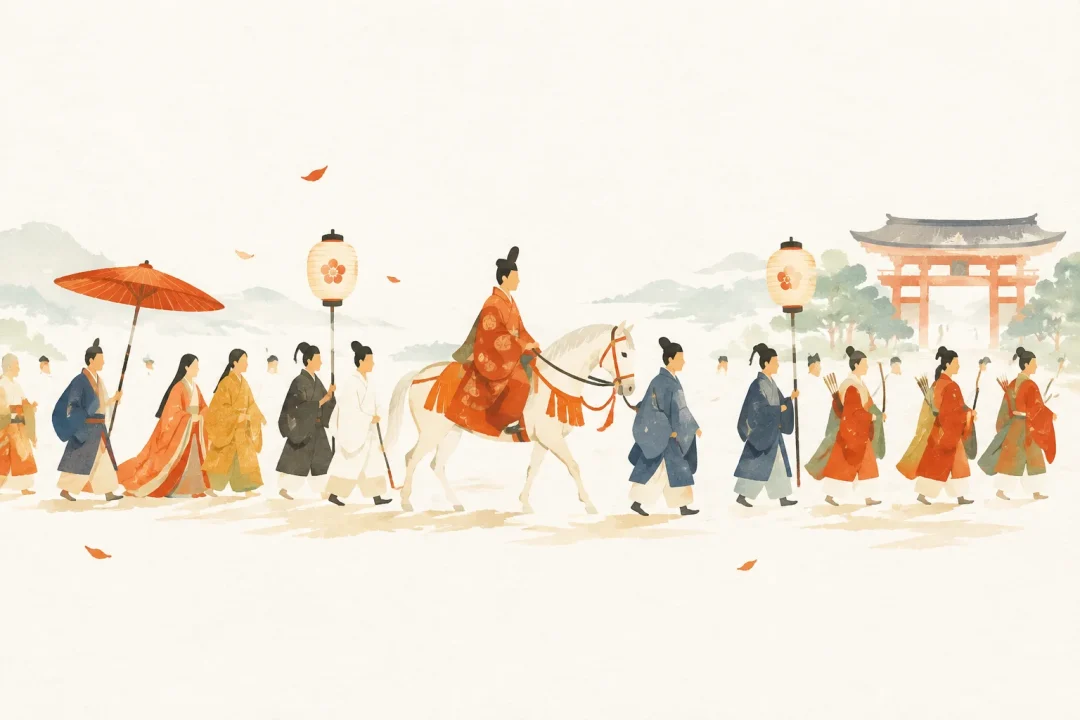
After parishioners playing the roles of warriors dressed in kamishimo fire 3 arrows, local residents divide into north and south sides and pull against each other on the rope.
The final outcome is used to divine whether rice or wheat will have a better harvest that year.
Location and access
- Venue and address
Daishō Shrine (17 Higashinakasato, Hioki, Yagi-cho, Nantan City, Kyoto Prefecture).
- Train and bus
Take a bus from JR Sonobe Station, get off at “Hioki,” then walk about 15 minutes.
Another guide says it takes 10 minutes by taxi from Yagi Station on the JR Sagano Line.
- Parking
There is no parking lot.
Source: 綱引神事 | イベント一覧 | 京都府観光連盟公式サイト
Address 17 Higashinakasato, Hioki, Yagi-cho, Nantan City, Kyoto Prefecture
Dates and season
- Season
Around mid-January, near Little New Year
- Frequency
Every year
Accommodation and hotels PR
Showing nearby accommodation.
Prices and availability are current at the time of retrieval. For multi-night stays, only the first night’s price is shown. Confirm the final price and directions to the venue with the booking provider. Select your dates again when using the area search link. Search area: within 3 km of Central Kyoto Prefecture / Nantan City (the search is not centered on the festival venue)
Tips for your visit
The venue is Daishō Shrine. Recommended transport options include taking a bus from JR Sonobe Station or a taxi from Yagi Station on the JR Sagano Line.
There is no parking lot, so consider using public transport or another option.
As the tug-of-war is a Shinto ritual involving local residents on north and south sides, please take care not to disrupt the proceedings or get in the way of participants when watching.
Nearby attractions
Nearby places listed include the Yagi Bio-Ecology Center, Seigenji Temple, and Monkaku Fureai Park.
Kyoto Taishakuten and Ōzekigawa Green Space Park are also featured as nearby attractions.
If you plan to visit nearby facilities along with the festival, it’s a good idea to check their operating status and visitor requirements in advance.
Origins and History of The tug-of-war at Daishō Shrine
The tug-of-war at Daishō Shrine is said to have begun when a snake that appeared during the shrine’s construction was slain and its spirit appeased.
Another account says the ritual commemorates a warrior who shot and killed a giant snake that had been tormenting the villagers.
The ritual, which connects the legend of the giant snake with a tug-of-war and divination of the harvest, is said to have continued for at least 100 years.
Official information
The event venue and transport information are listed in the Kyoto Prefecture Tourism Federation’s event guide.
A phone number for the Nantan City Tourism Association is listed as a contact.
Check for updates to the event information for details such as how to participate.
The tug-of-war at Daishō Shrine at a Glance
The tug-of-war at Daishō Shrine is a Shinto ritual in Nantan City that draws on a legend about slaying a giant snake and uses a rope about 14 meters long to divine the harvest.
After parishioners shoot arrows, local residents divide into north and south sides and pull on the rope, with the outcome used to divine whether rice or wheat will have a better harvest.
Guides give different dates for the 2026 event, so be sure to check the schedule before visiting.
Japanese Festivals.jp Editorial Team
Celebrating local culture and helping you discover a side of Japan you never knew.
Article updated: 2026/10/19
Submit information or a correction Submit photos of this festival