A summer memorial dance in Maie, brought together by flower hats and the rhythms of nenbutsu chants
Maie no Mitama Odori
The 2026 edition of Maie no Mitama Odori has ended.
Festival information
EVENT INFORMATION- Dates
- 2026/08/15Ended
- Season / frequency
- Every year
- Location
- From the grounds of Myōenji Temple to the grounds of Fukujūin Temple
- Area
- Ibaraki Prefecture・Ishioka City(From Tokyo: approx. 1 h 10 min–1 h 30 min · limited express)Prefecture-level estimate to a main station or airport, not the venue. Airport access, check-in and onward travel are extra; remote areas and islands can take much longer.
- Highlights and activities
- Wishes behind the festival
- Last updated
- 2026/10/19
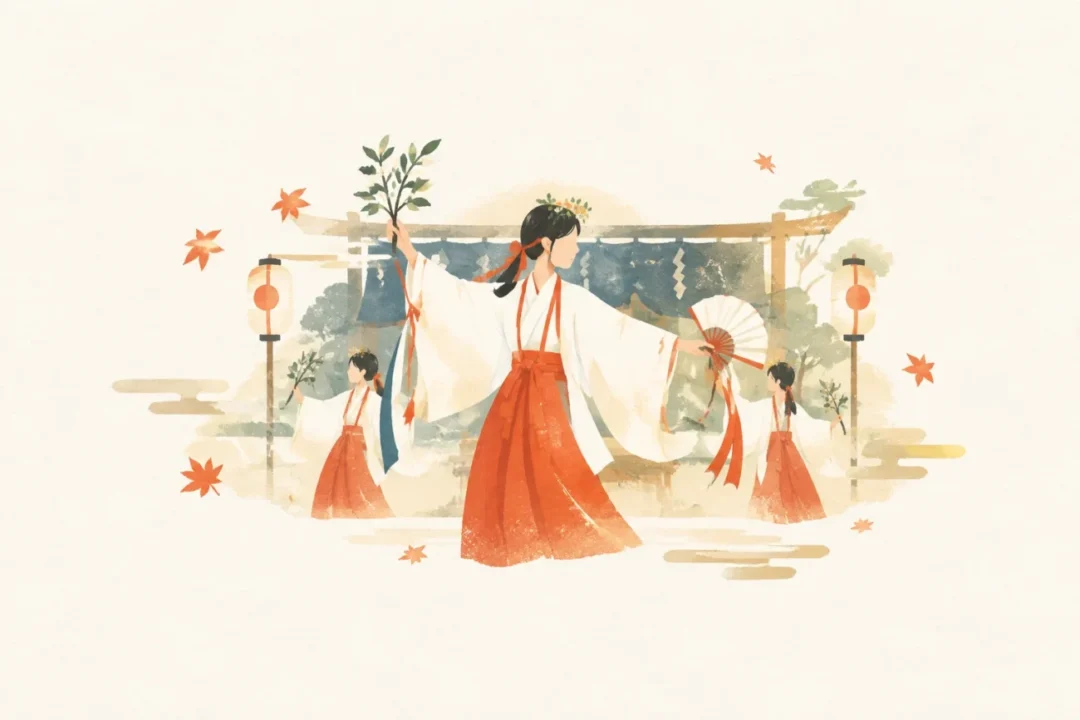
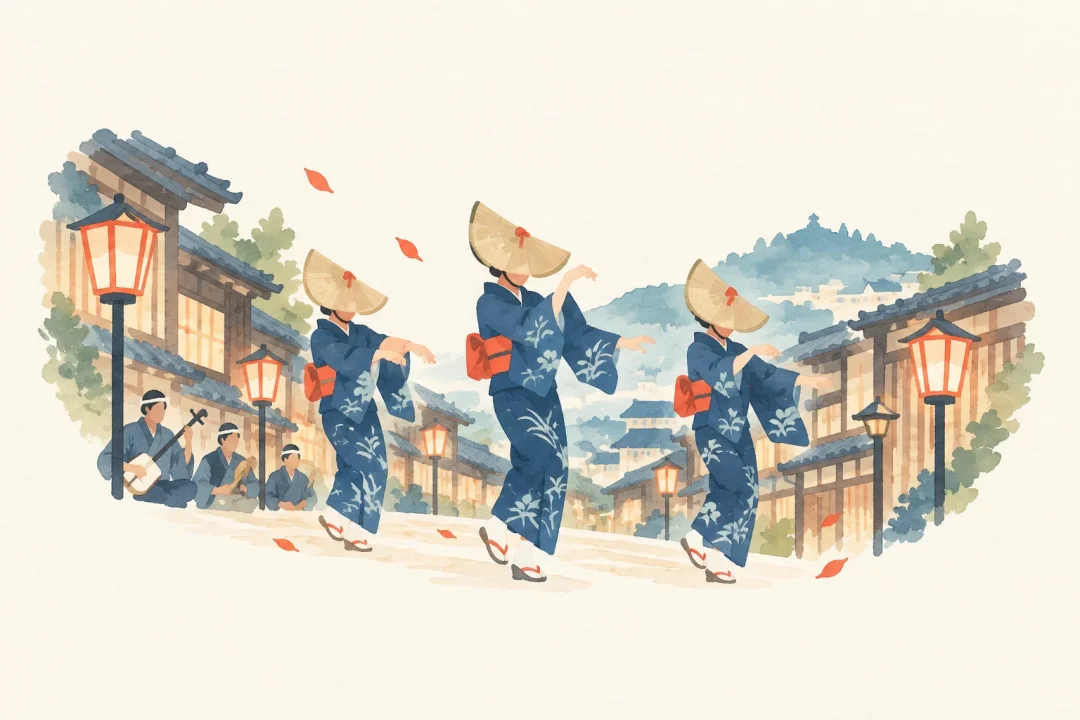
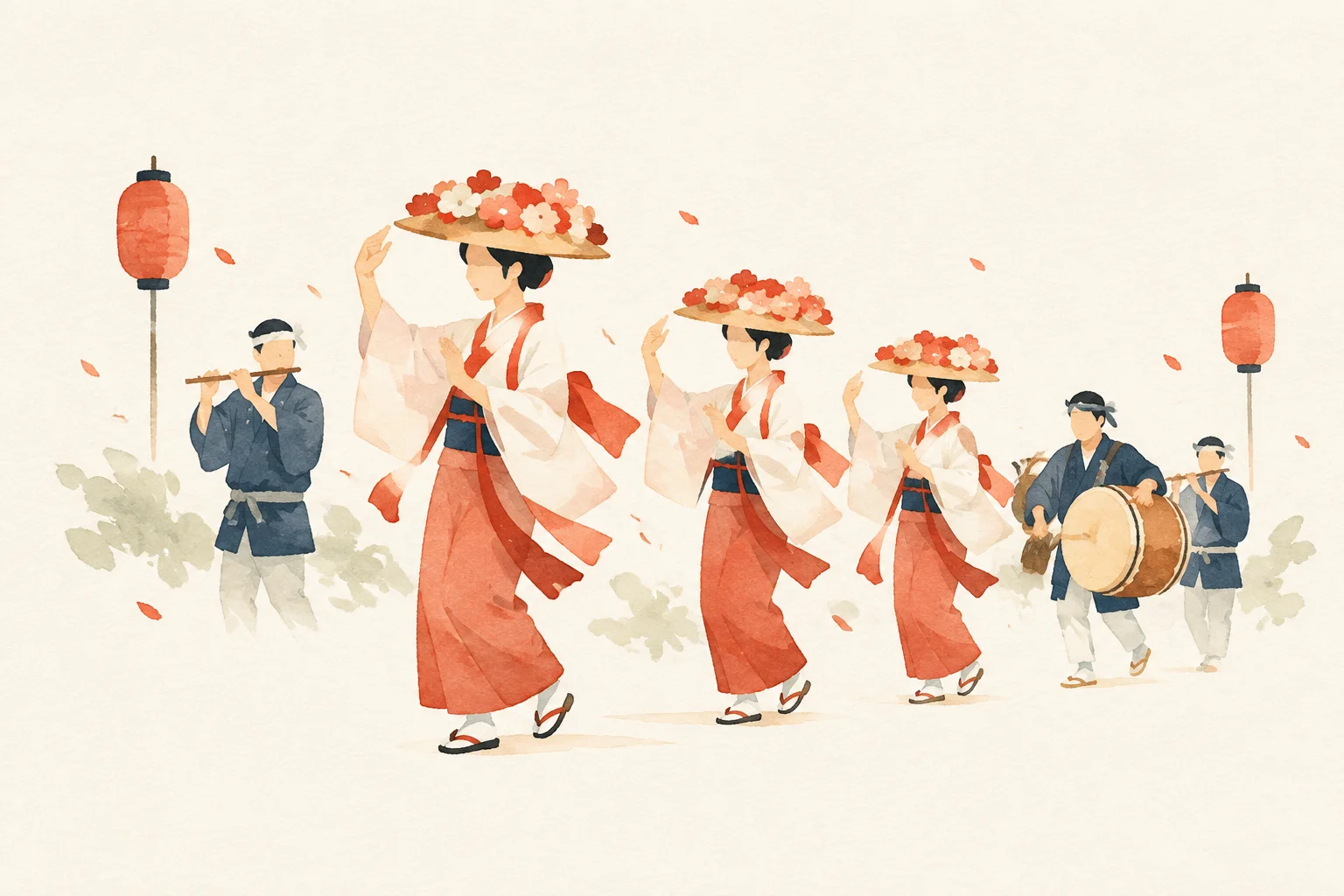
At Maie no Mitama Odori, dancers in flower hats and musicians proceed in a procession from Myōenji Temple to Fukujūin Temple. The nenbutsu wasan chants and the sounds of drums and flutes carry on the community’s reverence for its ancestors.
About Maie no Mitama Odori
Maie no Mitama Odori is a nenbutsu dance passed down at Fukujūin Temple and a local traditional event held during the old Bon season to honor the spirits of ancestors.
Dancers, musicians and others form a procession that visits and homes in the community.
The outfits, including and flower hats, come together with the nenbutsu chants and the sounds of drums and flutes, conveying the folk culture passed down in Maie.
Source: 真家みたまおどり | 【公式】茨城県 石岡市観光協会 / 国指定文化財等データベース
Festival highlights
A highlight is the “Kurikomi” procession, led by lanterns and followed by Midoshi, tiger skins, war fans, Saimara, binzasara, dancers, and musicians playing drums and flutes.
The dancers form a circle in flower hats and yukata, while Saimara and war fans dance in the opposite direction along the outer edge, crossing paths.
The three dances—the July Dance, the Ninotani Dance and the Sixteen-Beat Dance—and the nenbutsu wasan chants are also worth noting.
A summer memorial dance in Maie, brought together by flower hats and the rhythms of nenbutsu chants
What to expect
The event begins at Myōenji Temple, with the procession heading to Fukujūin Temple.
The tradition holds that the dance follows the “Kurikomi” procession at the dancing grounds, then continues with “Kuridashi,” visiting various places, and concludes with Kasao-same at Fukujūin Temple.
The dancers begin with the July Dance, holding fans, followed by the Ninotani Dance and the Sixteen-Beat Dance.
Location and access
- Venue and address
From the grounds of Myōenji Temple to the grounds of Fukujūin Temple.
The starting point is 1055 Maie, Ishioka City, and the endpoint is Fukujūin Temple (273 Maie, Ishioka City).
Address 1055 Maie, Ishioka City 315-0121 (Myōenji Temple) / 273 Maie, Ishioka City 315-0121 (Fukujūin Temple)
Dates and season
2026 event information (the listed dates have passed)
The 2026 event was scheduled for August 15 (Saturday). The procession was due to set off from the grounds of Myōenji Temple at 8 a.m. and arrive at the grounds of Fukujūin Temple at 11:40 a.m.
Times may vary depending on circumstances.
The event is listed as canceled in rainy weather, so check the weather and event status on the day before visiting.
Accommodation and hotels PR
Showing nearby accommodation.
Prices and availability are current at the time of retrieval. For multi-night stays, only the first night’s price is shown. Confirm the final price and directions to the venue with the booking provider. Select your dates again when using the area search link. Search area: within 3 km of Central Ibaraki Prefecture / Ishioka City (the search is not centered on the festival venue)
Tips for your visit
The times in the 2026 schedule are provisional and may vary depending on circumstances.
The event is listed as canceled in case of rain, so if the weather is unsettled, please check whether it is going ahead.
The procession travels from Myōenji Temple to Fukujūin Temple, so if you plan to follow the entire route rather than watch from one temple precinct, please take care not to obstruct people passing by or the dancing.
Nearby attractions
The temples associated with the event are Myōenji Temple and Fukujūin Temple.
Myōenji Temple is introduced as the starting point of Maie Mitama Odori, and Fukujūin Temple as the place where the dance concludes.
Fukujūin is described as a temple of the Buzan school of Shingon Buddhism, called Niosan, and Myōenji as a temple of the Honganji school of Jōdo Shinshū Buddhism. You can trace the relationship between the festival and the local temples.

常陸國總社宮
石岡市にある神社

茨城県フラワーパーク
茨城県石岡市にあるテーマパーク
Origins and History of Maie no Mitama Odori
One account of its origins says that around the Ōnin period, a traveling monk came from Hasedera Temple in Yamato Province to Fukujūin in this area and taught the dance to villagers.
According to the tourism association, the dance is said to have been brought from Hasedera Temple when Fukujūin was founded in the late Heian period, and is described as having begun as a ritual dance to honor ancestral spirits during the old Bon season.
In Meiji 44, a preservation society with more than 70 members was established, laying the foundation for passing on the tradition.
Official information
For the event date, procession route, venue address and arrangements in rainy weather, see the Ishioka City Tourism Association in Ibaraki Prefecture’s information on “Maie Mitama Odori.”
The Agency for Cultural Affairs’ Database of Nationally Designated Cultural Properties and Other Items also provides information on its cultural significance, structure and origins.
Maie no Mitama Odori at a Glance
Maie no Mitama Odori is a local event in which a procession travels from Myōenji Temple to Fukujūin Temple, with dancers in flower hats and musicians playing drums and flutes performing a nenbutsu dance.
Against the backdrop of honoring ancestral spirits during the old Bon season, the July Dance, the Ninotani Dance and the Sixteen-Beat Dance have been passed down through the generations.
It was listed as scheduled for August 15 (Saturday) in 2026.
The event is listed as canceled in rainy weather.
Japanese Festivals.jp Editorial Team
Celebrating local culture and helping you discover a side of Japan you never knew.
Article updated: 2026/10/19
Submit information or a correction Submit photos of this festival