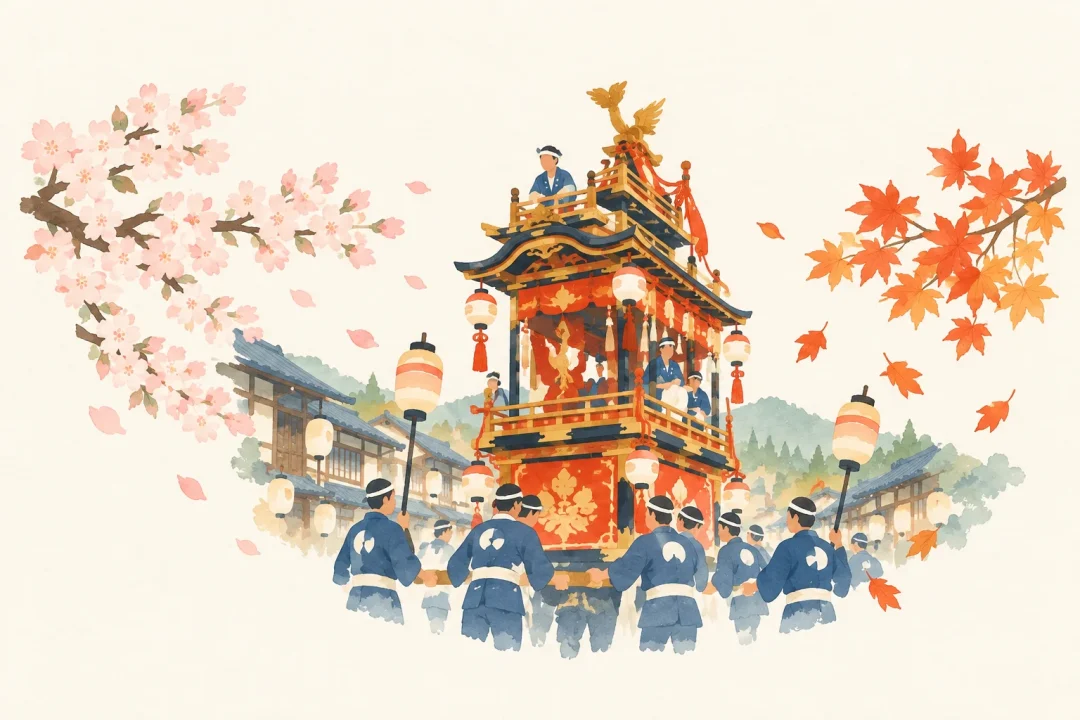
A Tenka Matsuri that reflects Edo traditions, with hōren palanquins and mikoshi traveling through central Tokyo
Kanda Matsuri
Festival information
EVENT INFORMATION- Season / frequency
- May / Once every 2 years
- Area
- Tokyo Metropolis・Chiyoda City and other areas(Within Tokyo: approx. 15 min–1 h by train (central areas))Prefecture-level estimate to a main station or airport, not the venue. Airport access, check-in and onward travel are extra; remote areas and islands can take much longer.
- Highlights and activities
- Wishes behind the festival
- Official website / social media
- Official website
- Last updated
- 2026/10/19
The hōren palanquin, , and floats of Kanda Myojin Shrine travel through central Tokyo, bringing the festival traditions passed down from Edo into the present.
About Kanda Matsuri
The Kanda Matsuri is one of the most representative festivals of Edo and Tokyo, centered on Kanda Myojin Shrine.
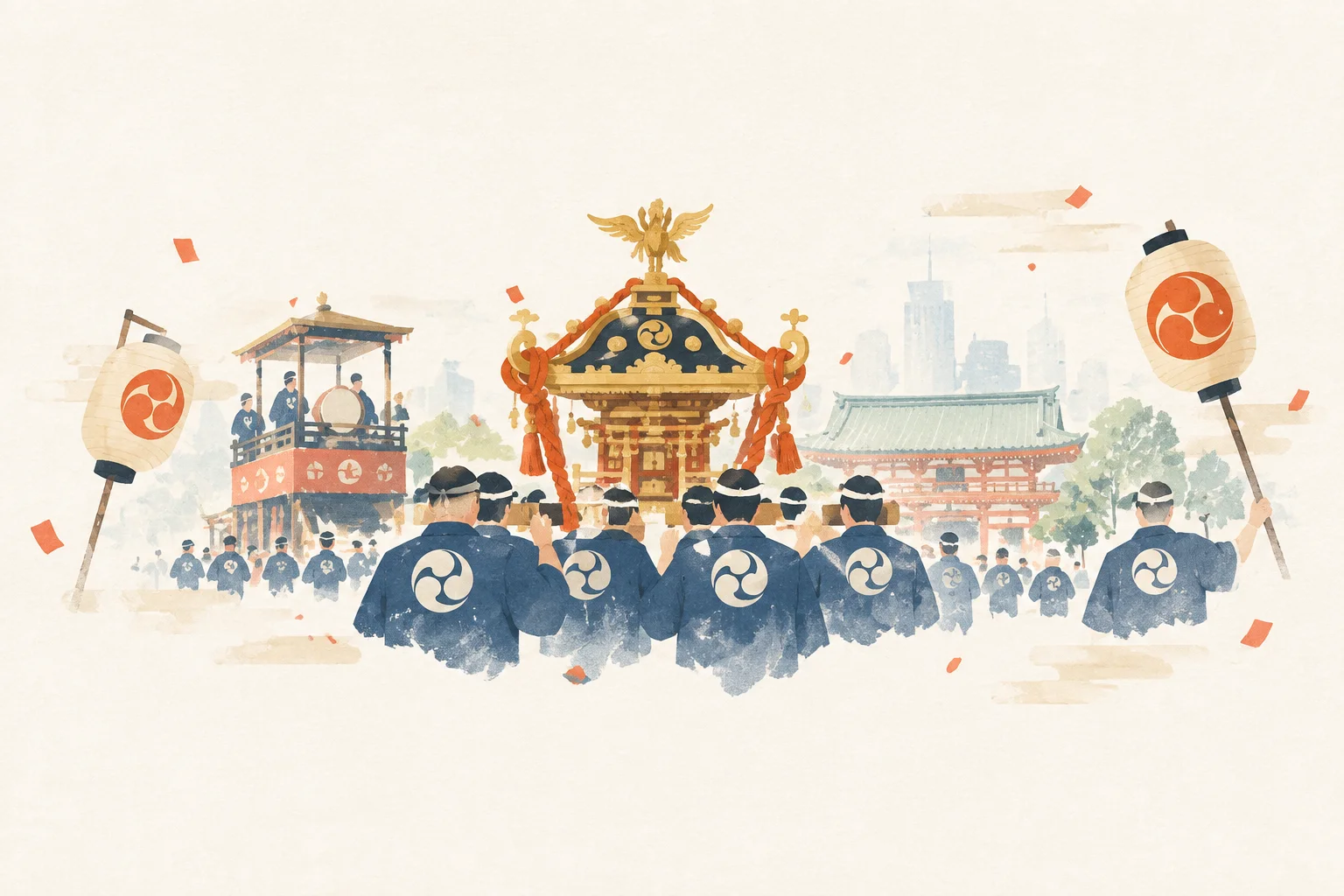
A procession centered on the hōren palanquin and mikoshi travels through the shrine's parishioner neighborhoods, purifying each area.
It has been passed down as a festival closely connected with central Tokyo neighborhoods such as Kanda, Nihonbashi, Otemachi-Marunouchi, and Akihabara.
Source: 神幸祭|神田祭特設サイト / 令和七年神田祭
Festival highlights
The main highlight is the grand Shinkosai procession, featuring a hōren palanquin, mikoshi, the Kanko dashi float, and the Shishigashira dashi float.
The procession travels through central Tokyo, growing in scale and splendor when the Tsuke Matsuri joins in the evening.
Enjoy a variety of attractions inspired by different eras and stories, including costumed processions, floats, and mounted warrior processions.
Source: 附け祭|神田祭特設サイト
A Tenka Matsuri that reflects Edo traditions, with hōren palanquins and mikoshi traveling through central Tokyo
What to expect
The Shinkosai begins early in the morning with the Okagi-watashi no Gi ceremony, followed by the Hatsu-ren-sai ceremony, which announces the procession's departure.
The hōren palanquin, mikoshi, and dashi floats then travel through the parishioner neighborhoods, with offerings of food, sacred cloth offerings, and the Hiru-mike ceremony held along the way.
When the procession returns to Kanda Myojin Shrine in the evening, the Chakurensai ceremony reports that the procession has returned safely and brings the day's Shinkosai to a close.
Location and access
- Venue and address
Centered on Kanda Myojin Shrine, the Shinkosai procession travels through central Tokyo, including Kanda, Nihonbashi, Otemachi-Marunouchi, and Akihabara.
- Train and bus
A 5-minute walk from the Hijiribashi Exit of JR Ochanomizu Station, and a 7-minute walk from the Electric Town Exit of JR Akihabara Station.
It is a 5-minute walk from Tokyo Metro's Ochanomizu, Shin-Ochanomizu, and Suehirocho stations, and a 7-minute walk from Tokyo Metro's Akihabara Station.
Take Toei Bus route Cha 51 to Kanda Myojin; the shrine is a 1-minute walk from the bus stop.
- By car
The Kanda-bashi exit on the Inner Circular Route of the Shuto Expressway and the Ueno exit on the Shuto Expressway Route 1 Ueno Line are listed.
- Parking
Kanda Myojin Shrine has a limited number of parking spaces for visitors.
Nearby parking facilities include Akihabara UDX Parking and Akihabara Daibiru Parking.
Source: アクセスマップ|神田祭特設サイト
Event venue 東京都千代田区ほか 神田明神を中心に
This map uses the venue name. Check the official guide for the event area and entrances.
Dates and season
- Season
May
- Frequency
Once every 2 years
Tips for your visit
The Shinkosai procession travels for many hours through several central Tokyo neighborhoods, so choosing in advance which procession or shrine rite you want to see can make your visit easier.
The procession schedule may change.
Along roadsides and within , follow staff instructions and watch from a place that does not obstruct the procession.
Nearby attractions
The historic site of Kanda Myojin Shrine and the Masakado-zuka mound, both closely associated with the festival, lie along the procession route through Otemachi.
The Shinkosai procession also passes along Chuo-dori in front of Nihonbashi Mitsukoshi Main Store and along Chuo-dori in Akihabara.
These locations are listed as places visited by the Shinkosai procession, and you can enjoy the surrounding area as you watch the procession.
Origins and History of Kanda Matsuri
The Kanda Matsuri came to be known as the “Tenka Matsuri” (“Festival of the Realm”) because its procession entered Edo Castle during the Edo period and was viewed by the Tokugawa shogun and his wife.
Since the Enpo period, the festival has traditionally been held in alternating years with the Sanno Festival, and it continues to take place once every 2 years.
As times changed, the festival shifted from being centered on dashi floats to mikoshi processions, and after the war its name was changed to Shinkosai.
Source: 神田祭の歴史|神田祭特設サイト
Official information
The Kanda Matsuri special website publishes information on the schedule, Shinkosai, Tsuke Matsuri, history, access, and more.
Source: 日程|神田祭特設サイト
Kanda Matsuri at a Glance
The Kanda Matsuri is a large-scale festival centered on the hōren palanquin and mikoshi of Kanda Myojin Shrine, which travel through the shrine's parishioner neighborhoods in central Tokyo.
The Shinkosai procession features dashi floats, lion heads, and the costumed procession of the Tsuke Matsuri, bringing together traditions dating back to Edo and the streetscapes of modern Tokyo.
Japanese Festivals.jp Editorial Team
Celebrating local culture and helping you discover a side of Japan you never knew.
Article updated: 2026/10/19
Submit information or a correction Submit photos of this festival