A seasonal occasion at Jonangu to eat the seven spring herbs and pray for health and protection from illness
Jonangu Nanakusa-gayu Day
Festival information
EVENT INFORMATION- Season / frequency
- Every year on February 11 / Every year
- Location
- Jonangu
- Area
- Kyoto Prefecture・Fushimi-ku, Kyoto(From Tokyo: approx. 2 h 10 min–2 h 40 min · bullet train)Prefecture-level estimate to a main station or airport, not the venue. Airport access, check-in and onward travel are extra; remote areas and islands can take much longer.
- Features
- Highlights and activities
- Wishes behind the festival
- Participation / viewing
- Open to public participation
- Participation fee
- Seven-herb rice porridge: 500 yen per bowl (price may change)
- Last updated
- 2026/11/13
An annual event at Jonangu where the seven spring herbs are offered before the kami, and people eat nanakusa-gayu and pray for health and protection from illness.
About Jonangu Nanakusa-gayu Day
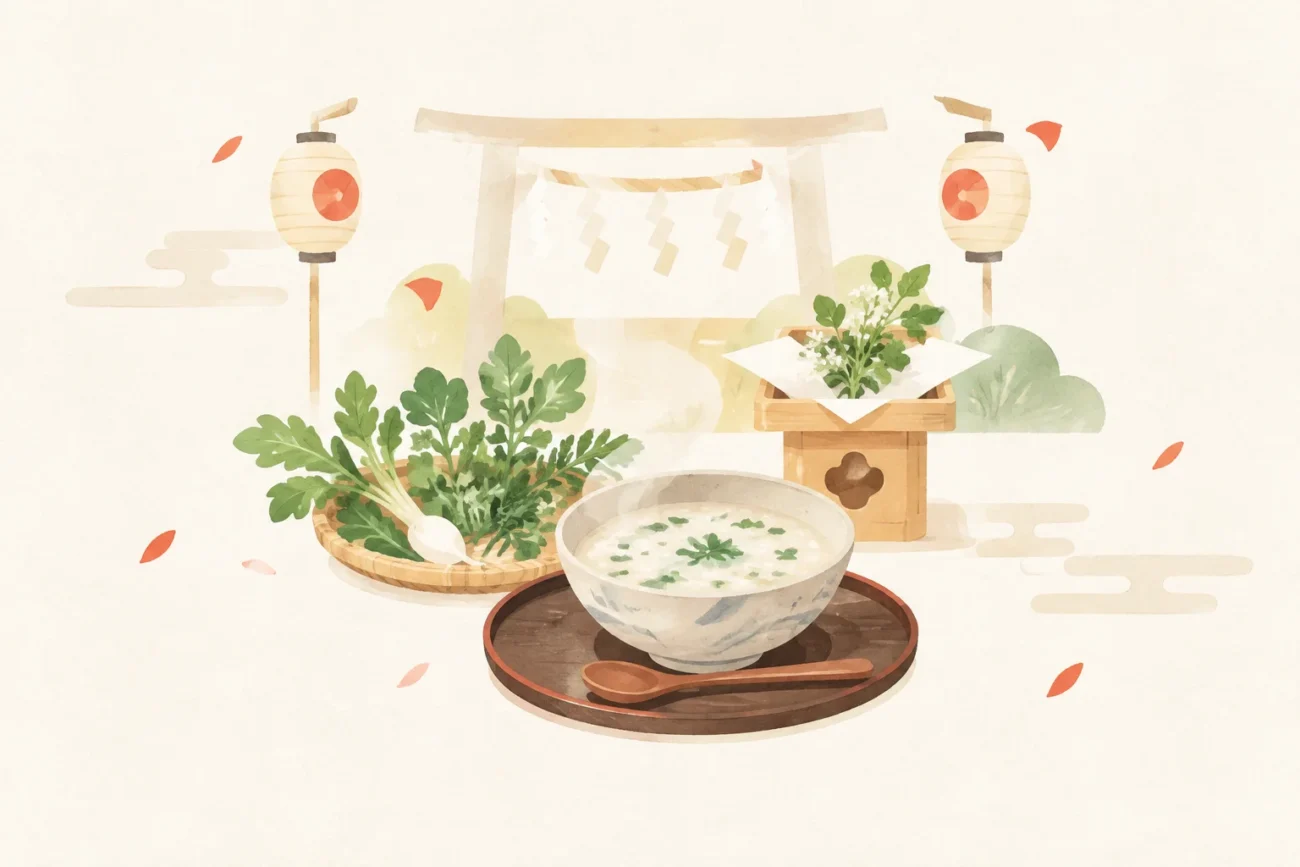
Jonangu’s Nanakusa-gayu Day is an event where the seven spring herbs are offered before the kami, and people pray for health and protection from illness while eating rice porridge made with the herbs.
Inspired by the Wakana chapters of The Tale of Genji, it preserves the traditional custom of eating the seven herbs.
Nanakusa-gayu is served to visitors, making this a Jonangu event that marks the change of seasons.
Festival highlights
The highlights are the seven spring herbs: seri, nazuna, suzuna, suzushiro, hotokenoza, gogyo, and hakobera.
The seven herbs, including those grown and harvested in the Jonangu Shrine Garden, are used in the nanakusa-gayu and also offered before the kami.
A distinctive feature of the event is that eating the herbs is associated with prayers for health, protection from illness, and longevity.
A seasonal occasion at Jonangu to eat the seven spring herbs and pray for health and protection from illness
What to expect
At the event, the traditional seven spring herbs are offered before the kami, and nanakusa-gayu is prepared.
Porridge made with herbs, including those grown and harvested in the Jonangu Shrine Garden, is served to visitors.
Eating the porridge and praying for health, protection from illness, and longevity connects the meal with prayer.
How to take part
Seven-herb rice porridge is served to general shrine visitors.
This event involves offering the seven herbs of spring before the kami and eating seven-herb rice porridge to pray for good health throughout the year.
Seven-herb rice porridge is listed at 500 yen per bowl, though the price may change.
Seven-herb rice porridge is served to general shrine visitors.
One bowl of seven-herb rice porridge costs 500 yen, though the price may change.
No information about reservations or applications is provided.
Location and access
- Venue and address
Jonangu Shrine, 7 Nakajima Tobarikyucho, Fushimi-ku, Kyoto City, Kyoto Prefecture
- Train and bus
Karasuma Subway Line: Get off at Takeda Station and walk 15 minutes / Kintetsu Kyoto Line: Get off at Takeda Station and walk 15 minutes / City bus: Get off at “Jonangu Higashiguchi” and walk 3 minutes / From the Hachijo Exit of Kyoto Station, take the Kyoto Rakunan Express (R'EX Bus) on weekdays and get off at “Jonangu-mae” (service is currently suspended on Saturdays, Sundays, and public holidays)
- Parking
100 regular cars, 10 buses
Address 7 Nakajima Tobarikyu-cho, Fushimi-ku, Kyoto, Kyoto 612-8459
Dates and season
- Season
Every year on February 11
- Frequency
Every year
Accommodation and hotels PR
Showing nearby accommodation.
Prices and availability are current at the time of retrieval. For multi-night stays, only the first night’s price is shown. Confirm the final price and directions to the venue with the booking provider. Select your dates again when using the area search link. Search area: within 3 km of Central Kyoto Prefecture / Fushimi-ku, Kyoto (the search is not centered on the festival venue)
Tips for your visit
Wheelchair access is available.
The parking lot and are level, and there is a ramp in front of the .
Assistance is required inside the Rakusuien Garden in the . A wheelchair-accessible toilet is also available.
Nearby attractions
Places near the venue include Kikusui Wakami, Kyoto Prefectural General Exhibition Hall (Kyoto Pulse Plaza), Anrakujuin Temple, and Fushimi Chikara no Yu.
According to the published information, Kikusui Wakami is 0.0 km in a straight line from Jonangu; Kyoto Prefectural General Exhibition Hall and Kyocera Gallery, among other places, are 0.6 km away; and Anrakujuin Temple and Fushimi Chikara no Yu are 0.8 km away.
These are some options to consider when visiting the surrounding area along with the event.

京都タワー
京都府京都市下京区にある塔

京都国立博物館
京都市にある国立博物館

京都国立近代美術館
京都市左京区岡崎にある美術館

京都国際マンガミュージアム
日本の京都府京都市中京区にある日本最大の漫画博物館

京都市美術館
京都市左京区岡崎にある美術館

京都府立植物園
京都市左京区にある植物園

京都鉄道博物館
京都府京都市下京区にある鉄道博物館

Fushimi Inari Taisha
京都市伏見区にある神社

元離宮二条城
京都市にある城郭及び元皇室関連施設

Yasaka Shrine
京都市東山区にある神社

円山公園
京都市にある公園

Kitano Tenmangu Shrine
京都市上京区にある神社
Origins and History of Jonangu Nanakusa-gayu Day
The custom of eating nanakusa-gayu is said to date back to the Heian period.
At Jonangu, it is held every year on February 11, close to the seventh day of the first month of the lunar calendar.
Inspired by the Wakana chapters of The Tale of Genji, it is passed down as an event where the seven spring herbs are offered before the kami and people pray for health, protection from illness, and longevity.
Official information
城南宮公式サイト:Jonangu official website
Jonangu Nanakusa-gayu Day at a Glance
Jonangu’s Nanakusa-gayu Day is an event where the seven spring herbs are offered before the kami, and people eat nanakusa-gayu and pray for health and protection from illness.
Some of the seven herbs used are grown and harvested in the Jonangu Shrine Garden, and they are also served to visitors.
This event connects the season with prayer through the tradition of eating nanakusa-gayu, passed down since the Heian period, and its association with the Wakana chapters of The Tale of Genji.
Sources and references
Japanese Festivals.jp Editorial Team
Celebrating local culture and helping you discover a side of Japan you never knew.
Article updated: 2026/11/13