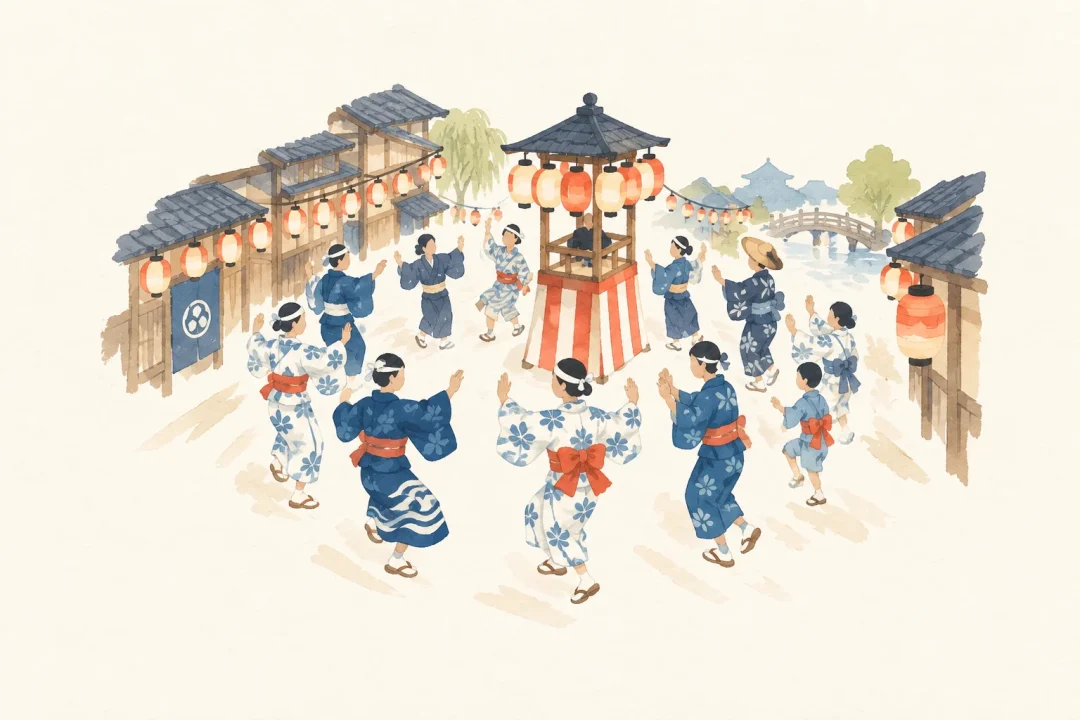
Nine performances dedicated for a rice-planting prayer, brought to life by taiko, flower hats, and a lion
The Rice Field Deity Festival at Iwa Shrine
Festival information
EVENT INFORMATION- Season / frequency
- April 5
- Location
- Iwa Shrine
- Area
- Gifu Prefecture・Tomika Town(From Tokyo: approx. 2 h–2 h 30 min · bullet train + connecting train)Prefecture-level estimate to a main station or airport, not the venue. Airport access, check-in and onward travel are extra; remote areas and islands can take much longer.
- Highlights and activities
- Wishes behind the festival
- Required number of participants
- 13 performers in the dedicated performance
- Last updated
- 2026/11/11
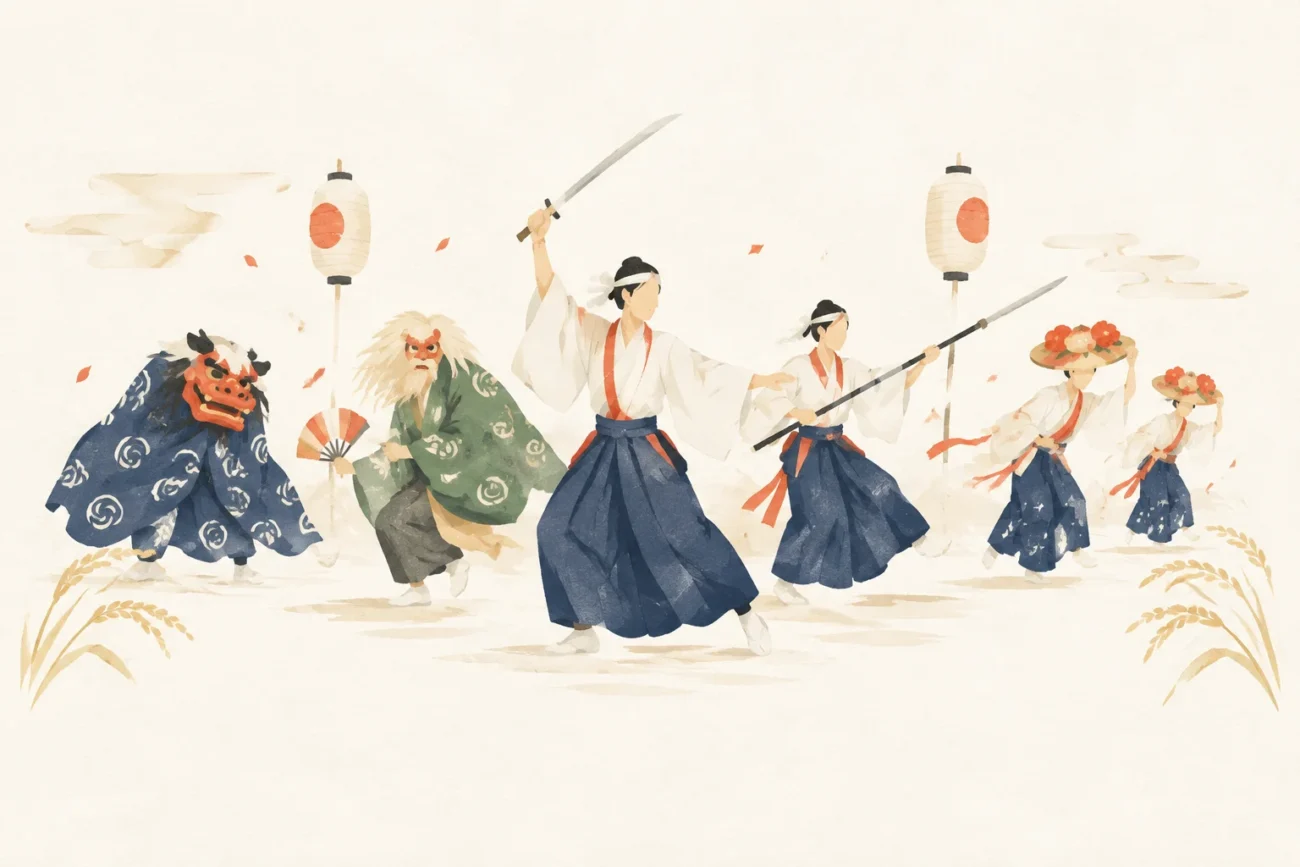
This performing art, centered on a rice-planting dance, has been handed down at Iwa Shrine in Kajita, Tomika. It consists of nine sections, including dances with swords and long swords, the Okina, the lion, and rice-planting songs performed with flower hats.
About The Rice Field Deity Festival at Iwa Shrine
The Rice Field Deity Festival at Iwa Shrine is a performing art dedicated at the shrine’s in Kajita, Tomika.
Centered on a rice-planting dance, the program features dances with swords, long swords, and staffs, followed in turn by the Okina, the lion, the Rice Field Deity Festival, and rice-planting songs.
Designated an Important Intangible Folk Cultural Property by Gifu Prefecture, it retains traces of Okina sarugaku and rice-field rituals.
Festival highlights
In the lion section, performers inside the cloth roll from side to side, portraying the lion as wild and unruly.
During the rice-planting songs, performers wearing flower hats scrape sasara in time with the and hand out pine sprigs, which represent rice seedlings, to spectators.
Another distinctive scene comes at the end of the dance, when performers walk among the spectators carrying sekihan.
Nine performances dedicated for a rice-planting prayer, brought to life by taiko, flower hats, and a lion
What to expect
At the preliminary festival, people gather at the home of the festival host in the Tochibora district to prepare sekihan, recite , and perform the Rice Field Deity Dance.
For the main festival, a procession goes from the host’s home to Iwa Shrine. After the shrine rites, the nine-section performance is dedicated on a stage made by laying three new woven mats in a triangular arrangement.
The ceremony concludes with the ritual offering removal and the ascending-deity rite.
How to take part
必要人数:奉納芸能の役者13名
Location and access
- Venue and address
Iwa Shrine, Kajita, Tomika, Kamo District
Address Kajita, Tomika, Kamo District
Dates and season
- Season
April 5
Accommodation and hotels PR
Showing nearby accommodation.
Prices and availability are current at the time of retrieval. For multi-night stays, only the first night’s price is shown. Confirm the final price and directions to the venue with the booking provider. Select your dates again when using the area search link. Search area: within 3 km of Central Gifu Prefecture / Tomika Town (the search is not centered on the festival venue)
Origins and History of The Rice Field Deity Festival at Iwa Shrine
According to tradition, the festival began when Sakanoue no Tamuramaro taught a rice-planting festival to pray for a good harvest.
A record from 1576 refers to “village ,” and the sasara festival implements bear ink inscriptions dated 1674, 1678, 1692, 1723, 1859, and other years.
After being suspended during the war, it was revived and dedicated in 1975, after 34 years.
Official information
The Cultural Heritage Division on the Gifu Prefecture official website provides information about the cultural property, while the Tomika Town official website outlines the festival’s roles and rites.
The Tomika Folk History Museum and the Cultural Properties Section of the Tomika Board of Education are listed as contacts for inquiries.
The Rice Field Deity Festival at Iwa Shrine at a Glance
The Rice Field Deity Festival at Iwa Shrine is a performing art dedicated to the rice-planting dance handed down in Kajita, Tomika.
The nine sections include dances with swords, long swords, and staffs, the Okina, the lion, the Rice Field Deity Festival, and rice-planting songs. Taiko, sasara, and flower hats also appear.
It has traditions associated with Sakanoue no Tamuramaro and old records, and is an Important Intangible Folk Cultural Property designated by Gifu Prefecture. The performance was revived and dedicated in 1975.
Sources and references
Japanese Festivals.jp Editorial Team
Celebrating local culture and helping you discover a side of Japan you never knew.
Article updated: 2026/11/11