The distinctive Hakkōji rice-forcing ritual, passed down by the yamabushi and gōriki
Hakkōji no Gōhan-shiki
Festival information
EVENT INFORMATION- Event status
- Cancelled
- Season / frequency
- Every year on January 3 / Every year
- Location
- Hakkōji Community Center (Local Culture Preservation and Training Hall) and Myōken
- Area
- Tochigi Prefecture・Kanuma City(From Tokyo: approx. 50 min–1 h · bullet train)Prefecture-level estimate to a main station or airport, not the venue. Airport access, check-in and onward travel are extra; remote areas and islands can take much longer.
- Highlights and activities
- Last updated
- 2026/10/24
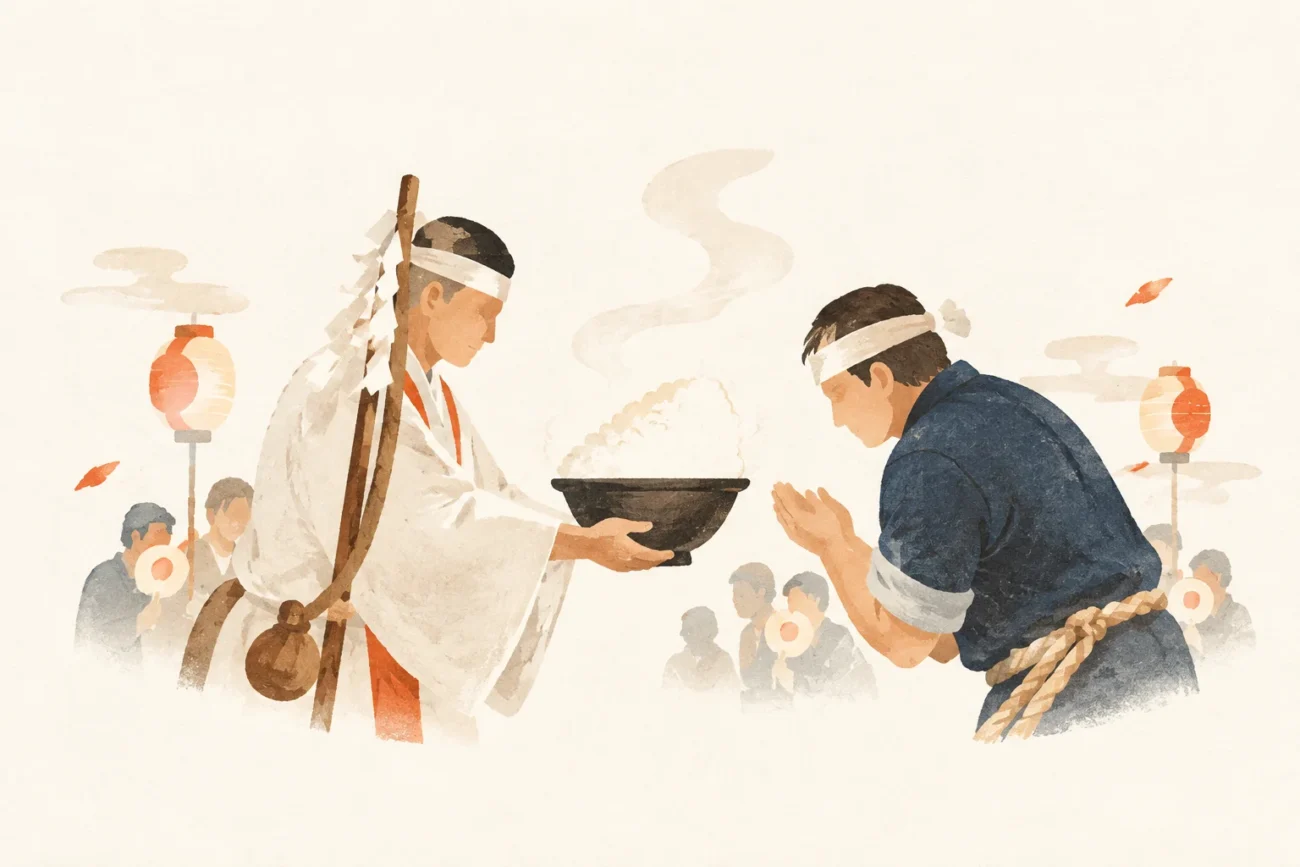
This folk event passed down in Hakkōji takes place at the turning point when festival duties at Myōken Jinja are handed over, with the yamabushi and gōriki appearing to make participants eat towering servings of rice.
Photo credits and terms of use
Photographer: Shikanuma File:発光路の強飯式.jpg / Wikimedia Commons / CC BY-SA 4.0 Own work by the contributorDisplay size only adjusted.May differ from the event currently featured.Photo credits and terms of use
Photographer: Shikanuma File:発光路の強飯式6.jpg / Wikimedia Commons / CC BY-SA 4.0 Own work by the contributorDisplay size only adjusted.May differ from the event currently featured.Photo credits and terms of use
Photographer: Shikanuma File:発光路の強飯式2.jpg / Wikimedia Commons / CC BY-SA 4.0 Own work by the contributorDisplay size only adjusted.May differ from the event currently featured.About Hakkōji no Gōhan-shiki
Hakkōji no Gōhan-shiki is a gōriki event held after festival duties at Myōken Jinja, the tutelary shrine of Hakkōji, have been handed over, and is one of the gōhan events.
The name is said to derive from a custom of entertaining deities with a feast and forcing the recipients to consume large quantities of rice, potatoes, sake, and other offerings.
Local , dressed as yamabushi and gōriki, perform the ceremony, linking the handover of festival duties with the life of the community.
It is designated a National Important Intangible Folk Cultural Property.
Source: 発光路の強飯式 | 鹿沼市 公式ホームページ
Festival highlights
The highlight is the scene where the yamabushi and gōriki appear after the has been struck three times, and the gōriki delivers a speech.
The gōriki blesses the new tayū and others by pressing the back of their necks with a “seme-bō” (pressure stick). The speeches also include humorous lines that seem at odds with the gōriki’s expression.
The distinctive ritual of forcing participants to eat towering servings of rice, and the laughter that arises amid solemn rites, are hallmarks of this event.
Source: 発光路の強飯式 - 鹿沼市観光情報サイト「鹿沼日和」
The distinctive Hakkōji rice-forcing ritual, passed down by the yamabushi and gōriki
What to expect
After the festival at Myōken Jinja, children known as Yobitsukai visit each household from the duty host’s home and ask everyone to take their seats there.
Once the participants are seated, the handover ceremony takes place with the children joining in, and the ritual is acknowledged by sharing and drinking sake.
Then the taiko sounds three times, and the Gōhan-shiki, led by the yamabushi and gōriki, begins.
The gōriki delivers a speech and blesses the new tayū and others with a seme-bō.
Location and access
- Venue and address
Hakkōji Community Center (Local Culture Preservation and Training Hall), 740 Kamikasuo, Kanuma City / Myōken Jinja, 915 Kamikasuo, Kanuma City
- Train and bus
Get off at “Kamiskasuo Hakkōji” or “Haryūguchi” on the Reebus Kamikasuo Yamanokami Line. ※ Public buses will not run at all on January 3, as it is a non-service day.
- By car
About 45 minutes toward Kasuo Pass and Ashio from the Tōhoku Expressway Tochigi IC / about 50 minutes toward Kasuo Pass and Ashio from the Kanuma IC
Address Hakkōji Community Center: 740 Kamikasuo, Kanuma City / Myōken Jinja: 915 Kamikasuo, Kanuma City
Dates and season
According to the notice for January 3, 2026, only the religious rites at Myōken Jinja will be held; the Gōhan-shiki is canceled.
案内された時間は、神事が9:00~10:00、強飯式が10:00~11:30です。
Accommodation and hotels PR
Showing nearby accommodation.
Prices and availability are current at the time of retrieval. For multi-night stays, only the first night’s price is shown. Confirm the final price and directions to the venue with the booking provider. Select your dates again when using the area search link. Search area: within 3 km of Central Tochigi Prefecture / Kanuma City (the search is not centered on the festival venue)
Tips for your visit
Public buses will not be running on January 3, so check the service conditions if you plan to travel by bus.
The event is held at two venues: Hakkōji Community Center and Myōken Jinja.
Nearby attractions

川上澄生美術館
栃木県鹿沼市にある美術館初代館長小林利延の研究者としての経歴から、ユニークな発想で、小規模ながら、川上澄生研究の中心となった。
Origins and History of Hakkōji no Gōhan-shiki
According to local oral tradition, Hakkōji no Gōhan-shiki has been held since the Enbun era (1356–1361).
It is described as a festival that preserves an old custom derived from the Nikko-seme tradition, with the yamabushi and gōriki retaining traces of Nikko Shugendo.
It was designated a National Important Intangible Folk Cultural Property in Heisei 8 (1996) December 20.
Official information
Kanuma City Official Website, “Hakkōji no Gōhan-shiki”
Hakkōji no Gōhan-shiki at a Glance
Hakkōji no Gōhan-shiki is a folk event that preserves traces of Nikko Shugendo and takes place at the turning point when festival duties at Myōken Jinja are handed over.
The proceedings move from the work of the children known as Yobitsukai, through the handover ceremony and three beats of the taiko, to the speeches of the yamabushi and gōriki, culminating in the distinctive ritual of forcing participants to eat towering servings of rice.
Local oral tradition says it has continued since the Enbun era, and it is designated a National Important Intangible Folk Cultural Property.
On January 3, 2026, only the religious rites will be held; the Gōhan-shiki has been canceled.
Japanese Festivals.jp Editorial Team
Celebrating local culture and helping you discover a side of Japan you never knew.
Article updated: 2026/10/24
Submit information or a correction Submit photos of this festival