Hikinuma’s mochi-pounding tradition, passed down through songs and the sound of mallets
Hikinuma Mochitsuki
Festival information
EVENT INFORMATION- Location
- Hikinuma district
- Area
- Tochigi Prefecture・Nasushiobara City(From Tokyo: approx. 50 min–1 h · bullet train)Prefecture-level estimate to a main station or airport, not the venue. Airport access, check-in and onward travel are extra; remote areas and islands can take much longer.
- Required number of participants
- 6 to 9 people
- Last updated
- 2026/11/21
This mochi-pounding tradition, accompanied by distinctive techniques and songs, has been passed down for generations in the Hikinuma district of Nasushiobara City. From 6 to 9 people pound the mochi, following a distinctive sequence that includes konedori.
About Hikinuma Mochitsuki
Hikinuma Mochitsuki is a mochi-pounding tradition passed down for generations in the Hikinuma district of Nasushiobara City.
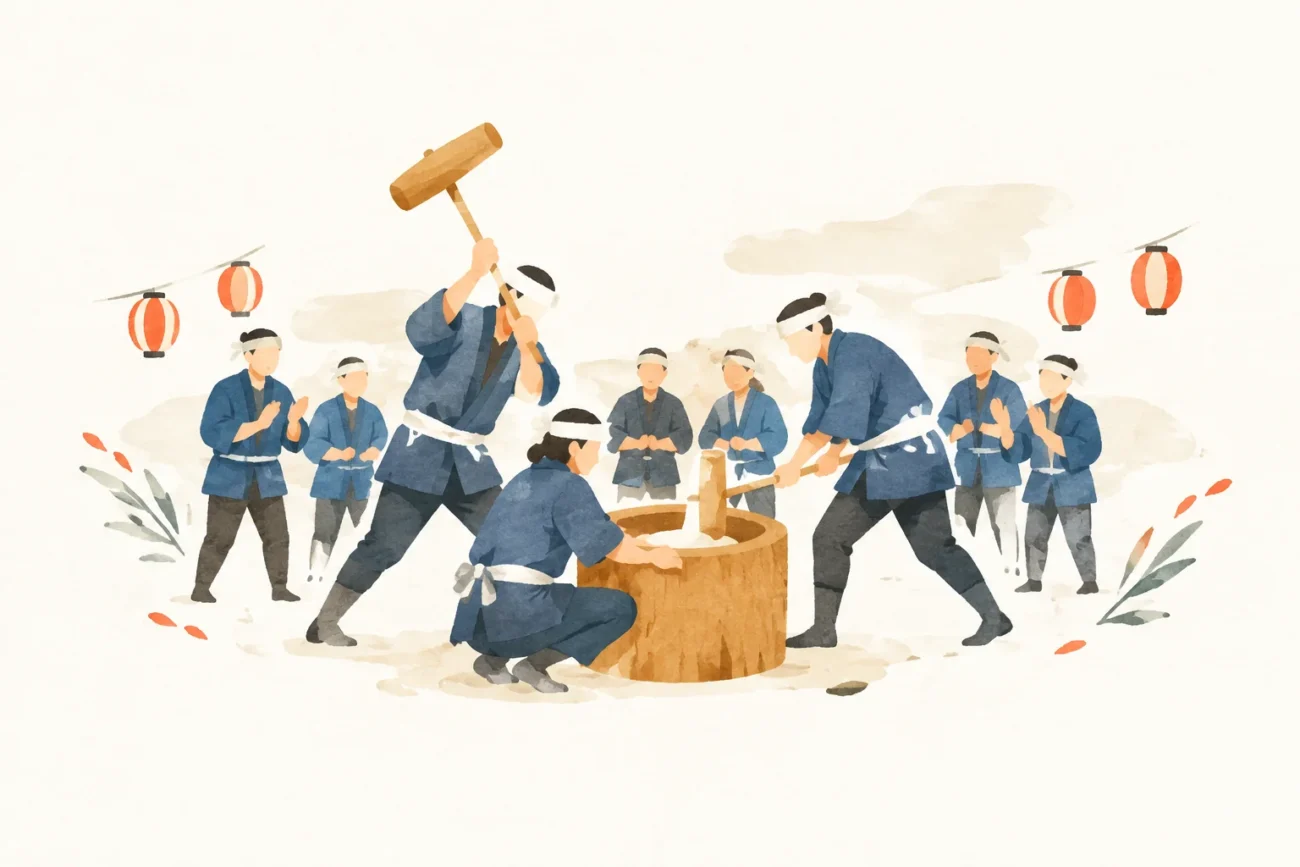
From 6 to 9 people pound the mochi, incorporating “konedori,” a technique that requires skill.
In the past, it was performed at celebrations such as formal congratulatory occasions, kōjigoto gatherings, thatched-roof replacements, and house-raising ceremonies.
Today, it is carried on by a preservation association formed to pass the techniques on to future generations.
Festival highlights
Highlights include the coordinated movements of several people pounding mochi together and the “konedori” performed along the way.
The process begins with “neri,” when steamed glutinous rice is placed in a mortar, followed by “tsuki,” when the mallet is swung to a triple beat, and “agetsuki,” when the mochi is pounded to a duple beat with konedori interspersed.
Mochi-pounding is accompanied by “Mochitsuki-uta” songs, widely passed down in the Nasu region.
Hikinuma’s mochi-pounding tradition, passed down through songs and the sound of mallets
What to expect
The process begins by steaming glutinous rice that has been soaked in water since the previous night. The steamed rice is placed in a mortar and kneaded with mallets in “neri,” followed by “tsuki,” when it is pounded to a triple beat.
During “tsuki,” mochi-pounding songs are sung, and konedori is performed while the people pounding take occasional breaks.
It concludes with “agetsuki,” when the mochi is pounded to a duple beat with konedori interspersed.
How to take part
必要人数:6人から9人
Location and access
Address Hikinuma district
Accommodation and hotels PR
Showing nearby accommodation.
Prices and availability are current at the time of retrieval. For multi-night stays, only the first night’s price is shown. Confirm the final price and directions to the venue with the booking provider. Select your dates again when using the area search link. Search area: within 3 km of Central Tochigi Prefecture / Nasushiobara City (the search is not centered on the festival venue)
Nearby attractions

乃木神社
栃木県那須塩原市にある神社
Origins and History of Hikinuma Mochitsuki
Hikinuma Mochitsuki is a tradition passed down for generations in the Hikinuma district.
In the past, it was performed as a celebration for formal congratulatory occasions, kōjigoto gatherings, thatched-roof replacements, and house-raising ceremonies.
In Heisei 6 (1994), a preservation association was formed to pass the techniques on to future generations. In Heisei 12 (2000)July 17, it was designated an Intangible Folk Cultural Property of Nasushiobara City.
Official information
Nasushiobara City Official Website: “Hikinuma Mochitsuki”
Hikinuma Mochitsuki at a Glance
Hikinuma Mochitsuki is an Intangible Folk Cultural Property passed down in the Hikinuma district of Nasushiobara City.
From 6 to 9 people pound the mochi, proceeding through the stages of neri, tsuki, konedori, and agetsuki.
Mochitsuki-uta songs are also sung, and the techniques once practiced at celebrations are now passed down by a preservation association formed in Heisei 6 (1994).
Sources and references
Japanese Festivals.jp Editorial Team
Celebrating local culture and helping you discover a side of Japan you never knew.
Article updated: 2026/11/21