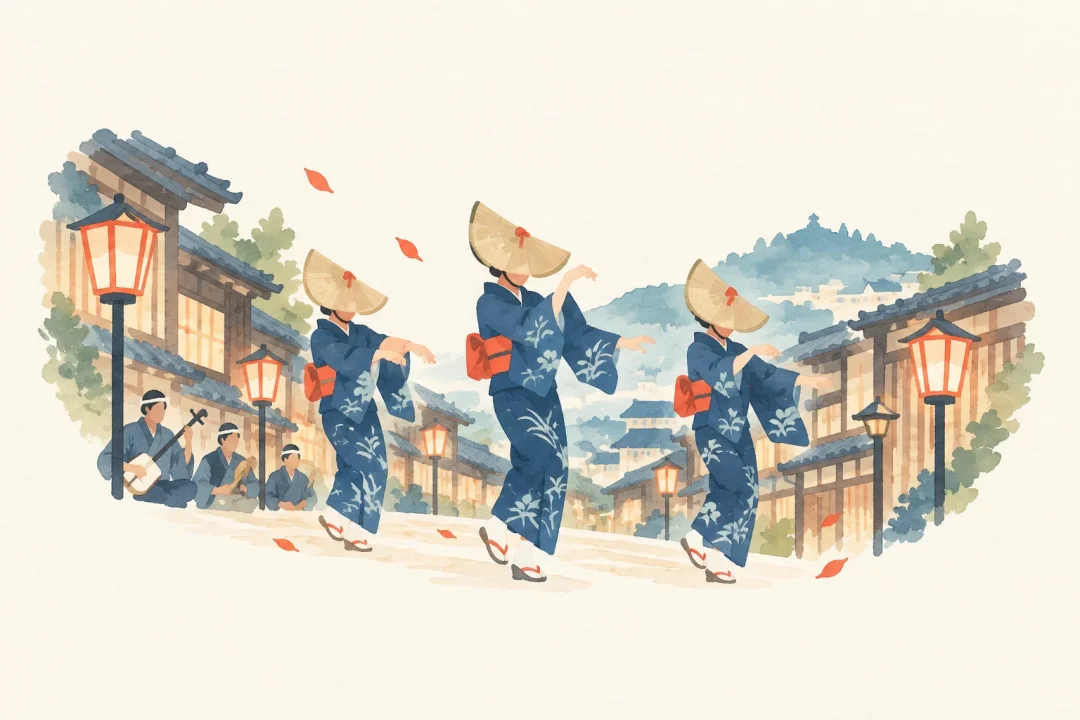
Hand dances and bonden dances, with a clown enlivening Hagiwara’s Bon tradition
Hagiwara Bon Odori
Festival information
EVENT INFORMATION- Season / frequency
- on August 14 in recent years / 1 time a year (in recent years, on August 14)
- Location
- Hagiwara
- Area
- Ehime Prefecture・Matsuyama City(From Tokyo: approx. 1 h 25 min–1 h 45 min · flight time only)Prefecture-level estimate to a main station or airport, not the venue. Airport access, check-in and onward travel are extra; remote areas and islands can take much longer.
- Highlights and activities
- Wishes behind the festival
- Last updated
- 2026/11/13
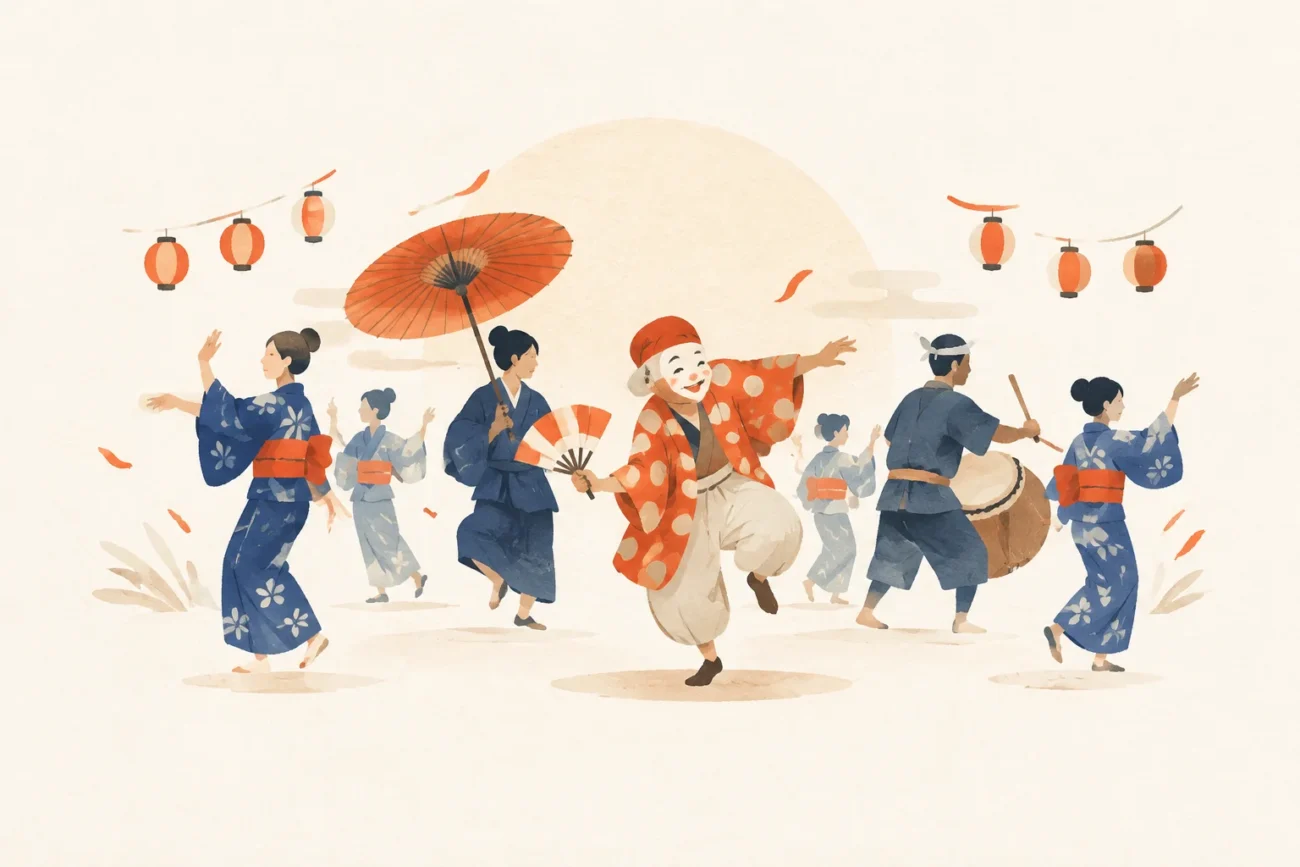
This tradition from Hagiwara, Matsuyama City, is rooted in the wish to comfort the spirits of the venerable Joren and the newly deceased. Its hand dances and bonden dances have been passed down through generations. Distinctive features include songs led with paper umbrellas and drums, and a clown who appears during the dances.
About Hagiwara Bon Odori
The Hagiwara Bon Odori began as a way to honor the virtues of the venerable Joren and comfort the spirits of Kokuzo Bosatsu, the Six Jizo, and the newly deceased.
It is now passed down by the Hagiwara Bon Odori Preservation Society and is designated a Matsuyama City Intangible Folk Cultural Property.
It used to be held 5 times a year, but in recent years it has taken place during Obon on August 14.
Festival highlights
The highlight is the set of 5 dances, made up of hand dances and bonden dances.
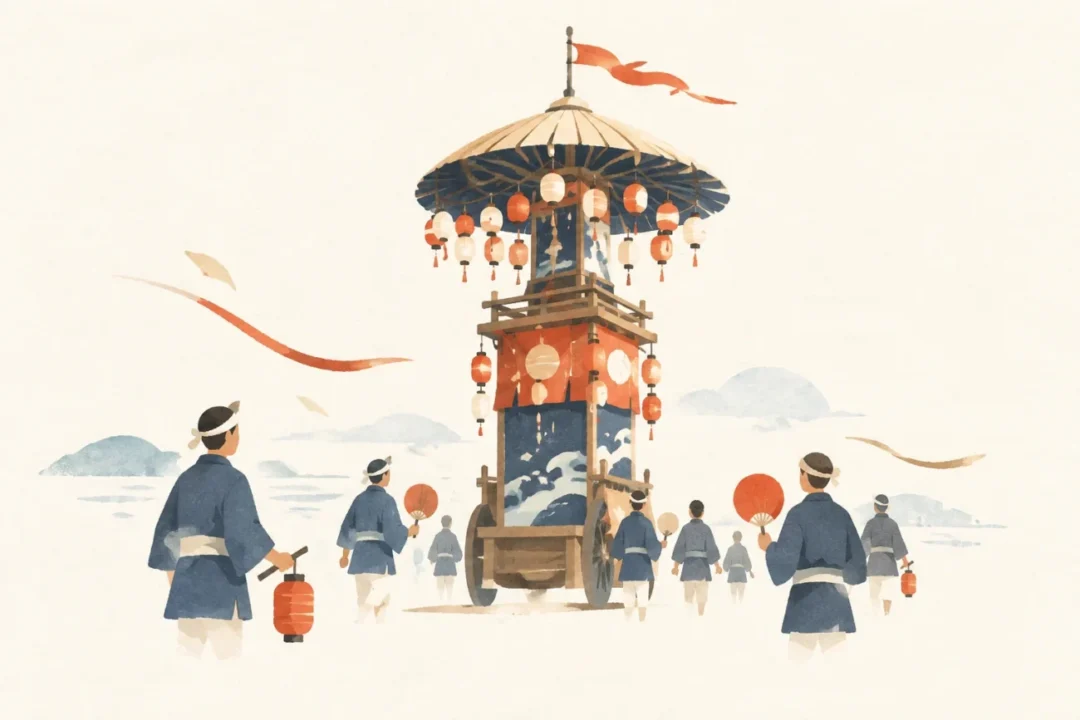
Singers use paper umbrellas, taiko drums, and a raised platform, and pass down songs such as Sukugi Monjin, Awa Kaizoku, and Yamazaki Sanza.
Another distinctive feature is the clown who appears during the dances and performs amusing gestures. The dances have a different character from those of Ajima’s Bon Odori.
Hand dances and bonden dances, with a clown enlivening Hagiwara’s Bon tradition
What to expect
During the event, singers lead the songs using paper umbrellas, taiko drums, and a raised platform. Five dances are performed: hand dances and bonden dances.
The songs include pieces such as “Sukugi Monjin,” “Awa Kaizoku,” and “Yamazaki Sanza.”
A clown appears during the dances, adding amusing gestures.
Location and access
- Venue and address
Hagiwara, Matsuyama City
Address Hagiwara, Matsuyama City
Dates and season
- Season
Obon on August 14 in recent years
- Frequency
1 time a year (in recent years, on August 14)
Accommodation and hotels PR
Showing nearby accommodation.
Prices and availability are current at the time of retrieval. For multi-night stays, only the first night’s price is shown. Confirm the final price and directions to the venue with the booking provider. Select your dates again when using the area search link. Search area: within 3 km of Central Ehime Prefecture / Matsuyama City (the search is not centered on the festival venue)
Nearby attractions

セキ美術館
愛媛県の博物館・美術館のスポットです。

伊丹十三記念館
愛媛県松山市にある博物館

伊佐爾波神社
松山市にある神社

坂の上の雲ミュージアム
愛媛県松山市にある博物館

城山公園
愛媛県松山市にある公園

子規堂
愛媛県松山市にある、正岡子規にちなむ観光施設
写真:Iyo at Japanese Wikipedia / CC BY-SA 3.0
Photo source ·
愛媛大学ミュージアム
愛媛県の博物館・美術館のスポットです。

愛媛県美術館
愛媛県松山市にある美術館

愛媛縣護國神社
愛媛県松山市にある護国神社

松山城
愛媛県松山市にある城

松山城二之丸史跡庭園
愛媛県松山市の史跡庭園

松山市立子規記念博物館
俳人正岡子規を記念する愛媛県松山市立の博物館
Origins and History of Hagiwara Bon Odori
The Hagiwara Bon Odori began as a way to honor the virtues of the venerable Joren and comfort the spirits of Kokuzo Bosatsu, the Six Jizo, and the newly deceased.
It used to be held 5 times a year at the ujigami shrine, the hermitage temple, Kami Jizo, and Kojin, but in recent years it has taken place during Obon on August 14.
In Showa 51 (1976) on September 8, it was designated a Matsuyama City Intangible Folk Cultural Property.
Official information
Matsuyama City Official Website, “Hagiwara Bon Odori”
Hagiwara Bon Odori at a Glance
The Hagiwara Bon Odori began as a way to comfort the spirits of the dead. It is a Matsuyama City-designated Intangible Folk Cultural Property passed down by the Hagiwara Bon Odori Preservation Society.
Its distinctive features include 5 hand and bonden dances, songs led with paper umbrellas and taiko drums, and a clown who appears during the dances.
An event once held 5 times a year now takes place during Obon on August 14 in recent years.
Sources and references
Japanese Festivals.jp Editorial Team
Celebrating local culture and helping you discover a side of Japan you never knew.
Article updated: 2026/11/13