A horseback archery tradition carrying on Okawa’s prayers
Furomiya Annual Grand Festival Yabusame
Festival information
EVENT INFORMATION- Season / frequency
- Every year February 9–11 / Every year
- Location
- Shimomiya shrine approach in Okawa Park
- Area
- Fukuoka Prefecture・Okawa City(From Tokyo: approx. 1 h 50 min–2 h 10 min · flight time only)Prefecture-level estimate to a main station or airport, not the venue. Airport access, check-in and onward travel are extra; remote areas and islands can take much longer.
- Highlights and activities
- Wishes behind the festival
- Last updated
- 2026/11/18
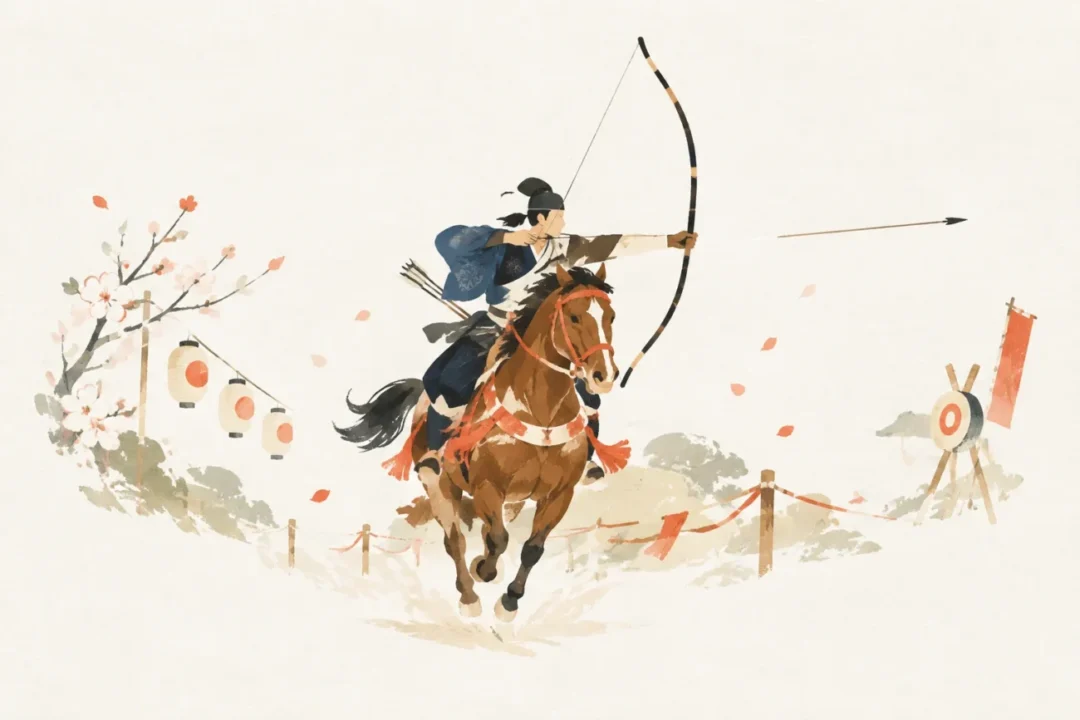
has been passed down as part of the Furomiya Annual Grand Festival. This traditional event brings prayer and skill together as archers shoot at wooden targets from horseback and ride on.
About Furomiya Annual Grand Festival Yabusame
Yabusame, held as part of the Furomiya Annual Grand Festival, is a traditional event of Furomiya, which has drawn deep devotion, especially in the Chikugo region, since medieval times.
Through the skill of shooting at a target with bow and arrow from horseback, people pray for a bountiful harvest, lasting success in battle, and freedom from illness and misfortune.
It is also listed in Okawa City’s cultural properties register and has been passed down both as a local festival and as a cultural property.
Festival highlights
Yabusame takes place on the approach to Shimomiya, located in Okawa Park.
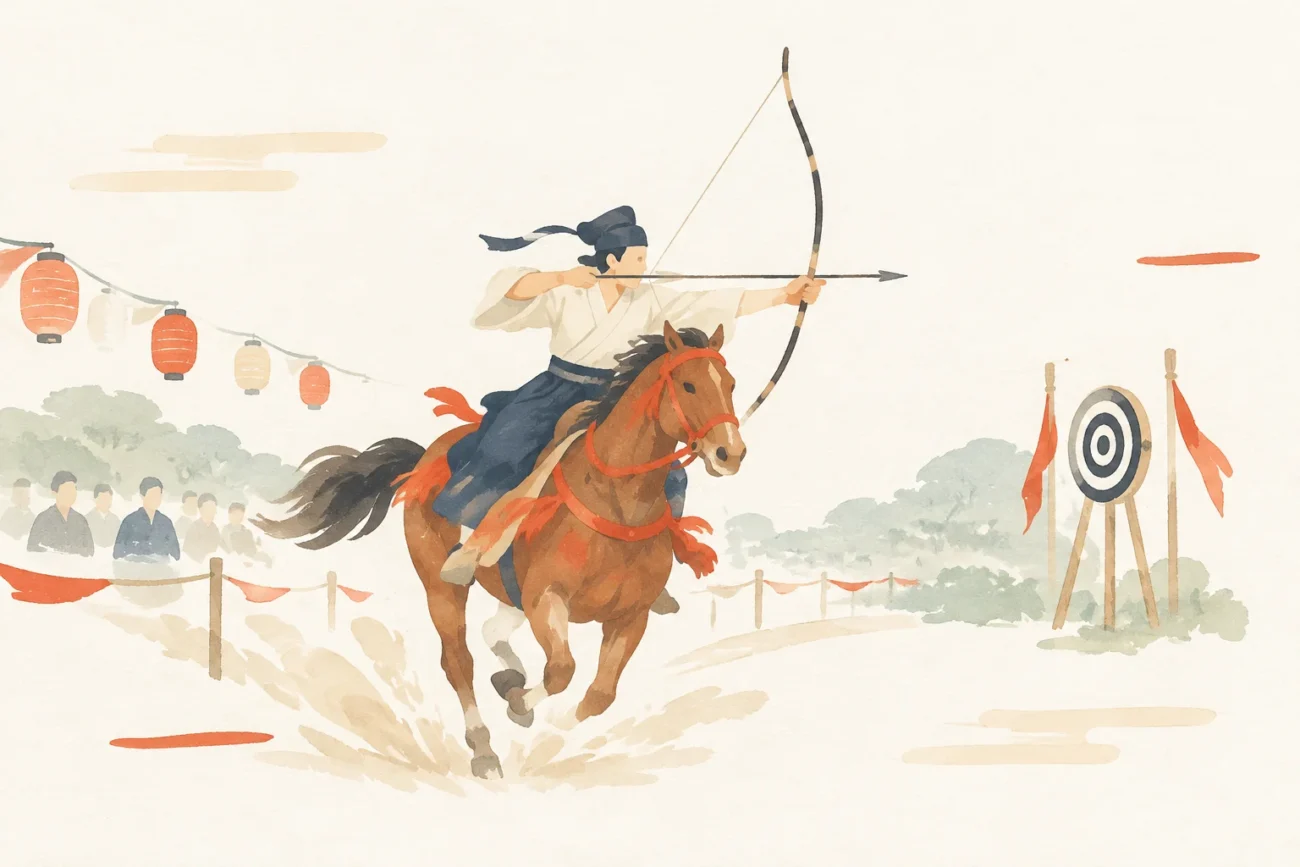
At the starting point, the rider stops the horse and uses a bamboo bow and arrows from horseback to aim at a wooden target fixed to the end of a bamboo pole held up by a person.
Sources say that after shooting, the riders gallop along a straight course of about 50 meters while throwing five-colored paper ornaments, and do this 3 times each.
A horseback archery tradition carrying on Okawa’s prayers
What to expect
Yabusame is offered in conjunction with Furomiya’s grand festival.
In yabusame, the mounted archers wear hats decorated with five-colored paper ornaments, suō robes, and tabi socks, and shoot arrows at wooden targets.
After shooting, they ride back and forth along a straight course of about 50 meters, throwing the paper ornaments as they go. They perform this sequence—combining the act of aiming at a target with riding—3 times each.
Location and access
- Venue
Shimomiya shrine approach in Okawa Park
Event venue 福岡県大川市 大川公園内の下の宮参道
This map uses the venue name. Check the official guide for the event area and entrances.
Dates and season
- Season
Every year February 9–11
- Frequency
Every year
Accommodation and hotels PR
Showing nearby accommodation.
Prices and availability are current at the time of retrieval. For multi-night stays, only the first night’s price is shown. Confirm the final price and directions to the venue with the booking provider. Select your dates again when using the area search link. Search area: within 3 km of Central Fukuoka Prefecture / Okawa City (the search is not centered on the festival venue)
Origins and History of Furomiya Annual Grand Festival Yabusame
Yabusame is said to have been held since medieval times as part of Furomiya’s grand festival in February.
However, it is unclear whether the festival was held from the time the shrine was founded; sources state that it took its current form in 1669 (Kanbun 9).
Yabusame was registered as an Okawa City-designated intangible cultural property in 2000 (Heisei 12)March 30.
Official information
Okawa City’s cultural properties register lists Furomiya Annual Grand Festival Yabusame as a cultural property of Sakemi.
Yabusame is described as an event registered as an Okawa City-designated intangible cultural property.
Furomiya Annual Grand Festival Yabusame at a Glance
Furomiya Annual Grand Festival Yabusame is a traditional event offering prayers for a bountiful harvest, lasting success in battle, and freedom from illness and misfortune.
At the Shimomiya shrine approach in Okawa Park, mounted archers shoot at wooden targets, then ride along a straight course of about 50 meters while throwing five-colored paper ornaments.
This has been passed down as part of a festival tradition dating back to medieval times and was registered as an Okawa City-designated intangible cultural property in 2000.
Sources and references
Japanese Festivals.jp Editorial Team
Celebrating local culture and helping you discover a side of Japan you never knew.
Article updated: 2026/11/18