Nakafurano’s large shimenawa: tying hopes for a good harvest into rice straw and a bale of rice
Large shimenawa
Festival information
EVENT INFORMATION- Season / frequency
- Every year (the specific date is currently being confirmed) / Every year
- Location
- Nakafurano Shrine
- Area
- Hokkaido・Nakafurano Town(From Tokyo: approx. 1 h 30 min–2 h · flight time only)Prefecture-level estimate to a main station or airport, not the venue. Airport access, check-in and onward travel are extra; remote areas and islands can take much longer.
- Highlights and activities
- Wishes behind the festival
- Last updated
- 2026/10/19
The large offered to Nakafurano Shrine every year is a local tradition expressing hopes for a good harvest, using rice straw and a bale of rice.
About Large shimenawa
The large shimenawa is a tradition that conveys hopes for a good harvest and the community’s agricultural way of life. It is offered to Nakafurano Shrine every year.
Considered one of Nakafurano Town’s intangible cultural assets, the tradition has been passed down by farming families who moved there to help develop Hokkaido.
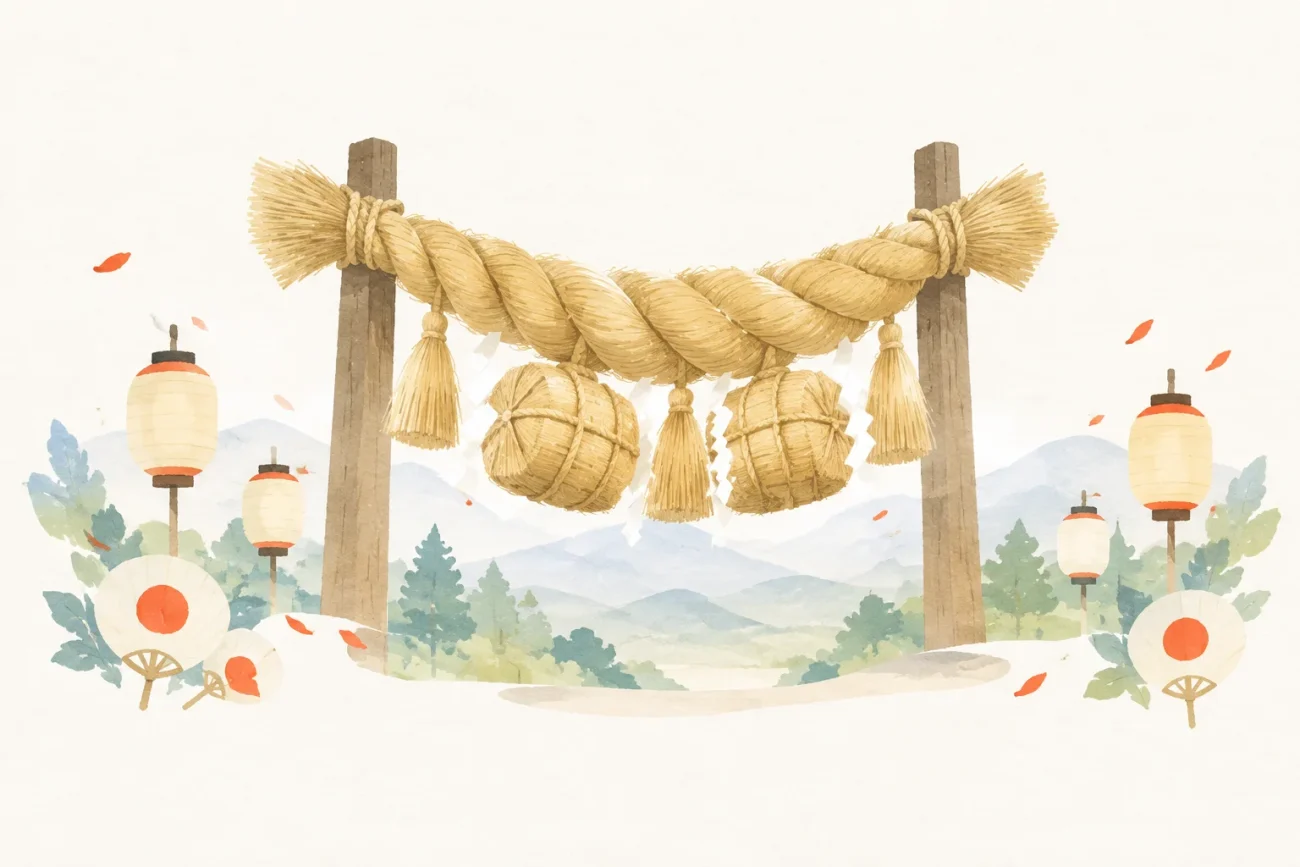
Made from rice straw, it also features a bale of rice placed on top of the shimenawa, reflecting the area’s identity as a rice-growing region.
Source: 北海道中富良野町の富良野盆地の真ん中!なかふらので育てたお米です!|ふるさとチョイス - ふるさと納税サイト
Festival highlights
Highlights include the large shimenawa made from rice straw and the bale of rice placed on top of it.
Unlike the sedge often used for shimenawa, it is made with rice straw, reflecting the area’s identity as a rice-growing region.
The knot used to fasten it to the gate retains a form passed down by people who settled in Nakafurano from the Tsugaru region.
Nakafurano’s large shimenawa: tying hopes for a good harvest into rice straw and a bale of rice
What to expect
The main activity is making a large shimenawa locally and offering it to Nakafurano Shrine.
Today, volunteer rice farmers have formed the Large Shimenawa Preservation Association and pass on the shimenawa-making techniques.
Through the large shimenawa offered to the shrine, you can learn about the community’s history of rice cultivation and its hopes for a good harvest.
Location and access
- Venue and address
Nakafurano Shrine (1829 Nakafurano, Nakafurano Town, Sorachi District, Hokkaido)
- Train and bus
A 20-minute walk from Nakafurano Station on the JR Furano Line.
Source: 中富良野神社 - 北海道神社庁のホームページ
Address 1829 Nakafurano, Nakafurano Town, Sorachi District, Hokkaido
Dates and season
- Season
Every year (the specific date is currently being confirmed)
- Frequency
Every year
Accommodation and hotels PR
Showing nearby accommodation.
Prices and availability are current at the time of retrieval. For multi-night stays, only the first night’s price is shown. Confirm the final price and directions to the venue with the booking provider. Select your dates again when using the area search link. Search area: within 3 km of Central Hokkaido / Nakafurano Town (the search is not centered on the festival venue)
Origins and History of Large shimenawa
The large shimenawa is a tradition passed down by farming families who moved to Nakafurano to help develop Hokkaido.
The way of tying it, passed down by settlers from the Tsugaru region, can still be seen in the part fastened to the torii gate.
Today, a preservation group passes on the techniques, keeping alive the region’s history of farming and migration.
Official information
For Nakafurano Shrine’s location, annual festival date, directions, and information about the offering of the large shimenawa, see the Hokkaido Shrine Agency’s Nakafurano Shrine guide.
Large shimenawa at a Glance
The large shimenawa offered to Nakafurano Shrine is a Nakafurano Town tradition expressing hopes for a good harvest.
The rice straw, bale of rice, and knot originating from the Tsugaru region embody the history of rice farming and settlement.
Preservation efforts by volunteer rice farmers also keep the shimenawa-making techniques alive.
Japanese Festivals.jp Editorial Team
Celebrating local culture and helping you discover a side of Japan you never knew.
Article updated: 2026/10/19
Submit information or a correction Submit photos of this festival