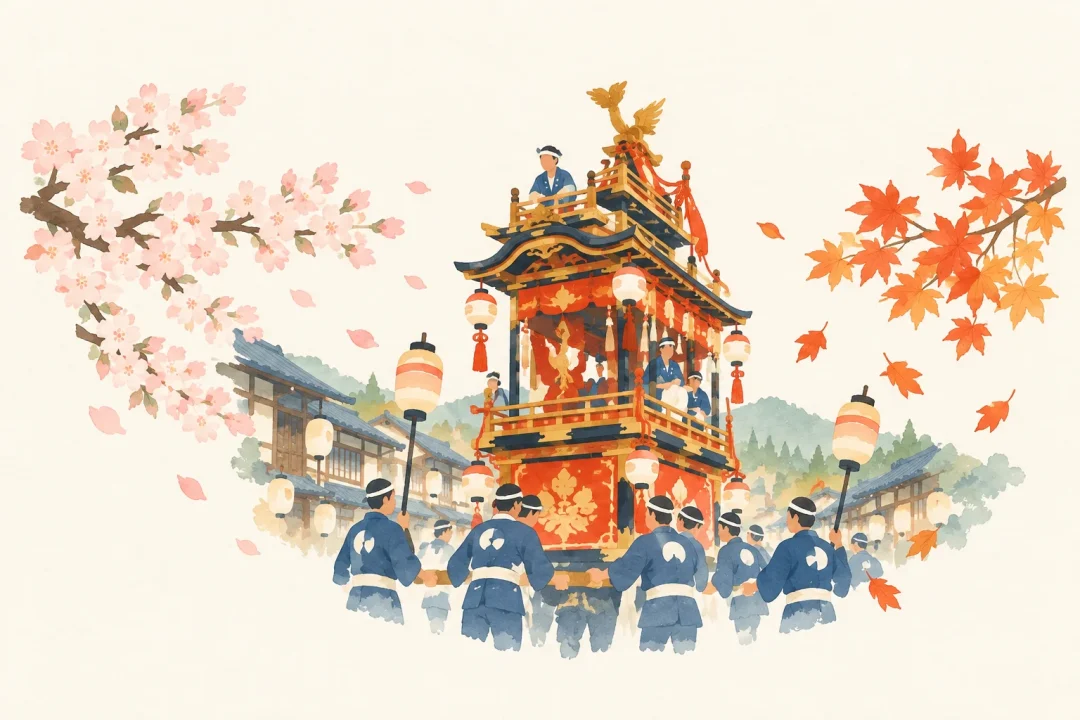
Explore autumn festivals across Harima, brought to life by yatai and mikoshi
Banshu Autumn Festivals
Festival information
EVENT INFORMATION- Season / frequency
- Usually held around October / Every year
- Area
- Hyogo Prefecture(From Tokyo: approx. 2 h 40 min–3 h 10 min · bullet train)Prefecture-level estimate to a main station or airport, not the venue. Airport access, check-in and onward travel are extra; remote areas and islands can take much longer.
- Features
- Highlights and activities
- Wishes behind the festival
- Participation / viewing
- Spectators welcome
- Last updated
- 2026/10/19
Banshu Autumn Festivals is a collective term for the diverse shrine festivals held in autumn in the Harima region of southwestern Hyogo Prefecture. The , , , traditional performing arts, and other features vary by area, offering a chance to encounter a variety of festivals in the same season.
About Banshu Autumn Festivals
Banshu Autumn Festivals is a collective name for the autumn grand festivals at shrines throughout the Harima region in southwestern Hyogo Prefecture.
The details vary by shrine, but many festivals feature yatai (Yassa) brought out from parishioner districts to accompany the mikoshi procession or be offered before the shrine.
A key feature is that this is not one single festival, but a series of distinctive festivals in different areas.
Source: 播州の秋祭り - Wikipedia
Festival highlights
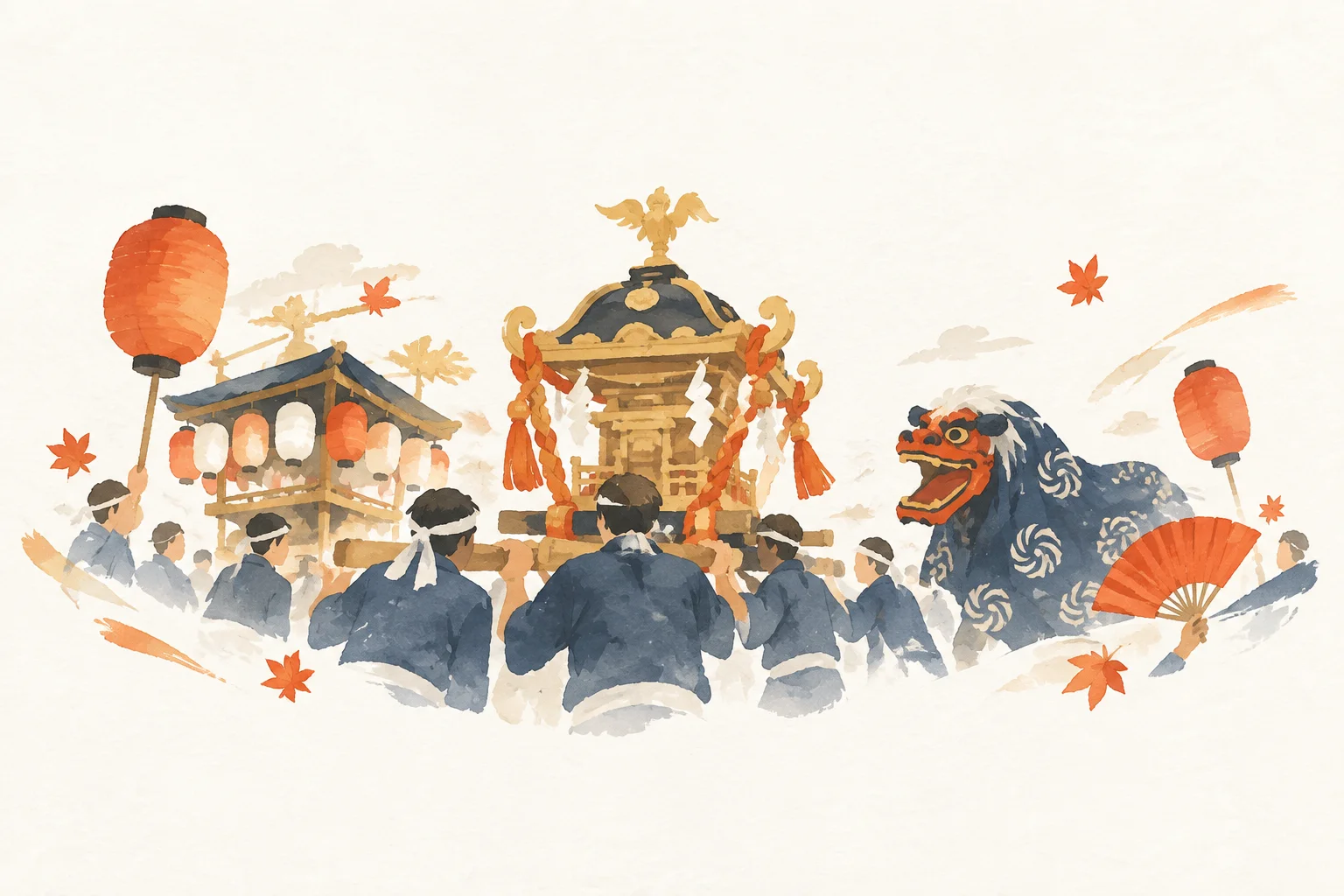
Highlights include teams carrying ornate yatai in a lively procession and mikoshi carried in a .
In some areas, several yatai are brought together, and performances include Daiba-zashi, in which a yatai is raised high, and Chosa, in which it is tossed into the air.
Another attraction is seeing the different traditional events held at each shrine, such as lion dances, lantern processions, bamboo breaking, and the Hitotsumono rite.
Explore autumn festivals across Harima, brought to life by yatai and mikoshi
What to expect
At the festivals, yatai and floats are brought out from each parishioner district to enter the or join processions to the .
Yatai process to rhythmic calls, then are raised high and brought together in performances in the shrine precincts or festival grounds.
Some festivals also feature mikoshi processions, lion dances, ritual sumo, the Dragon King dance, yabusame, and lantern processions, with events sometimes differing between the eve-of-festival and main festival days.
How to take part
Visitors can watch the event.
Location and access
- Venue and address
Held at shrines throughout the Harima region.
Major examples include Matsubara Hachiman Shrine (Ko, Shirahama-cho, Himeji), Sone Tenmangu Shrine (Sone-cho, Takasago), and Ubusuna Hachiman Shrine (193 Miyauchi, Aboshi-ku, Himeji).
- Train and bus
Matsubara Hachiman Shrine is about a 5-minute walk from Shirahama-no-Miya Station on the Sanyo Electric Railway; Sone Tenmangu Shrine is about a 3-minute walk from Sanyo Sone Station; and Ubusuna Hachiman Shrine is about a 15-minute walk from Sanyo Aboshi Station.
- By car
Traffic restrictions may be in place for individual festivals.
Source: 播州秋祭りで有名なのはどこ?人気の祭りや見どころを一覧で紹介! | 旅ときどき。 / 曽根天満宮秋祭り2026の屋台は何時から?出店場所や種類も調査 | 旅ときどき。
Event venue 兵庫県 播磨地域一帯の各神社で行われます
This map uses the venue name. Check the official guide for the event area and entrances.
Dates and season
Banshu Autumn Festivals are generally held around October each year.
However, as the festivals are held separately at shrines throughout the Harima region, festival dates and the schedules for the eve-of-festival and main festival days differ by shrine.
For 2026, schedules have been announced for Sone Tenmangu Shrine on October 13 and 14, the Nada Fighting Festival on October 14 and 15, and Ubusuna Hachiman Shrine on October 21 and 22, among others.
Tips for your visit
The yatai and mikoshi processions can get crowded, so take care when watching from close range.
Traffic restrictions may be in place around the venue, so visitors are advised to use public transportation such as trains.
At nighttime events, it can be dark underfoot and crowds may grow. If you are with children, watch out for them getting lost, and follow the instructions of staff and security personnel while viewing the events.
Origins and History of Banshu Autumn Festivals
The precise origins and history of Banshu Autumn Festivals as a whole are unknown.
Yatai processions are said to have taken place by around the 18th century, though the prototypes and names of the floats vary by area.
Records from the Tensho era also mention Hitotsumono, the Miko procession, ritual sumo, lion dances, the Dragon King dance, yabusame, and mikoshi, suggesting links to medieval festivals.
Banshu Autumn Festivals at a Glance
Banshu Autumn Festivals is a collective term for the autumn grand festivals held at shrines throughout the Harima region.
The events vary greatly by shrine and district and may include yatai entering the shrine grounds and being brought together, mikoshi processions, lion dances, and lantern processions.
In 2026, festivals will also be held in various locations around October, so it is best to choose the festival you want to see and check the schedule and travel information for its venue before visiting.
Japanese Festivals.jp Editorial Team
Celebrating local culture and helping you discover a side of Japan you never knew.
Article updated: 2026/10/19
Submit information or a correction Submit photos of this festival