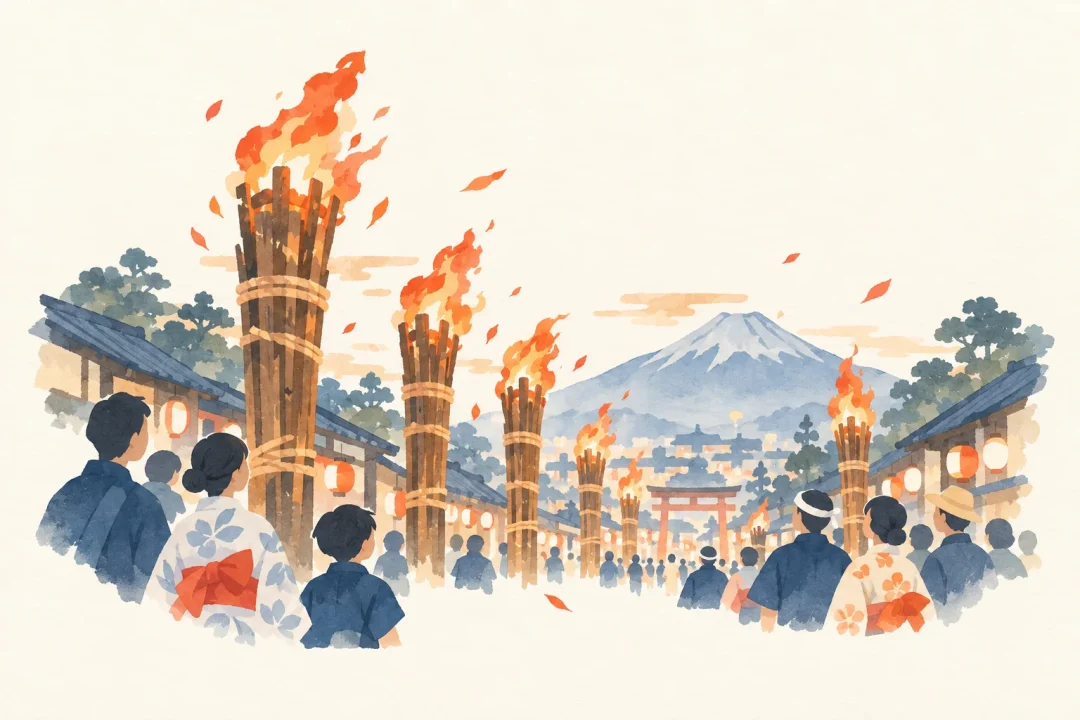
Prayers passed down through the great rope linking east and west, and the michizunē
Maezato Great Tug-of-War
Festival information
EVENT INFORMATION- Season / frequency
- In the morning on day 16 of lunar month 8
- Area
- Okinawa Prefecture・Itoman City(From Tokyo: approx. 2 h 30 min–3 h · flight time only)Prefecture-level estimate to a main station or airport, not the venue. Airport access, check-in and onward travel are extra; remote areas and islands can take much longer.
- Wishes behind the festival
- Last updated
- 2026/10/24
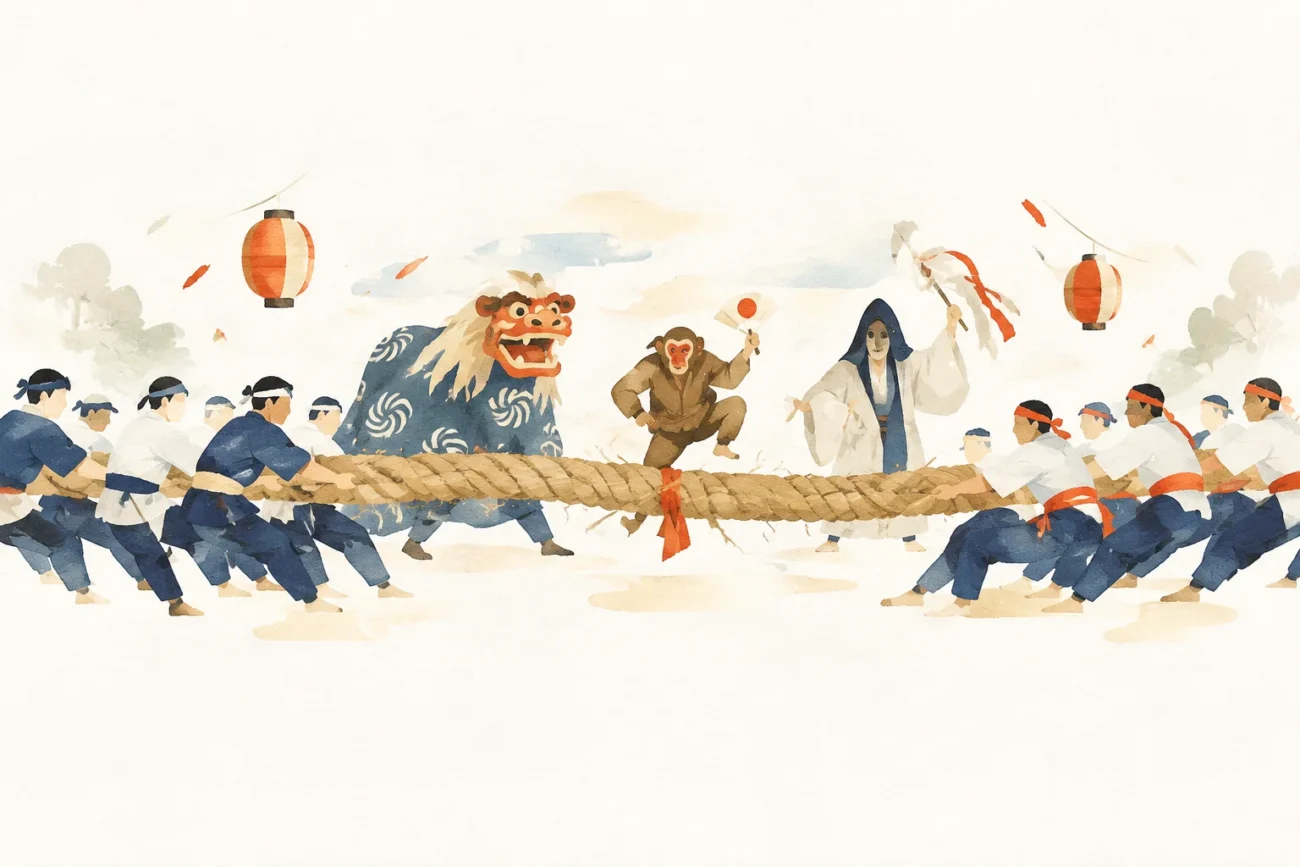
The Maezato Great Tug-of-War is a community event held to pray for prosperity, a good harvest, and the health of the people. As well as pulling the giant rope against each other in eastern and western groups, participants hold a michizunē procession featuring a shishi, a monkey, and Miroku.
About Maezato Great Tug-of-War
The Maezato Great Tug-of-War is a community tug-of-war event held in the morning on day 16 of lunar month 8.
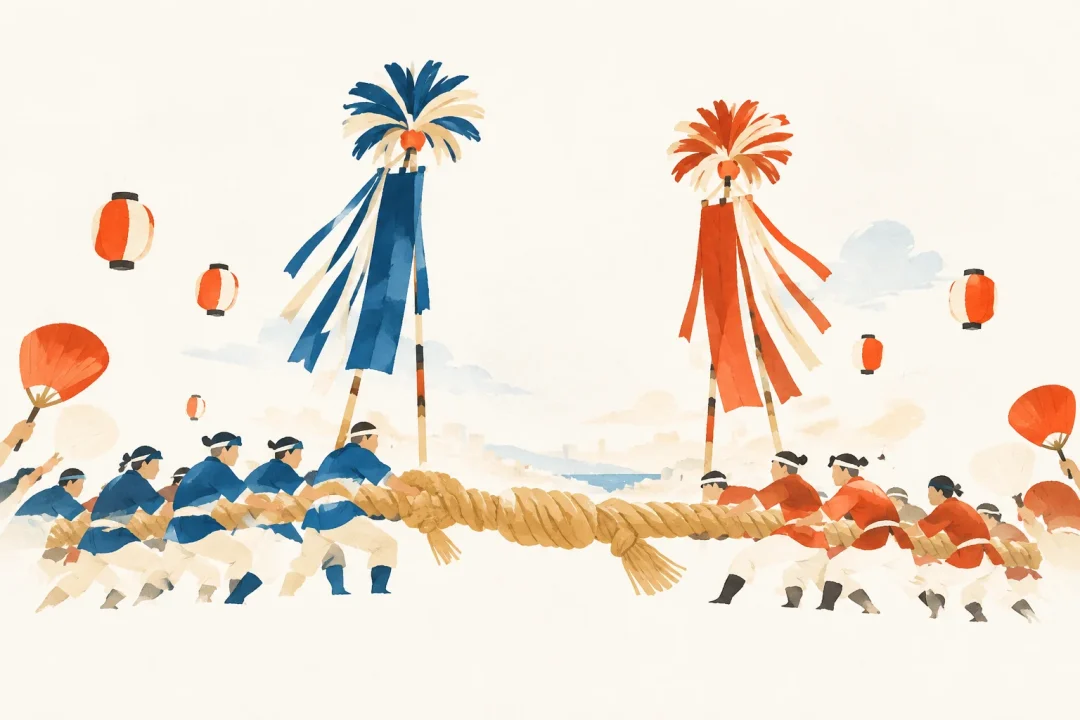
The entire village prays for prosperity, a good harvest, and the health of its people, then splits into eastern and western groups to pull the rope against each other.
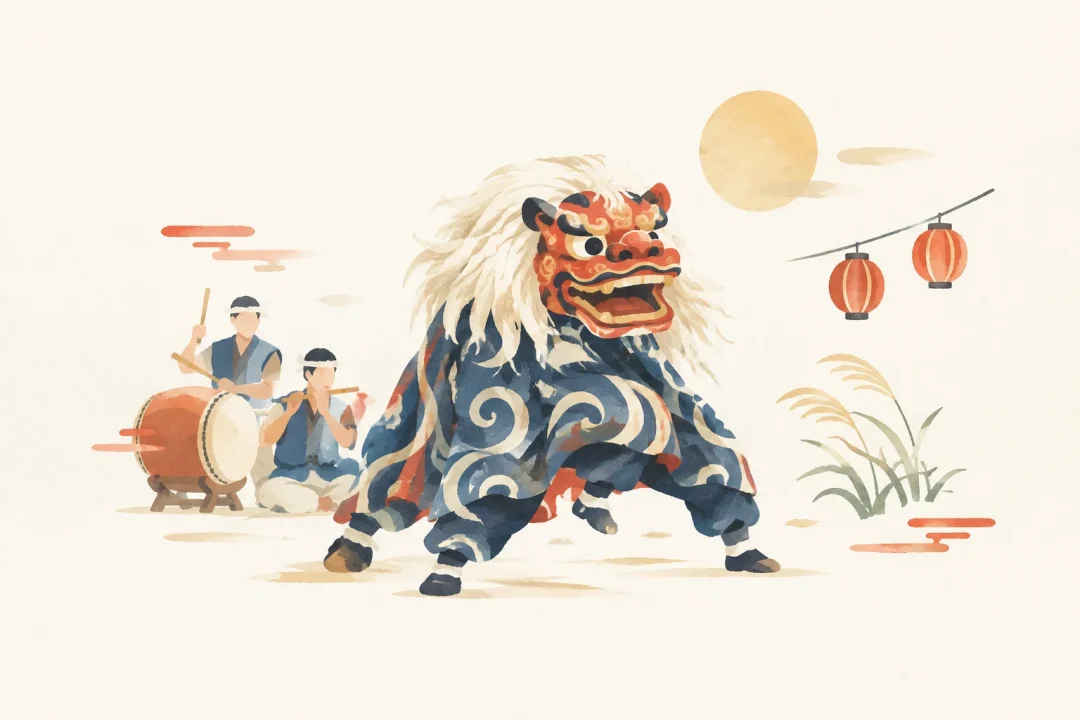
A michizunē procession featuring a shishi, a monkey, and Miroku is also held, making this an event that brings together the tug-of-war, prayers, and the passing down of local performing arts and equipment.
Source: 市指定無形民俗文化財 字真栄里の大綱引き - 糸満市ホームページ
Festival highlights
A highlight is the moment when people split into eastern and western groups and pull the approximately 54-meter male and female ropes against each other.
In addition to the tug-of-war, a michizunē procession featuring a shishi, a monkey, Miroku, and others is held.
Repairs and decorations of the shitaku equipment and banner heads used for prayers, rope-making, and michizunē, as well as the satire performed by the shishi and monkey, are also passed down as defining features of the event.
Prayers passed down through the great rope linking east and west, and the michizunē
What to expect
The event takes place in the morning on day 16 of lunar month 8.
After prayers and rope-making, a michizunē procession featuring a shishi, a monkey, Miroku, and others is held, and villagers split into eastern and western groups to pull the male and female ropes against each other.
Repairs and decorations of the shitaku equipment and banner heads are passed down, and preparations and michizunē, not just the tug-of-war, help shape the event.
Location and access
- Address
Itoman City
Host municipality 沖縄県糸満市
This map shows the surrounding area, not the exact venue location.
Dates and season
- Season
In the morning on day 16 of lunar month 8
Accommodation and hotels PR
Showing nearby accommodation.
Prices and availability are current at the time of retrieval. For multi-night stays, only the first night’s price is shown. Confirm the final price and directions to the venue with the booking provider. Select your dates again when using the area search link. Search area: within 3 km of Central Okinawa Prefecture / Itoman City (the search is not centered on the festival venue)
Nearby attractions

ひめゆり平和祈念資料館
沖縄県糸満市にある博物館

沖縄県平和祈念資料館
糸満市の平和祈念公園内にある博物館
Origins and History of Maezato Great Tug-of-War
A distinctive historical feature of this event is the passing down of repairs and decorations for the shitaku equipment and banner heads used for prayers, rope-making, and michizunē.
It also retains essential elements of the Maezato Great Tug-of-War, including satire performed by the shishi and monkey.
Itoman City recognizes this as a valuable example representative of Okinawan tug-of-war events and designates it a Municipal Intangible Folk Cultural Property.
Official information
Itoman City website, “Municipal Intangible Folk Cultural Property: Maezato Great Tug-of-War”
Maezato Great Tug-of-War at a Glance
The Maezato Great Tug-of-War is a tug-of-war event held in the morning on day 16 of lunar month 8 to pray for the village’s prosperity, a good harvest, and the health of its people.
Participants split into eastern and western groups to pull the approximately 54-meter male and female ropes against each other, and a michizunē procession featuring a shishi, a monkey, and Miroku is also held.
A Municipal Intangible Folk Cultural Property that preserves the repair and decoration of equipment and banner heads, as well as satire performed by the shishi and monkey.
Japanese Festivals.jp Editorial Team
Celebrating local culture and helping you discover a side of Japan you never knew.
Article updated: 2026/10/24
Submit information or a correction Submit photos of this festival