Two Furyū dances from Ama, expressing gratitude for the rain through dance
Aman no Furyū Ō-odori Ko-odori

Festival information
EVENT INFORMATION- Season / frequency
- Every year, on the Sunday closest to September 15 / Every year
- Location
- Kameoka Hachiman Shrine
- Area
- Hyogo Prefecture・Minami-Awaji City(From Tokyo: approx. 2 h 40 min–3 h 10 min · bullet train)Prefecture-level estimate to a main station or airport, not the venue. Airport access, check-in and onward travel are extra; remote areas and islands can take much longer.
- Highlights and activities
- Wishes behind the festival
- Last updated
- 2026/10/19
Aman no Furyū Ō-odori Ko-odori, passed down in Kamicho, Ama, Minami-Awaji City, is an Important Intangible Folk Cultural Property that preserves Ō-odori and Ko-odori, each with a distinct character. They are performed as offerings to songs and drums at Kameoka Hachiman Shrine’s autumn festival.
About Aman no Furyū Ō-odori Ko-odori
Aman no Furyū Ō-odori Ko-odori is a folk performing art passed down in Kamicho, Ama, Minami-Awaji City, Hyogo Prefecture.
It consists of two types of dance, Ō-odori and Ko-odori, and is now performed as an offering in the worship hall during Kameoka Hachiman Shrine’s autumn festival.
Originally performed to pray for rain, it is now passed down as an event expressing gratitude for rain and prayers for abundant harvests and the prosperity of the local community.
It is also designated an Important Intangible Folk Cultural Property.
Source: 国指定文化財等データベース
Festival highlights
One highlight is the format, in which Ō-odori and Ko-odori, each with a distinct character, are performed in alternating pieces.
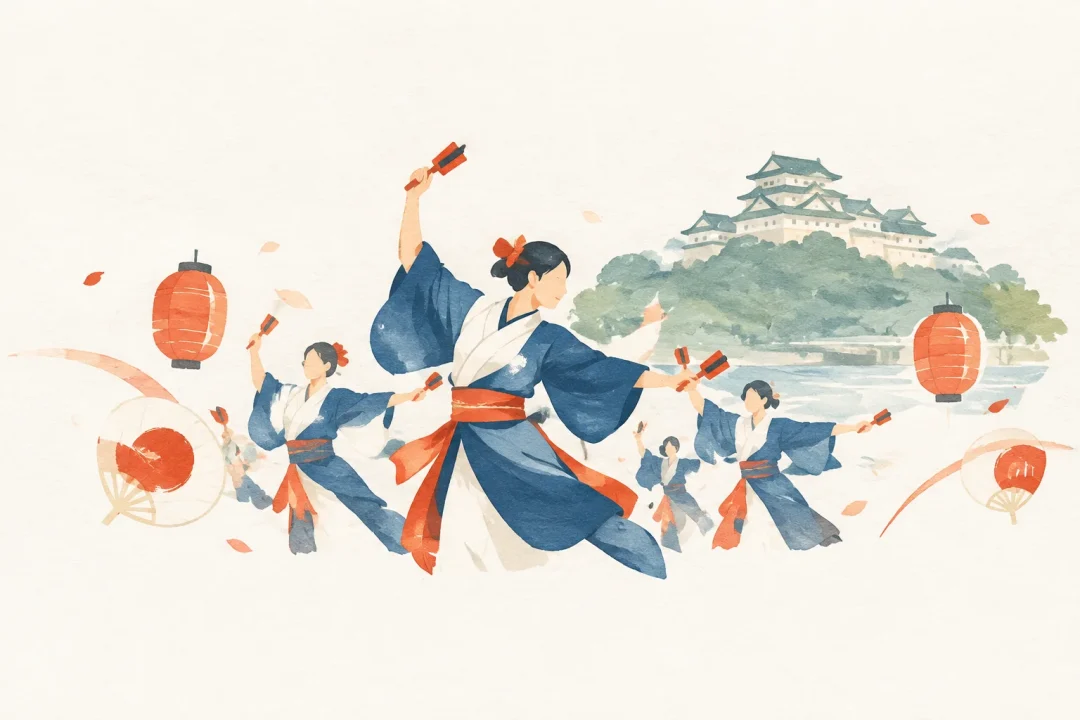
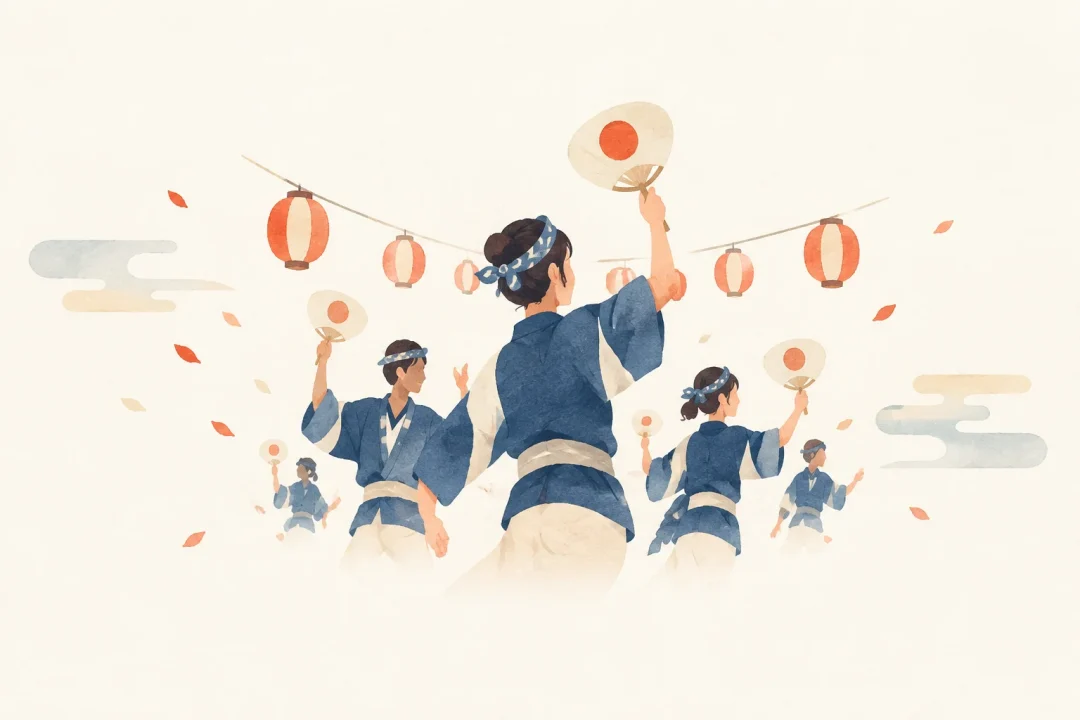
In Ō-odori, children carrying fans or slender bamboo poles perform the front dance, while adults carrying large fans perform the middle dance in two lines.
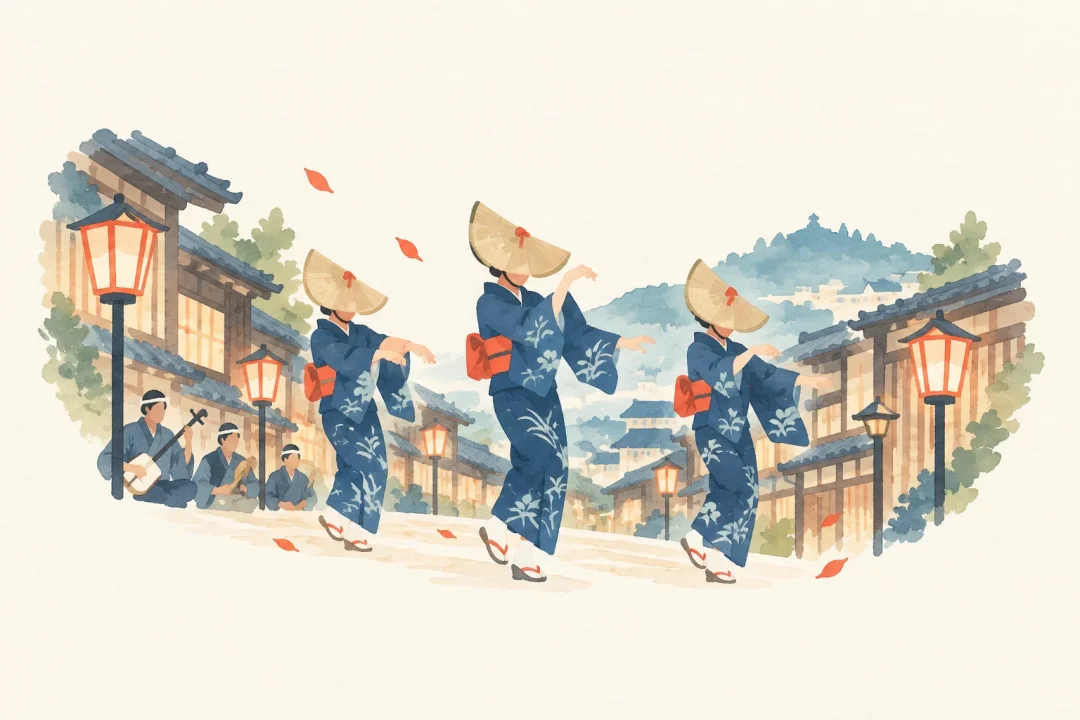
In Ko-odori, around 6–8 dancers line up in a single row and move more briskly than in Ō-odori.
Songs, clappers, and shime-daiko drums support the dances, whose old-fashioned, unhurried style and fine details remain a pleasure to watch.
Two Furyū dances from Ama, expressing gratitude for the rain through dance
What to expect
The performances alternate between one piece of Ō-odori and one piece of Ko-odori.
Ō-odori is danced in two lines: children in the front row and adults in the back perform different movements to the same music, while an ondotori sings behind them.
In Ko-odori, a line of dancers is joined by musicians playing shime-daiko drums, clappers, and small hand drums, as well as singers.
The repertoire includes 7 Ō-odori pieces and 8 Ko-odori pieces.
How to take part
The dance has been passed down by groups of performers, such as the Ōodori-kō and Kodori-kō.
Children perform the Ōodori, while around six to eight dancers perform the Kodori; however, no information is available on whether visitors can take part as dancers.
Those wishing to watch can view the dance when it is offered at the shrine’s autumn grand festival.
Location and access
- Venue and address
Kameoka Hachiman Shrine (Kamicho, Ama, Minami-Awaji City).
The dances are performed as offerings in the shrine’s worship hall.
Source: 阿万の風流大踊小踊(あまのふりゅうおおおどりこおどり) - 南あわじ市ホームページ
Address Kamicho, Ama, Minami-Awaji City, Hyogo Prefecture
Dates and season
It is offered at the autumn grand festival, which is held on a Sunday close to September 15 each year.
If you plan to visit on the day, please check the autumn grand festival schedule and offering time in advance.
Accommodation and hotels PR
Showing nearby accommodation.
Prices and availability are current at the time of retrieval. For multi-night stays, only the first night’s price is shown. Confirm the final price and directions to the venue with the booking provider. Select your dates again when using the area search link. Search area: within 3 km of Central Hyogo Prefecture / Minami-Awaji City (the search is not centered on the festival venue)
Tips for your visit
The offering takes place in the haiden of Kameoka Hachiman Shrine.
As the dance is performed in conjunction with the shrine’s autumn grand festival, please behave appropriately for a festival setting when watching.
Origins and History of Aman no Furyū Ō-odori Ko-odori
Ō-odori is believed to have originated between the late Muromachi period and the Azuchi-Momoyama period, while Ko-odori is thought to have originated around the middle of the Edo period.
A local gazetteer from Bunka 8 (1811) records that people prayed for rain during droughts and danced in thanksgiving after their prayers were answered.
Practice was suspended during the war, but the dances were revived in Showa 29. Since the latter half of the Showa 50s, they have been performed regularly at shrine festivals.
Official information
An overview of the cultural property and its location can be found on Minami-Awaji City’s page on historical and cultural heritage.
The National Cultural Property Database provides its designation details and a full description as an Important Intangible Folk Cultural Property.
Aman no Furyū Ō-odori Ko-odori at a Glance
Aman no Furyū Ō-odori Ko-odori is a traditional performing art in which Ō-odori and Ko-odori, associated with prayers for rain and dances of thanksgiving after prayers are answered, are performed as offerings at Kameoka Hachiman Shrine’s autumn festival.
Highlights include Ō-odori, with children and adults dancing in two lines; Ko-odori, danced briskly in a single line; and the songs and drums accompanying the dances.
The date for 2026 is currently being confirmed, but the festival is usually held on the Sunday closest to September 15.
Japanese Festivals.jp Editorial Team
Celebrating local culture and helping you discover a side of Japan you never knew.
Article updated: 2026/10/19
Submit information or a correction Submit photos of this festival