Before You Go to a Fire Festival: What to Keep in Mind When Viewing the Yoshida Fire Festival and Nachi Fan Festival
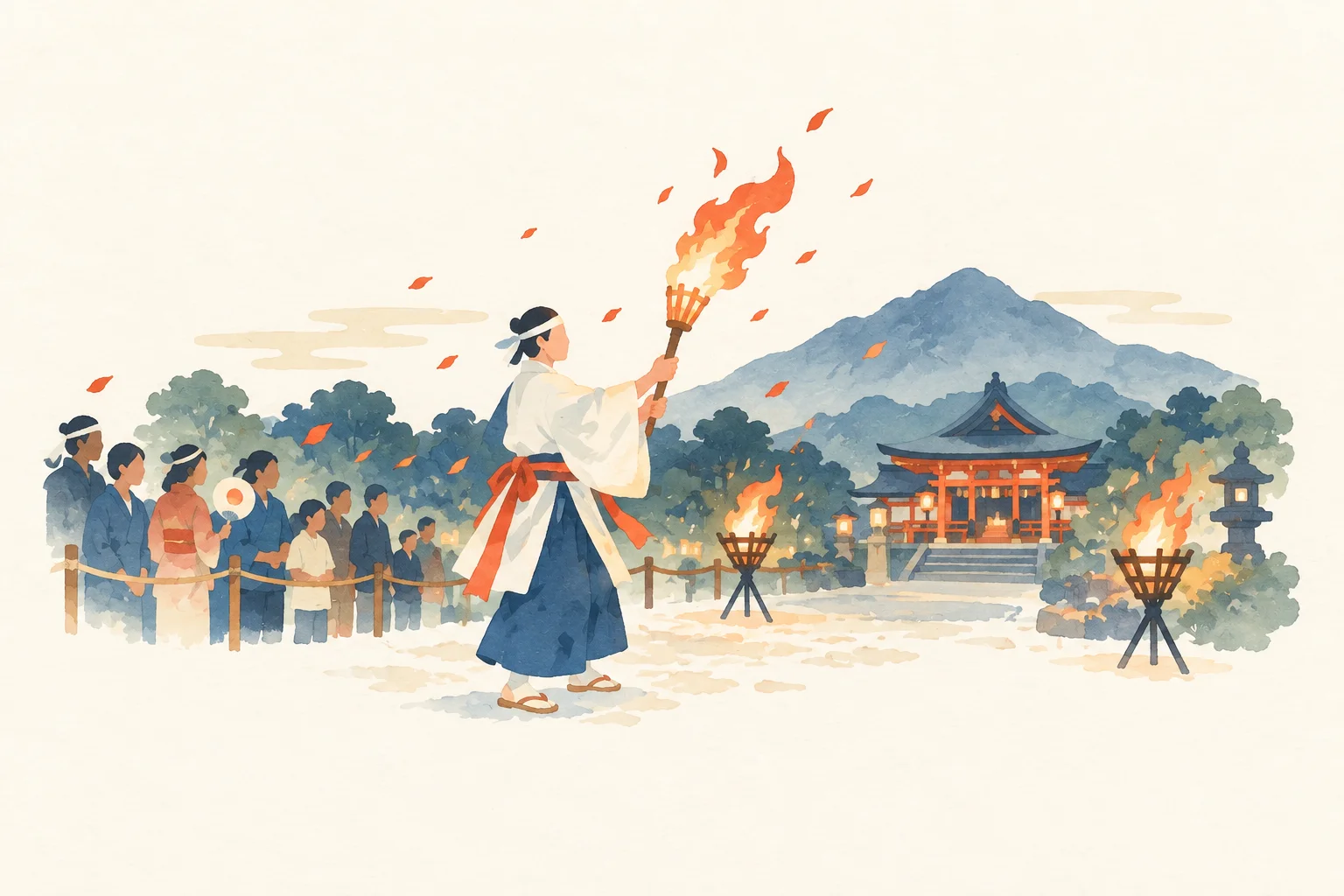
Photos of fire festivals have a striking intensity that catches the eye even from far away. However, not all festivals involving fire have the same meaning or ways of viewing them. Using the Yoshida Fire Festival and Nachi Fan Festival as examples, this article introduces the background worth knowing before you watch the flames and offers some guidance on viewing the festivals in person.
First, understand “what kind of festival it is”
The Yoshida Fire Festival is associated with Kitaguchi Hongu Fuji Sengen Shrine and Suwa Shrine. The festival unfolds over 2 days, including not only the night of the torches on August 26 but also the Susuki Festival on the 27th. Your perspective changes when you learn about the procession and the order of the festival rites, rather than focusing only on the night view. (Fujiyoshida Tourism Guide: “Yoshida Fire Festival”)
The Nachi Fan Festival is the annual grand festival held on July 14 at Kumano Nachi Taisha. It features the flames of torches during sacred rites in which fan mikoshi are carried toward the waterfall. Its setting and procession differ from those of Yoshida, where torches light the town streets. (Kumano Nachi Taisha: “Annual Grand Festival: Nachi Fan Festival”)
Do not explain every fire’s role using the same terms
When watching an event involving fire, it can be tempting to immediately describe it with words like warding off misfortune, prayer or purification. First, read the official explanation of that particular festival. The history of Yoshida, too, is explained through records of local rites, not just through impressions of Mount Fuji. Reading traditions and historical records separately can help you understand the background. (Fujiyoshida Tourism Guide: “Yoshida Fire Festival: History”)
You do not need to memorize every detail of the festival’s origins before you go. Simply keeping 2 questions in mind—“At what point in the festival does this fire appear?” and “What happens before and after it?”—can help you notice more than just the flames.
Do not assume that closer means a better view
At fire festivals, do not judge your distance from the flames by your own sense alone; follow restrictions and staff guidance first. Avoid stepping forward to make your photos look more dramatic, entering the procession’s route, or walking backward while taking photos. There is also something special about watching from farther away, with the town or waterfall in view.
If there are requirements for clothing or items to bring, follow the organizer’s guidance for that year. Do not rely only on general festival packing lists; check the viewing conditions in areas where fire is used. If you go with children, it is important to choose a place where you can step away partway through, not just one with a good view.
Plan your day starting before the fires are lit
| Festivals | Planning your time | Check your route |
|---|---|---|
| Yoshida Fire Festival | Distinguish between the events on the night of the 26th and those on the 27th | Town-center restrictions, getting back at night, and accommodation |
| Nachi Fan Festival | Check the order of the sacred rites and viewing times | Routes to the shrine and waterfall, stairs, and buses |
If you plan to arrive just before the main events, you may spend all your time looking for a place to watch. While it is still light, get your bearings, take breaks and eat, and decide how you will get back after viewing the festival.
You may set out to see the intensity of the flames, but by the time you leave, the prayers of the people and the life of the town may be what stay with you. When looking for a fire festival, consider the dramatic photos, but also read the stories shared by the shrine and local community before choosing one.
Official sources consulted
- Fujiyoshida Tourism Guide: “Yoshida Fire Festival”
- Fujiyoshida Tourism Guide: “Yoshida Fire Festival: History”
- Kumano Nachi Taisha: “Annual Grand Festival: Nachi Fan Festival”
This article is based on publicly available information from official sources, local governments, tourism associations and others. Information checked: 2026/10/01. Please check the official information for the year you plan to visit for the dates, venue, traffic restrictions and participation requirements.
Festivals related to this article
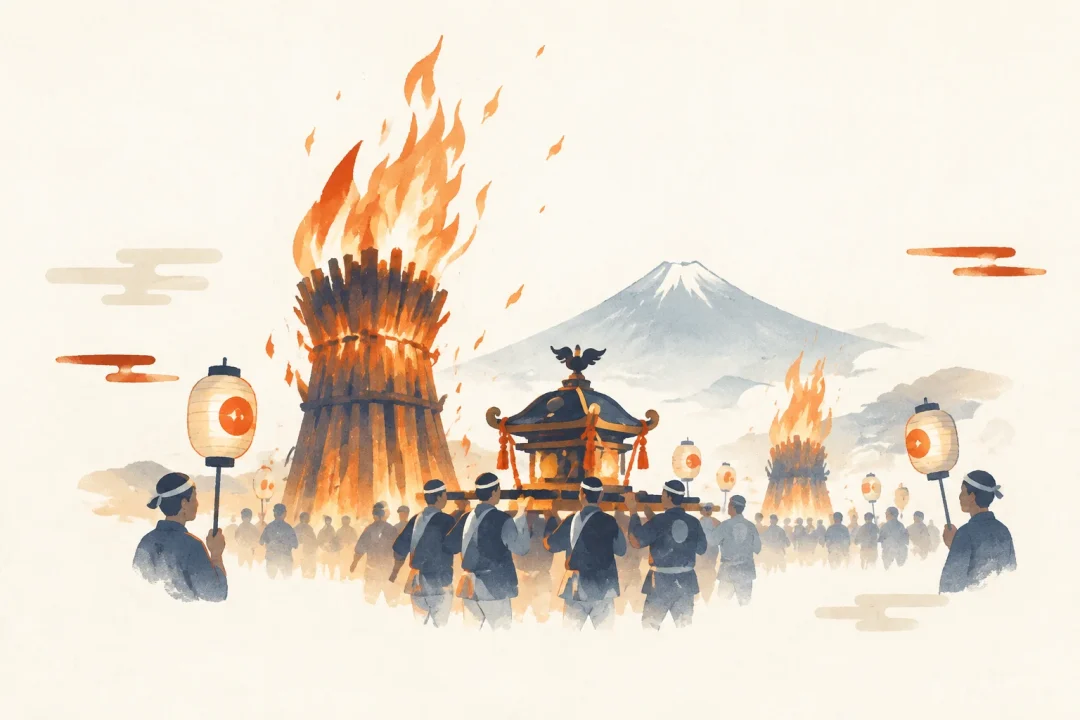
Yoshida Fire Festival
A summer festival in Fujiyoshida, where giant torches light the town and mikoshi carry on tradition
