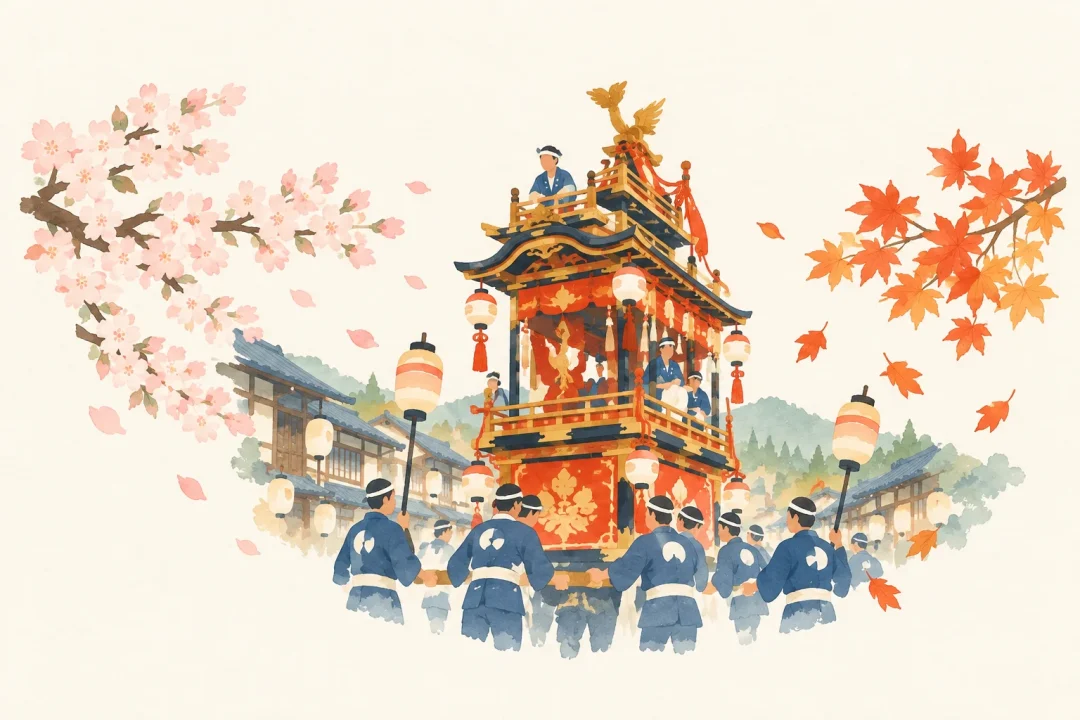
Discover the Nachi Ogi Festival: The 12 fan mikoshi carried toward the waterfall, and the meaning of the flames
A closer look at the annual grand festival of Kumano Nachi Taisha, beyond the spectacle of the “fire festival.”

The Nachi Ogi Festival is known for the striking flames of its large torches. But calling it simply “a festival with spectacular fire” does not fully explain either the procession toward the waterfall or the long, slender fan . Understanding the sequence of the annual grand festival of Kumano Nachi Taisha helps explain why fire and water are part of the same event.
July 14, the annual grand festival procession toward the waterfall
According to the official Kumano Nachi Taisha information, the Ogi Festival is the shrine’s annual grand festival held on July 14. It is described as a sacred rite in which the spirits are transferred to 12 fan mikoshi, which are then carried toward Nachi Falls. The waterfall is not just a scenic backdrop; it’s also an important place for understanding the festival’s movements.(Kumano Nachi Taisha, “Annual Grand Festival: Nachi Ogi Festival”)
When planning your visit, rather than simply searching for “Nachi Falls” and deciding when to arrive, check the order of the rites and where visitors can watch. The flow of people and areas open to visitors may differ between a regular visit and the day of the festival. You’ll have a calmer view from one viewing spot than by rushing to follow the procession.
Fan mikoshi have a different shape from conventional mikoshi.
Although its name includes “mikoshi,” its shape differs from the roofed mikoshi commonly seen at town festivals. The Agency for Cultural Affairs describes distinctive features of the Ogi Festival’s design, including long, plank-shaped yorishiro adorned with fans. Start by noticing the form itself, and look at it while considering why it has this appearance.(Agency for Cultural Affairs, Database of Nationally Designated Cultural Properties, “Nachi Ogi Festival”)
When exploring explanations of the festival’s origins and symbolism, we recommend consulting shrine and cultural property sources rather than assigning a single meaning to each visual feature. The Kumano Sanzan guide also describes the relationship between the 12 fan mikoshi and Kumano beliefs. Familiarizing yourself with the forms through diagrams or photos before you go will help you take in the whole ceremony instead of focusing on checking every detail as it happens.(Kumano Sanzan Council, “Annual Grand Festival of Kumano Nachi Taisha”)
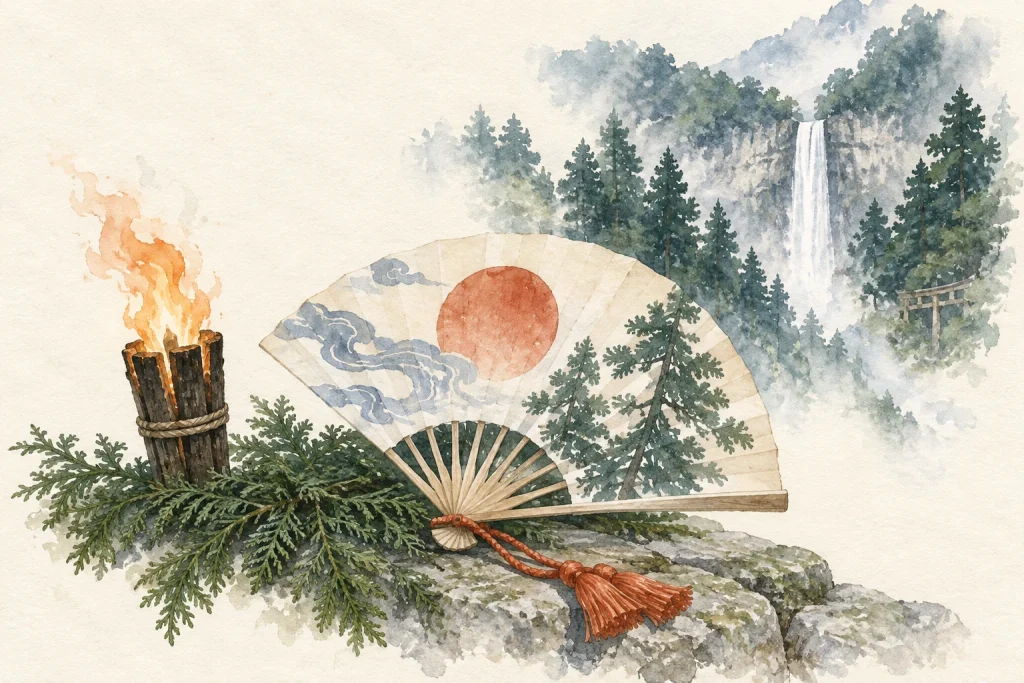
Keep the flow of the sacred rite in mind as you watch the torch flames.
The size of the flames leaves a strong impression, but the appeal of the Ogi Festival is not simply watching the fire as a standalone performance. See the places connected by the fan mikoshi, torches, and waterfall as one continuous flow. Viewed as a sacred rite held amid the mountain greenery and the presence of water, it offers a different sense of time from festivals of lights in town.
Please stay within the designated viewing areas rather than moving forward to get a better shot or blocking passageways. It’s also important not to move closer by judging the distance from the flames for yourself. Set aside moments to photograph details with a zoom lens and moments to lower your device and watch the whole scene. This can help you take away lasting impressions even from a limited viewing area.
Plan your visit to the shrine and viewing time comfortably within a single day.
On a trip to Nachi, the journey to the shrine and waterfall is part of the experience. Even places that look close on a map may involve stairs and changes in elevation, so plan for those separately. Narrow down the places you want to see based on who you’ll be walking with and how often you’d like to rest, so the day doesn’t feel rushed.
- Check the schedule for the rites and viewing information for the current year, and allow plenty of time to arrive.
- Check how buses and parking operate on the day of the festival.
- Check the stairs and slopes along your route, as well as places where you can rest.
- Plan your onward journey and trip home before the event, and don’t try to keep up with the procession all the way to the end.
You can visit Kumano Nachi Taisha to take in the spectacular scenery, to experience its religious traditions, or for both. On the day of the Ogi Festival, the two come together in a single scene. Starting with the striking fire and learning about the prayers directed toward the waterfall should make the festival even more memorable.
Official sources referenced
- Kumano Nachi Taisha, “Annual Grand Festival: Nachi Ogi Festival”
- Agency for Cultural Affairs, Database of Nationally Designated Cultural Properties, “Nachi Ogi Festival”
- Kumano Sanzan Council, “Annual Grand Festival of Kumano Nachi Taisha”
This article is based on publicly available information from official sources, local governments, tourism associations, and other organizations. Information checked: 2026/10/01. Please check the official information for the year of your visit for the event date, venue, traffic restrictions, and participation requirements.

Find one thing that catches your interest.
Find a little “first” beyond the familiar everyday. Why not start with a region or way of enjoying yourself that catches your interest, and see where it leads?
Find festivals