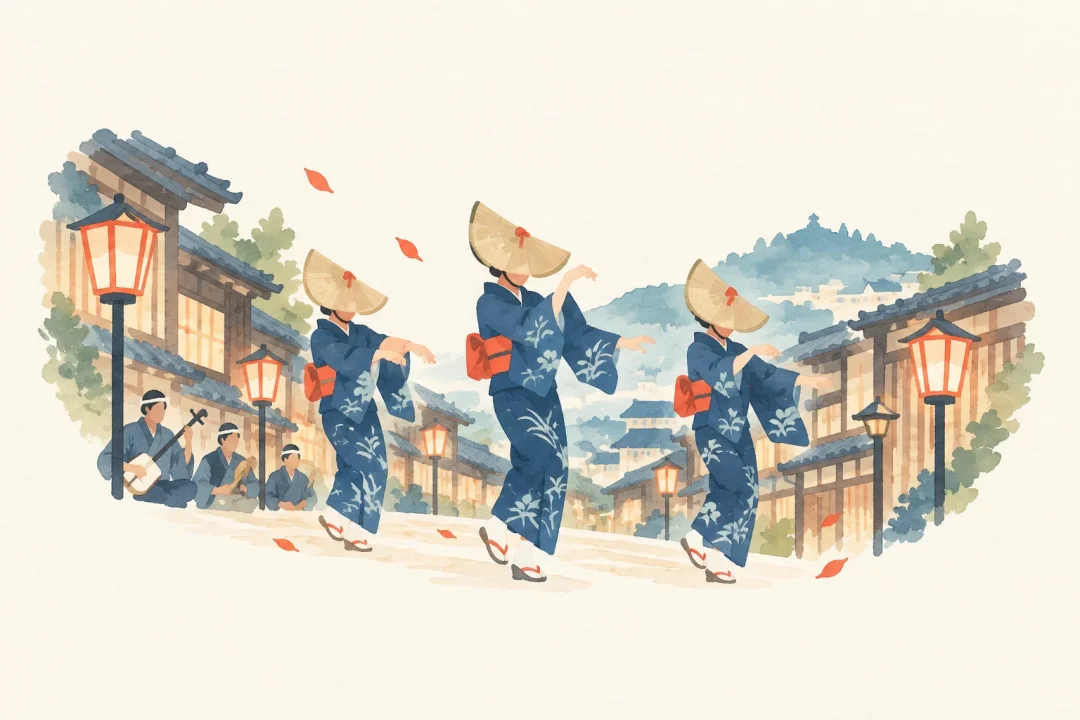
Discover songs and dances passed down at the utaki, and the prayers of Yonaguni
The performing arts of Yonaguni Island’s festivals
Festival information
EVENT INFORMATION- Season / frequency
- At seasonal turning points. The main harvest festival is held in the 6th month of the lunar calendar; Suru (Bon) in the 7th month; and Machiri (Kanbunaga) in the 10th and 11th months. / Seasonally
- Location
- Festival venues in villages across Yonaguni Island, centered on its twelve utaki
- Area
- Okinawa Prefecture・Yonaguni Town(From Tokyo: approx. 2 h 30 min–3 h · flight time only)Prefecture-level estimate to a main station or airport, not the venue. Airport access, check-in and onward travel are extra; remote areas and islands can take much longer.
- Highlights and activities
- Wishes behind the festival
- Participation / viewing
- Spectators welcome
- Last updated
- 2026/10/19
The performing arts of Yonaguni Island’s festivals are traditional songs and dances offered seasonally at the island’s utaki and villages. A diverse repertoire, including stick dances, kumiodori, , and Tamahati, has been passed down, preserving the forms of ancient rites.
About The performing arts of Yonaguni Island’s festivals
The performing arts of Yonaguni Island’s festivals comprise songs, dances, and ritual arts offered at the island’s twelve utaki at seasonal turning points.
Performing arts that retain ancient forms have been passed down amid the cultural landscape of Yonaguni Island, where southern, Chinese, and Ryukyu Kingdom-era influences converge.
In 1985, it was designated a National Important Intangible Folk Cultural Property.
Source: 国指定文化財等データベース
Festival highlights
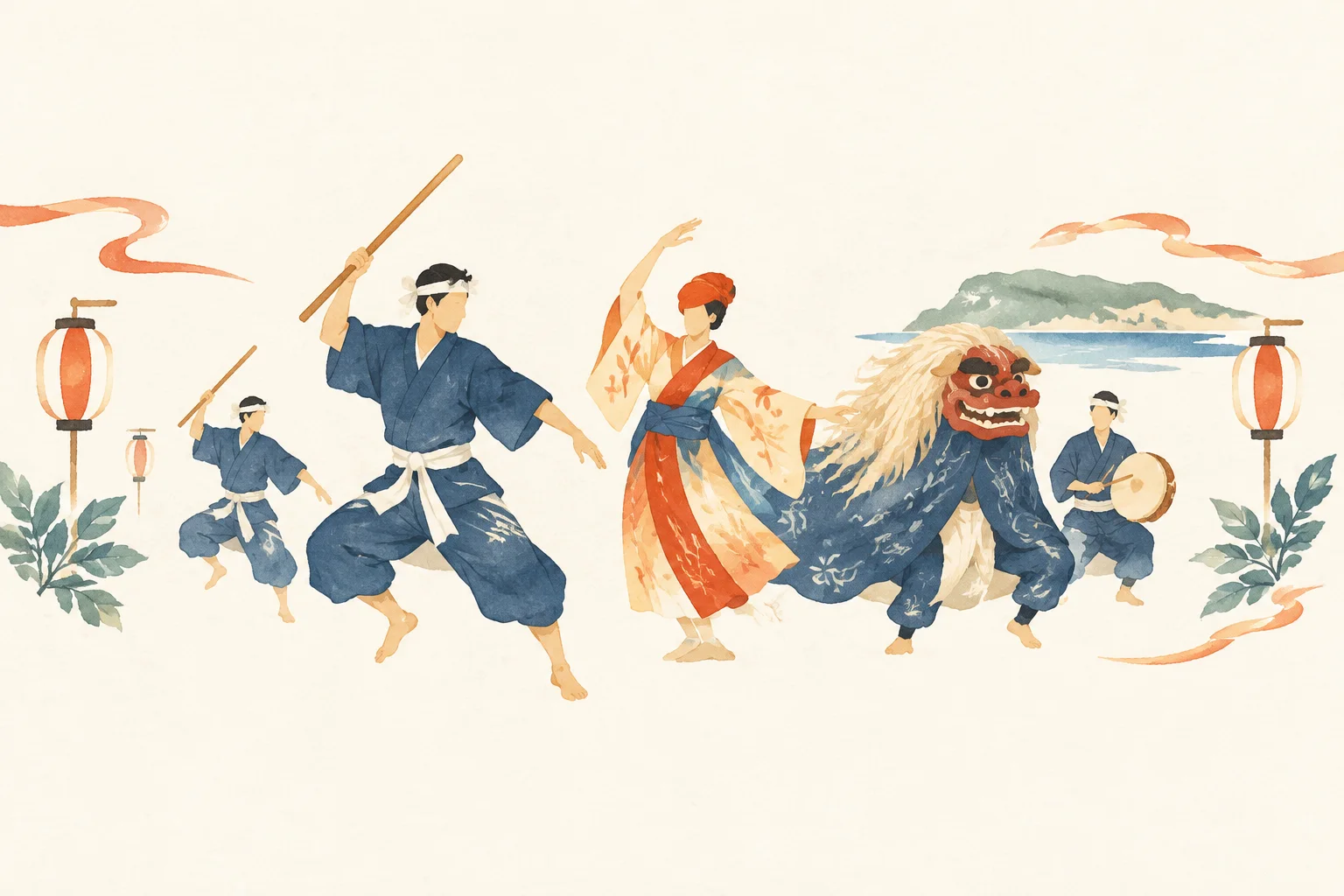
Highlights include a varied program of stick dances, dances, , kumiodori, and lion dances, following the ceremonial prayers of an elder known as Ubunda.
Tamahati, performed while holding sacred objects, is particularly noteworthy as an art that preserves the forms of ancient rites.
In some performances, Miruku appears leading a large procession, and the performance lasts for several hours.
Discover songs and dances passed down at the utaki, and the prayers of Yonaguni
What to expect
Festival performances begin with offerings to the utaki and ceremonial prayers, followed by a variety of acts such as stick dances, dances, kyogen, kumiodori, and lion dances.
At some festivals, Miruku appears leading a large procession and performs dances, kyogen, and stick dances.
Stick dances at harvest festivals are accompanied by drums, flutes, and gong-like cymbals, with performances passed down in each village.
Source: No27. 与那国町 豊年祭、その他(棒座師匠(チス)の世代交代の行事) – 沖縄空手ユネスコ登録推進協議会
How to take part
Some performances at events such as the Harvest Festival are open to the public, and visitors may be able to watch respectfully.
However, some rituals held inside utaki are restricted to people involved, and not every ceremony is open to public participation.
It is important to check locally what is open to the public and observe in accordance with the community’s guidance.
Even if you are watching a part open to the public, first check locally where spectators are allowed.
Utaki are sacred places, so do not enter without permission; dress modestly and follow the guidance of local staff and community members.
Whether photography is permitted must also be checked locally for each event.
Location and access
- Venue and address
Festival venues in villages across Yonaguni Island, centered on its twelve utaki.
Located in Yonaguni Town, Yaeyama District, Okinawa Prefecture.
- Train and bus
Flights to Yonaguni Airport from Naha Airport or Ishigaki Airport are listed as options for visitors coming from outside the island.
- By car
Getting around the island by rental car or rental motorbike is listed as a convenient option.
Address Yonaguni Town, Yaeyama District, Okinawa Prefecture
Dates and season
The ceremonies follow the lunar calendar, so the dates vary each year.
A major occasion is the Harvest Festival in the sixth lunar month, held in the three villages of Sonai, Hika, and Kubura.
Other events include Suru () in the seventh lunar month and Machiri (Kanbunaga) in the tenth and eleventh lunar months.
Accommodation and hotels PR
Showing nearby accommodation.
Prices and availability are current at the time of retrieval. For multi-night stays, only the first night’s price is shown. Confirm the final price and directions to the venue with the booking provider. Select your dates again when using the area search link. Search area: within 3 km of Central Okinawa Prefecture / Yonaguni Town (the search is not centered on the festival venue)
Tips for your visit
These festivals are not staged performances for tourists; they take place in living places of worship centered on the utaki.
Distinguish areas open to the public from rites restricted to participants, and always follow local permission and instructions regarding entry and photography.
Dates vary according to the lunar calendar, so check the latest schedule before visiting and plan with plenty of time.
Nearby attractions
Alongside the festival performances, visitors to Yonaguni Island can take in sights such as Nishizaki, Tategami Rock, and Gunkanjima Rock.
Yonaguni horses graze at Higashi Ranch, and the Yonaguni Town Museum of History and Folklore offers insight into the town’s history and folkways.
The underwater ruins and Hanazake, a type of awamori that is a specialty of the island, are also 소개 as ways to learn about the island’s culture.
Origins and History of The performing arts of Yonaguni Island’s festivals
On Yonaguni Island, performing arts with a strong distinctive character developed among the Yaeyama Islands, shaped by influences from southern cultures and China as well as the culture of the Ryukyu Kingdom era.
Ancient forms survive in the songs and dances, and Tamahati, which uses sacred objects, has also been passed down.
January 21, 1985, its value in the history of performing arts and folklore was recognized, and it was designated a National Important Intangible Folk Cultural Property.
Official information
The Agency for Cultural Affairs’ Database of National Cultural Properties lists “The Performing Arts of Yonaguni Island’s Festivals” as an Important Intangible Folk Cultural Property.
The preservation organization is the Yonaguni Folk Performing Arts Preservation Association, with preservation groups listed for the East, West, Shimachu, Hikana, and Kubura districts.
The performing arts of Yonaguni Island’s festivals at a Glance
The performing arts of Yonaguni Island’s festivals are ritual arts centered on songs and dances, passed down at the island’s twelve utaki and in each village.
The diverse repertoire includes stick dances, kumiodori, lion dances, and Tamahati, and some performances last for several hours.
When attending, check locally what is open to the public and whether photography is allowed, and respect local beliefs and customs.
Japanese Festivals.jp Editorial Team
Celebrating local culture and helping you discover a side of Japan you never knew.
Article updated: 2026/10/19
Submit information or a correction Submit photos of this festival