A traditional event in Nakayama, Hino Town, where people entrust their hopes for agriculture to the length of taro
Omi Nakayama Imo Kurabe Festival

Festival information
EVENT INFORMATION- Season / frequency
- First Sunday of September each year / Every year
- Location
- Kumano Shrine and Nogamiyama
- Area
- Shiga Prefecture・Hino Town(From Tokyo: approx. 2 h 20 min–3 h · bullet train + connecting train)Prefecture-level estimate to a main station or airport, not the venue. Airport access, check-in and onward travel are extra; remote areas and islands can take much longer.
- Features
- Highlights and activities
- Wishes behind the festival
- Last updated
- 2026/10/19
A traditional event in Nakayama, Hino Town, where the eastern and western communities make their way from Kumano Shrine to Nogamiyama and compete to see whose taro is longer.
About Omi Nakayama Imo Kurabe Festival
The Omi Nakayama Imo Kurabe Festival is a festival honoring the local deity Nogami, passed down in the Nakayama district of Hino Town, Shiga Prefecture.
The eastern and western communities ritually compete to see whose taro is longer, using a variety called Tounoimo.
The event also aims to foster harmony within the district and pray for the growth of livelihoods such as field farming and rice cultivation.
In Heisei 3, it was designated an Important Intangible Folk Cultural Property of Japan.
Source: 国指定文化財等データベース / 近江中山の芋競べ祭り | 日野町役場
Festival highlights
The main highlight is the contest in which the eastern and western communities compete to see whose taro is longer.
Traditional rituals are performed at the festival site, including a san-san-kudo sake-cup ceremony, offering sumo, and exchanges of meals and gifts.
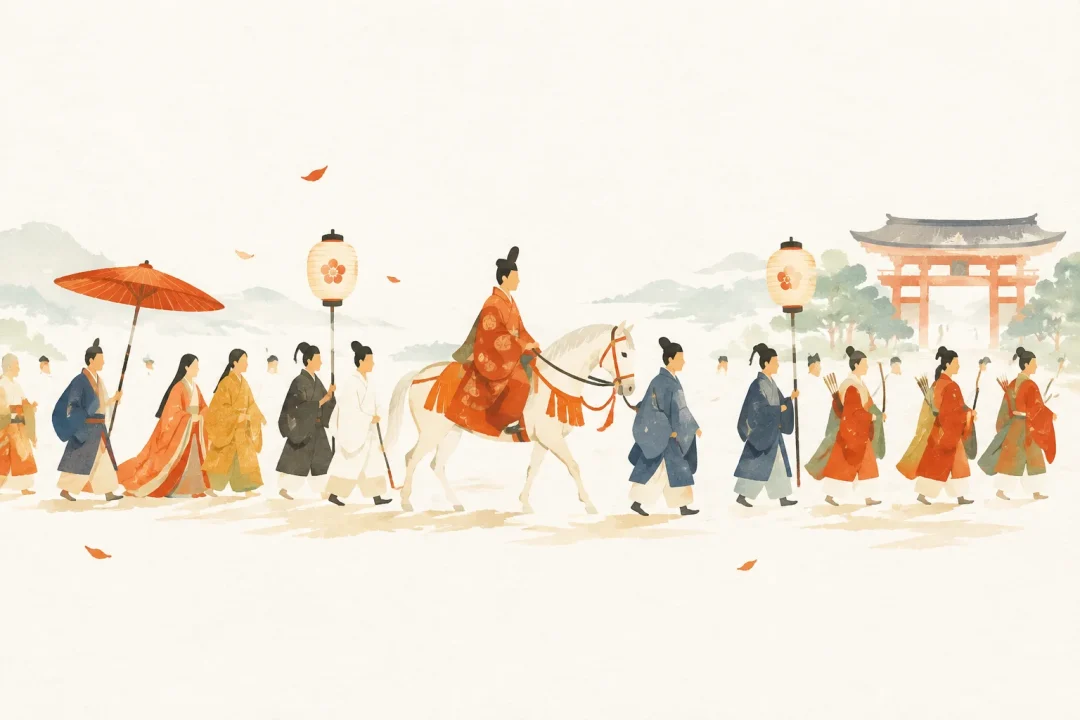
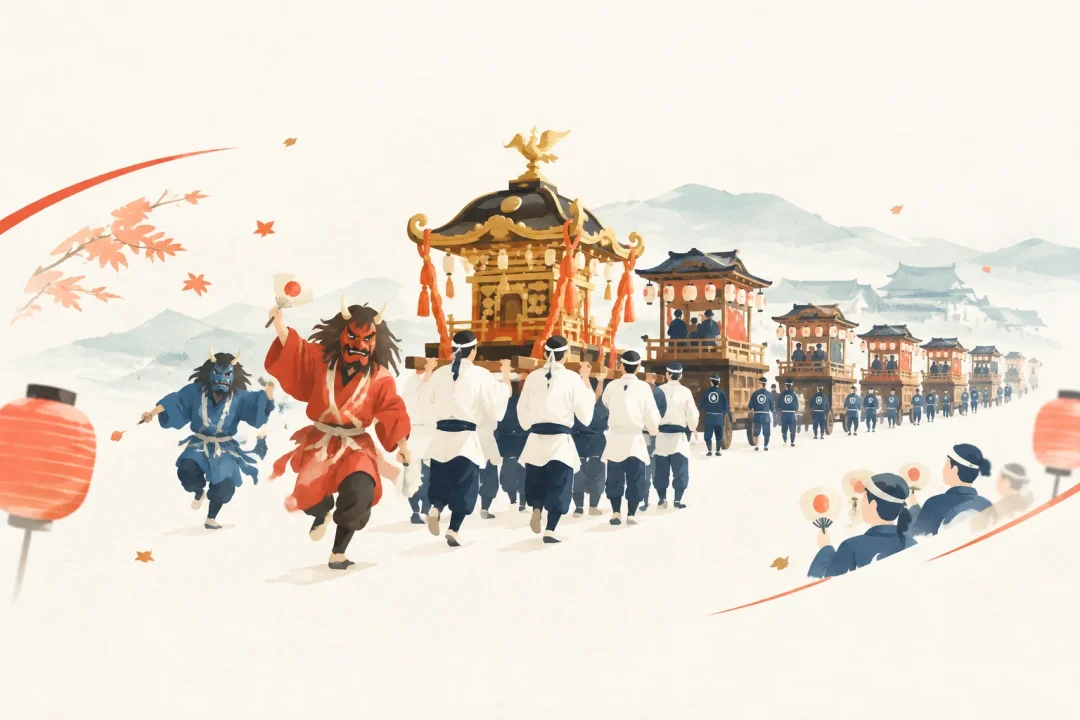
A procession carrying taro decorated on mōsō bamboo poles as it heads to the mountaintop ritual site is another distinctive feature.
According to local lore, a victory for the west means a good harvest, while a victory for the east means a poor harvest.
Source: 近江中山の芋競べ祭り | 滋賀県観光情報[公式観光サイト]滋賀・びわ湖のすべてがわかる!
A traditional event in Nakayama, Hino Town, where people entrust their hopes for agriculture to the length of taro
What to expect
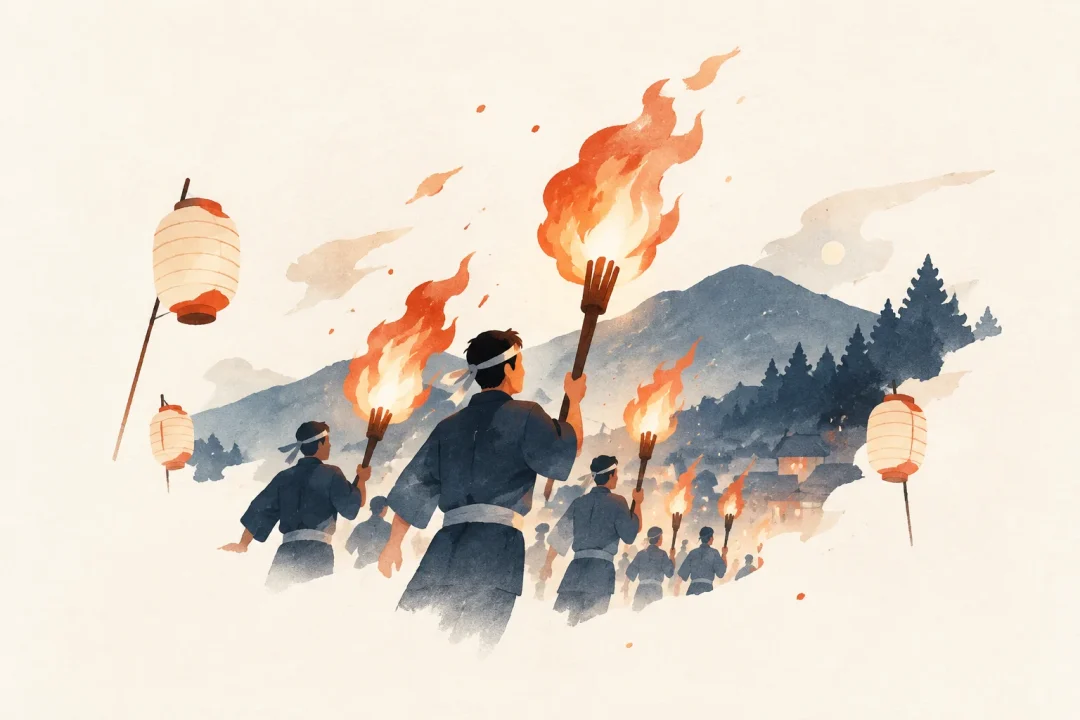
The festival begins with worship and a sake-cup ritual at Kumano Shrine. The eastern and western groups then take separate routes to Nogamiyama.
At the mountaintop ritual site, young men known as yamawaka lead the ceremony, following prescribed words and gestures.
After offerings of sumo, meals, and exchanges of gifts, the taro from the east and west are measured to determine the winner.
Location and access
- Venue and address
Kumano Shrine and Nogamiyama (1931 Nakayama, Hino Town)
- Train and bus
About 10 minutes by car from Hino Station on the Omi Railway Main Line.
Rental bicycles are available in front of the station.
- By car
About 25 minutes from Meishin Yokaichi IC via National Routes 421, 307, and 477.
- Parking
10 regular-sized cars.
Address 1931 Nakayama, Hino Town
Dates and season
In 2026, it is scheduled to take place on the first Sunday of September.
Each year, people visit Kumano at around 1 p.m., head to Nogamiyama at around 1:30 p.m., and from around 2 p.m., a and an Imo Kurabe ceremony are held at the festival site on the mountain.
The schedule may change depending on how the shinji proceeds, so it’s a good idea to allow plenty of time when you visit.
Source: 日野町年間イベントカレンダー | 日野町役場
Accommodation and hotels PR
Showing nearby accommodation.
Prices and availability are current at the time of retrieval. For multi-night stays, only the first night’s price is shown. Confirm the final price and directions to the venue with the booking provider. Select your dates again when using the area search link. Search area: within 3 km of Central Shiga Prefecture / Hino Town (the search is not centered on the festival venue)
Tips for your visit
The festival moves from Kumano Shrine to Nogamiyama, so allow time to travel between the venues.
The ritual site is set up on the mountaintop, and the start time may vary depending on how the festival proceeds.
As this is primarily a religious ceremony, visitors should watch quietly from the designated areas without disrupting the proceedings.
Nearby attractions

近江日野商人館
日本の滋賀県蒲生郡日野町にある資料館
Origins and History of Omi Nakayama Imo Kurabe Festival
This traditional event has been passed down from parents to children and from children to grandchildren in Nakayama East and Nakayama West, Hino Town.
Older records describe it as an event held in lunar calendar: August; it is said to have settled into its current form on September 1 only after Showa 46.
In Heisei 3 February 21, it was designated an Important Intangible Folk Cultural Property of Japan.
Accounts of the festival’s origins include the view that it began as an agricultural rite dating back to the late Heian period. There are also various theories about why taro are compared.
Official information
Hino Town Hall’s guide to the “Omi Nakayama Imo Kurabe Festival” provides information on the festival’s origins, venues, transportation, and schedule for the day.
The Agency for Cultural Affairs’ Database of Nationally Designated Cultural Properties also lists the festival’s cultural designation and details of the event.
Omi Nakayama Imo Kurabe Festival at a Glance
The Omi Nakayama Imo Kurabe Festival is an Important Intangible Folk Cultural Property passed down in Hino Town, where the eastern and western communities compete to see whose taro is longer.
The festival proceeds from a sake-cup ritual at Kumano Shrine to the ritual site on Nogamiyama, where the contest takes place after offering sumo and traditional ceremonies.
Held on the first Sunday of September each year, it continues to embody the community’s ties and agricultural traditions.
Japanese Festivals.jp Editorial Team
Celebrating local culture and helping you discover a side of Japan you never knew.
Article updated: 2026/10/19
Submit information or a correction Submit photos of this festival