Two sacred horses gallop in a time-honored shinko festival rooted in Yorishima
Oura Jinja Keiba Shinji
Festival information
EVENT INFORMATION- Season / frequency
- First Saturday and the following Sunday in October / Every year
- Location
- Oura
- Area
- Okayama Prefecture・Asakuchi City(From Tokyo: approx. 3 h 10 min–3 h 40 min · bullet train)Prefecture-level estimate to a main station or airport, not the venue. Airport access, check-in and onward travel are extra; remote areas and islands can take much longer.
- Last updated
- 2026/10/25
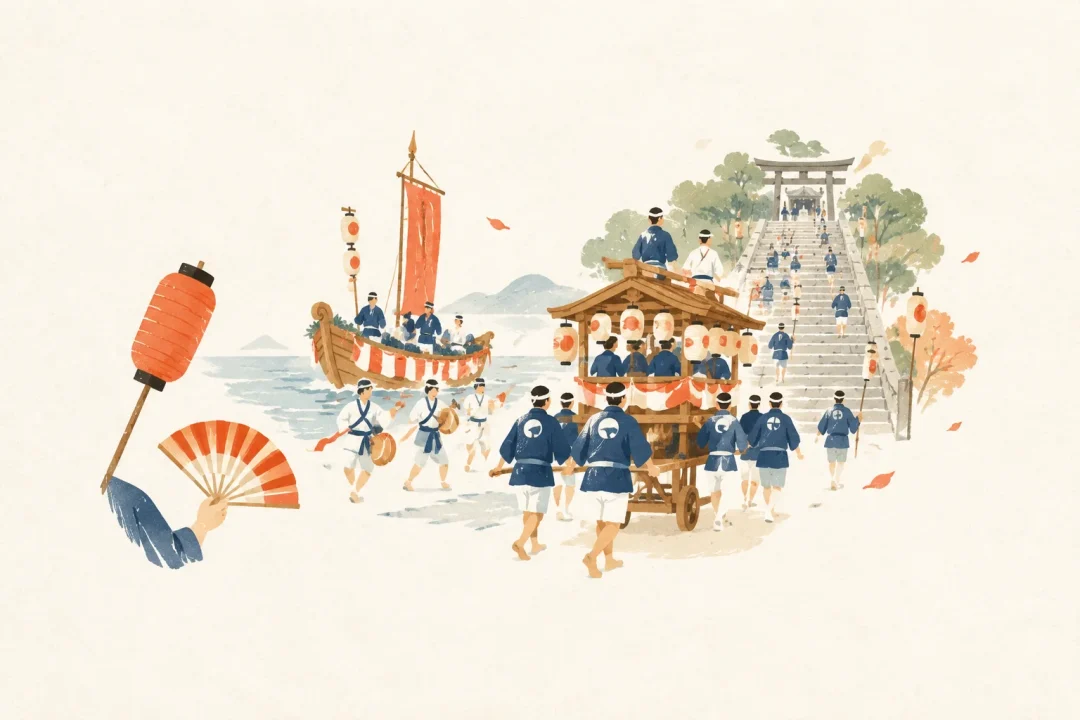
An autumn grand festival held at Oura Jinja in Yorishima-cho, Asakuchi City, distinguished by the service and gallop of sacred horses. The miya-iri procession, featuring the and sacred boat, is followed by 2 sacred horses racing around the .
About Oura Jinja Keiba Shinji
The Oura Jinja Keiba is a ritual held as part of the autumn grand festival at Oura Jinja in Yorishima-cho, Asakuchi City.
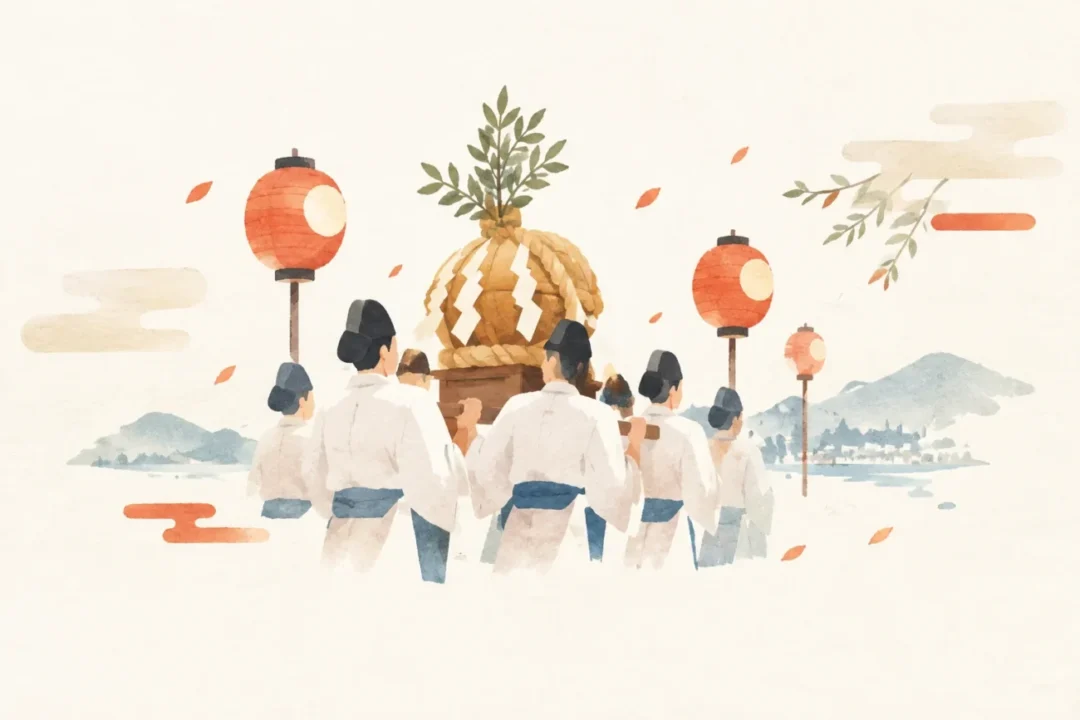
The miya-iri procession, featuring the mikoshi, sacred horses, a sacred boat, servants, and senzairaku, is followed by 2 sacred horses galloping around the shrine grounds.
The custom of including sacred horses in the is said to have begun with the shinko procession held in connection with Lord Hosokawa Michitada’s relocation of the shrine.
Festival highlights
Highlights include the traditional miya-iri procession, joined by the mikoshi and sacred horses, followed by the Keiba Junikake Shinji.
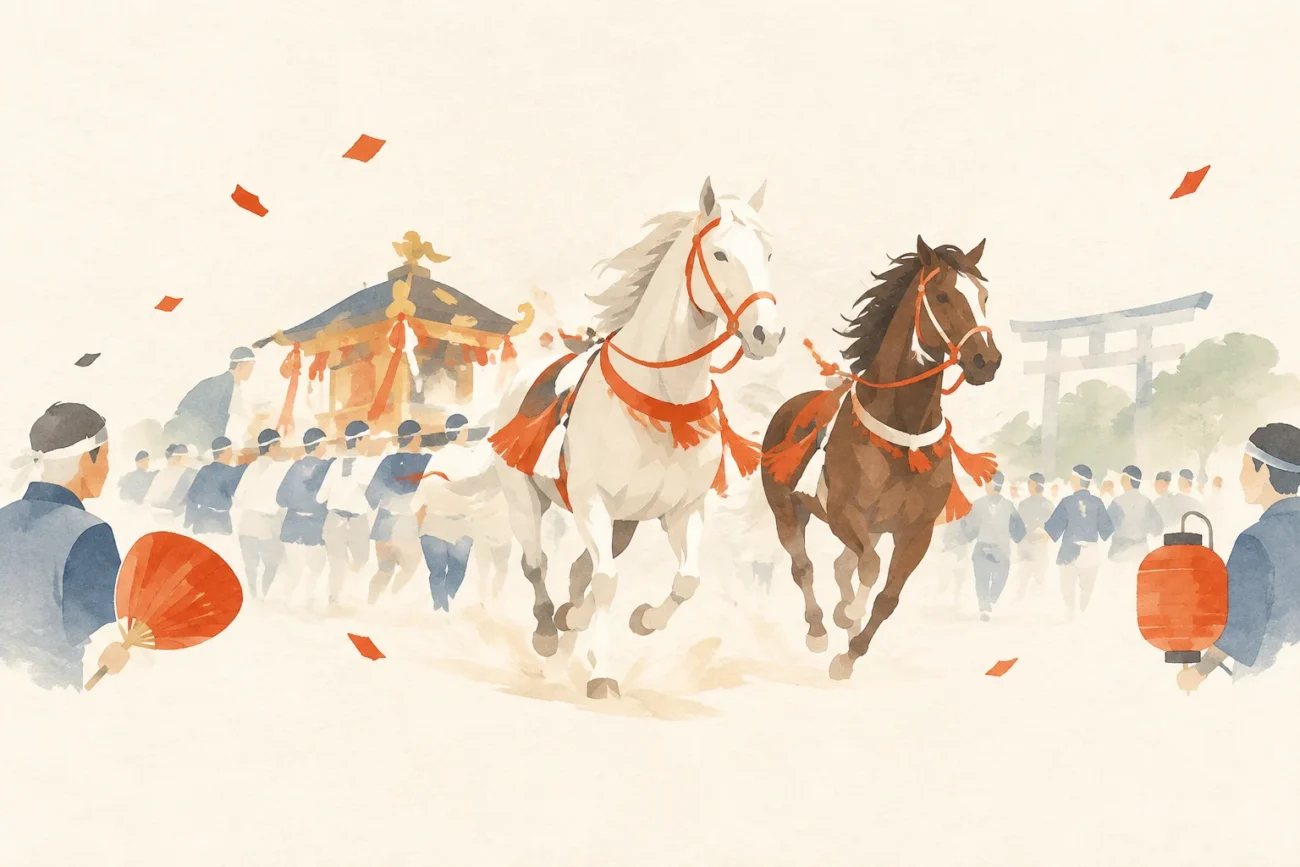
In the Keiba Junikake Shinji, 2 sacred horses gallop 12 laps around the shrine grounds.
The spirited contest between 2 sacred horses is a distinctive scene that also reflects the origin of the festival’s name.
Two sacred horses gallop in a time-honored shinko festival rooted in Yorishima
What to expect
The autumn grand festival takes place on Saturday and the following Sunday, with the miya-iri and Keiba Junikake Shinji held on Sunday.
During the miya-iri, the mikoshi, sacred horses, a sacred boat, servants, and senzairaku form a procession.
Afterward, 2 sacred horses gallop 12 laps around the shrine grounds, demonstrating before your eyes the role of the horses included in the shinko procession.
Location and access
- Venue and address
Oura Jinja, 7756 Yorishima-cho, Asakuchi City
- Train and bus
From JR Sanyo Main Line’s Kamogata or Satosho Station, drive about 10 minutes south
- By car
About 15 minutes south from the Sanyo Expressway’s Kamogata Interchange
- Parking
10 vehicles
Address 7756 Yorishima-cho, Asakuchi City, Okayama Prefecture
Dates and season
- Season
First Saturday and the following Sunday in October
- Frequency
Every year
Accommodation and hotels PR
Showing nearby accommodation.
Prices and availability are current at the time of retrieval. For multi-night stays, only the first night’s price is shown. Confirm the final price and directions to the venue with the booking provider. Select your dates again when using the area search link. Search area: within 3 km of Central Okayama Prefecture / Asakuchi City (the search is not centered on the festival venue)
Origins and History of Oura Jinja Keiba Shinji
The Keiba Shinji is said to have begun in 1559, when Hosokawa Michitada moved the shrine to Oura and included 40 sacred horses in the shinko procession.
Since then, it has been customary to include sacred horses in the shinko procession.
Today, at the formal horse-selection ceremony on September 1, 1 sacred horse is chosen from each of the Jikata and Ryoke lineages to serve at the autumn grand festival.
Official information
大浦神社公式サイト:大浦神社公式サイト|国内唯一の特殊神事「競馬神事」県下最大級の本殿は登録有形文化財に登録されています。
Oura Jinja Keiba Shinji at a Glance
The Oura Jinja Keiba Shinji is a ritual held as part of the autumn grand festival, handed down in Yorishima-cho, Asakuchi City.
After the miya-iri procession featuring the mikoshi, sacred horses, a sacred boat, servants, and senzairaku, 2 sacred horses gallop 12 laps around the shrine grounds.
The festival traces its origins to a shinko procession held in connection with the shrine’s relocation in 1559. A formal horse-selection ceremony is now also held on September 1.
Japanese Festivals.jp Editorial Team
Celebrating local culture and helping you discover a side of Japan you never knew.
Article updated: 2026/10/25
Submit information or a correction Submit photos of this festival