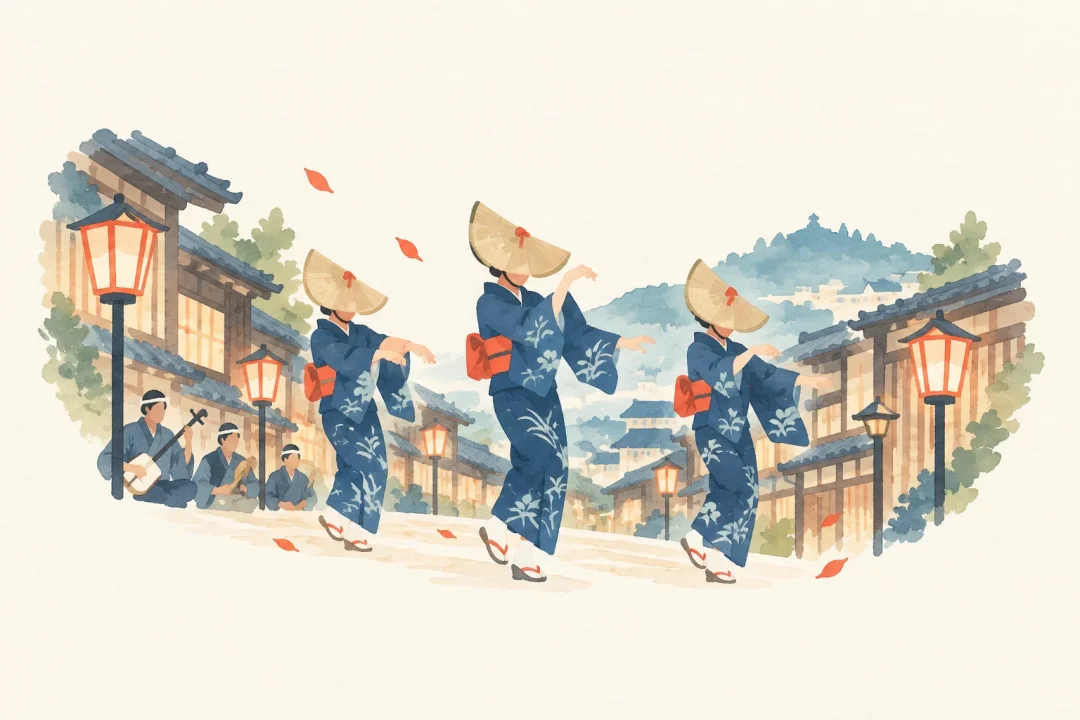
Okamoto’s spring festival arts, carried on through music and naginata
Kenketo Festival
Festival information
EVENT INFORMATION- Season / frequency
- Early April to early May
- Location
- Takagi Shrine
- Area
- Shiga Prefecture・Higashiōmi(From Tokyo: approx. 2 h 20 min–3 h · bullet train + connecting train)Prefecture-level estimate to a main station or airport, not the venue. Airport access, check-in and onward travel are extra; remote areas and islands can take much longer.
- Highlights and activities
- Last updated
- 2026/11/21
The Kenketo Festival, held at Takagi Shrine in Gamō Okamoto-chō, Higashiōmi, is a spring festival in which Kanka Odori, performed to instrumental music, and naginata performances bring color to the sacred procession.
About Kenketo Festival
The Kenketo Festival is a festival art performed at the spring festival of Takagi Shrine in Gamō Okamoto-chō, Higashiōmi.
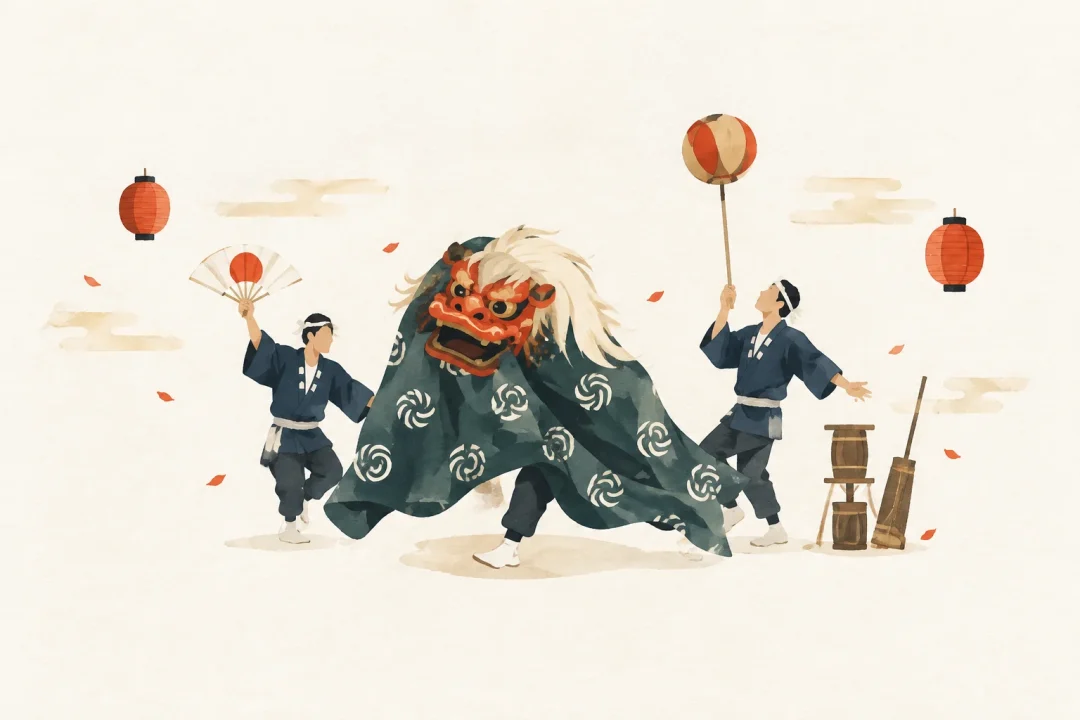
In Gamō Okamoto-chō, the naginata performance known as “Kenketo” and “Kanka Odori,” performed by dancers, have been handed down.
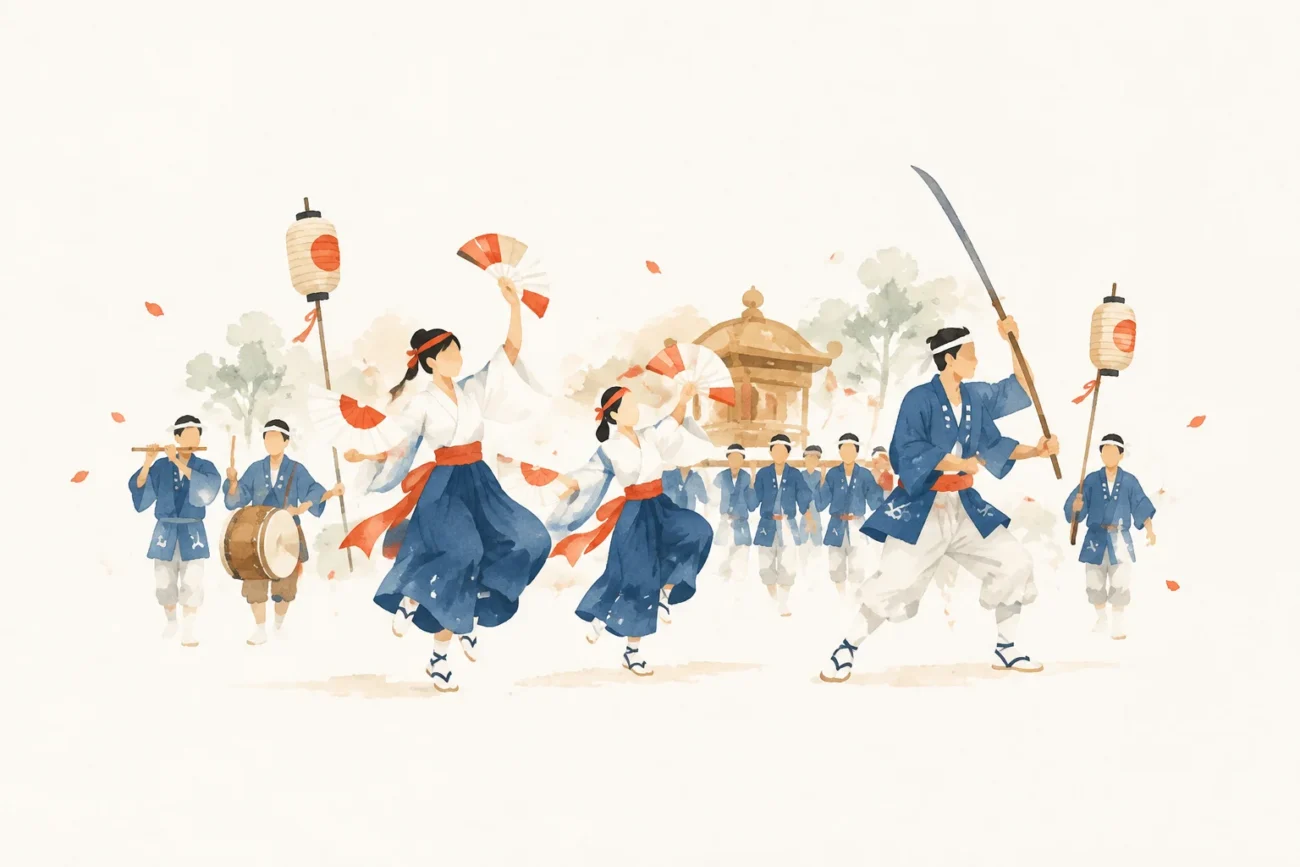
The performers dance while playing instruments such as bells, , kakko drums, and sasara, traveling around the district alongside the and kasahoko procession. They perform at the , the , and other locations.
Festival highlights
Highlights include naginata performers advancing to the accompaniment of and Kanka Odori performed by the dancers.
The Kenketo Festival naginata dance is said to include movements such as twirling a naginata overhead, leaping over it, and tossing it up and catching it.
Gamō Okamoto-chō’s Kanka Odori features instruments such as bells, taiko, kakko drums, and sasara, combining instrumental music with dance.
Okamoto’s spring festival arts, carried on through music and naginata
What to expect
During the festival, dancers—primarily boys—dance while playing instruments together, and the sacred procession advances with naginata and staff performances.
The procession travels around the district with the mikoshi and kasahoko, makes its way into the shrine grounds and otabisho, and then presents the festival arts at various locations.
In Gamō Okamoto-chō, participants take on roles in order by age. After completing Kanka Odori, they become Kenketo performers and are said to continue performing until the age of twenty.
Location and access
- Venue and address
Takagi Shrine, Gamō Okamoto-chō, Higashiōmi
Address Gamō Okamoto-chō, Higashiōmi, Shiga Prefecture
Dates and season
- Season
Early April to early May
Accommodation and hotels PR
Showing nearby accommodation.
Prices and availability are current at the time of retrieval. For multi-night stays, only the first night’s price is shown. Confirm the final price and directions to the venue with the booking provider. Select your dates again when using the area search link. Search area: within 3 km of Central Shiga Prefecture / Higashiōmi (the search is not centered on the festival venue)
Nearby attractions

観峰館
滋賀県の博物館・美術館のスポットです。

阿賀神社
滋賀県東近江市小脇町にある神社
Origins and History of Kenketo Festival
The Kenketo Festival naginata performance is a traditional festival art passed down in the Konan and Koto regions of Shiga Prefecture.
It is believed that performing arts popular in Kyoto in the early modern period spread to the region and have been passed down as festival arts.
Records of festival performers from Tenmei 5 (1785) through Taishō 4 (1915) document the instrumental arrangements and naginata. In Tenpō 5 (1834), a staff performer is also named among the naginata roles.
Official information
Agency for Cultural Affairs, Cultural Heritage Online, “Kenketo Festival Naginata Performance of Ōmi”
Kenketo Festival at a Glance
The Kenketo Festival, handed down at Takagi Shrine in Gamō Okamoto-chō, Higashiōmi, is a spring festival known for naginata performances and Kanka Odori.
The performers dance to the sounds of bells, taiko, kakko drums, and sasara, traveling around the district with the mikoshi and kasahoko and presenting the festival arts.
The festival’s defining features include naginata movements, dances performed by boys, and the continuation of festival performing arts recorded in old documents.
Sources and references
Japanese Festivals.jp Editorial Team
Celebrating local culture and helping you discover a side of Japan you never knew.
Article updated: 2026/11/21