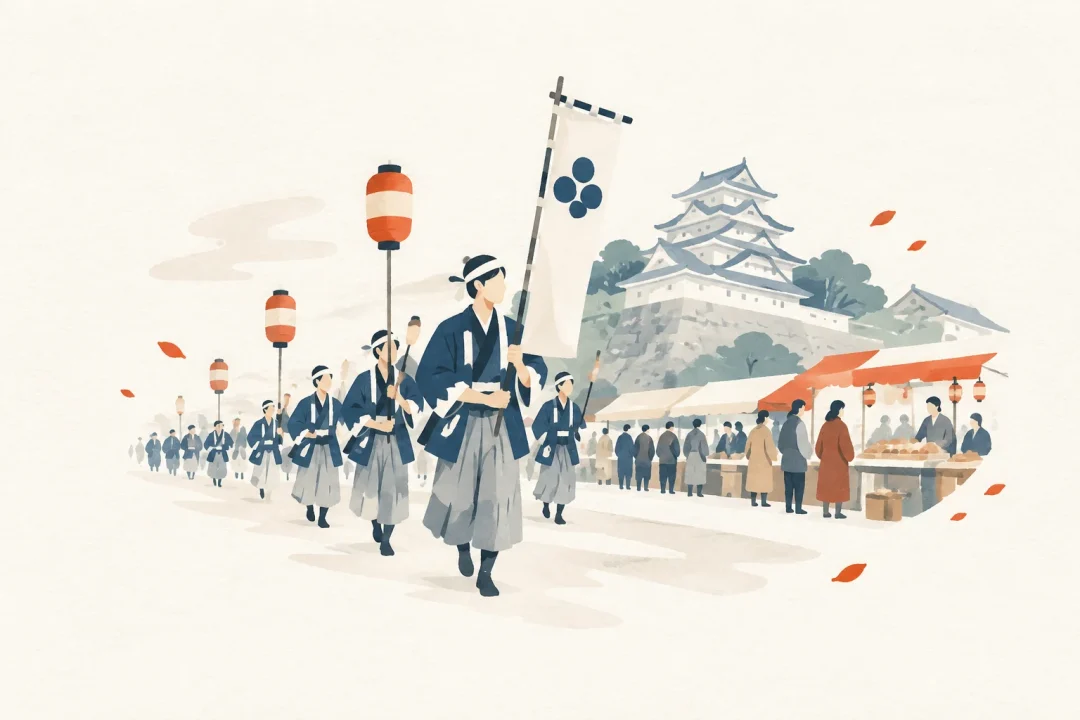
A grand ritual passed down in Himeji, welcoming the kami to an artificial mountain
Harima Sosha Hitotsuyama and Mitsuyama Ritual
Festival information
EVENT INFORMATION- Season / frequency
- Hitotsuyama is held every 60 years, and Mitsuyama every 20 years. / Hitotsuyama: every 60 years / Mitsuyama: every 20 years
- Location
- Harima Sosha
- Area
- Hyogo Prefecture・Himeji City(From Tokyo: approx. 2 h 40 min–3 h 10 min · bullet train)Prefecture-level estimate to a main station or airport, not the venue. Airport access, check-in and onward travel are extra; remote areas and islands can take much longer.
- Highlights and activities
- Last updated
- 2026/11/11
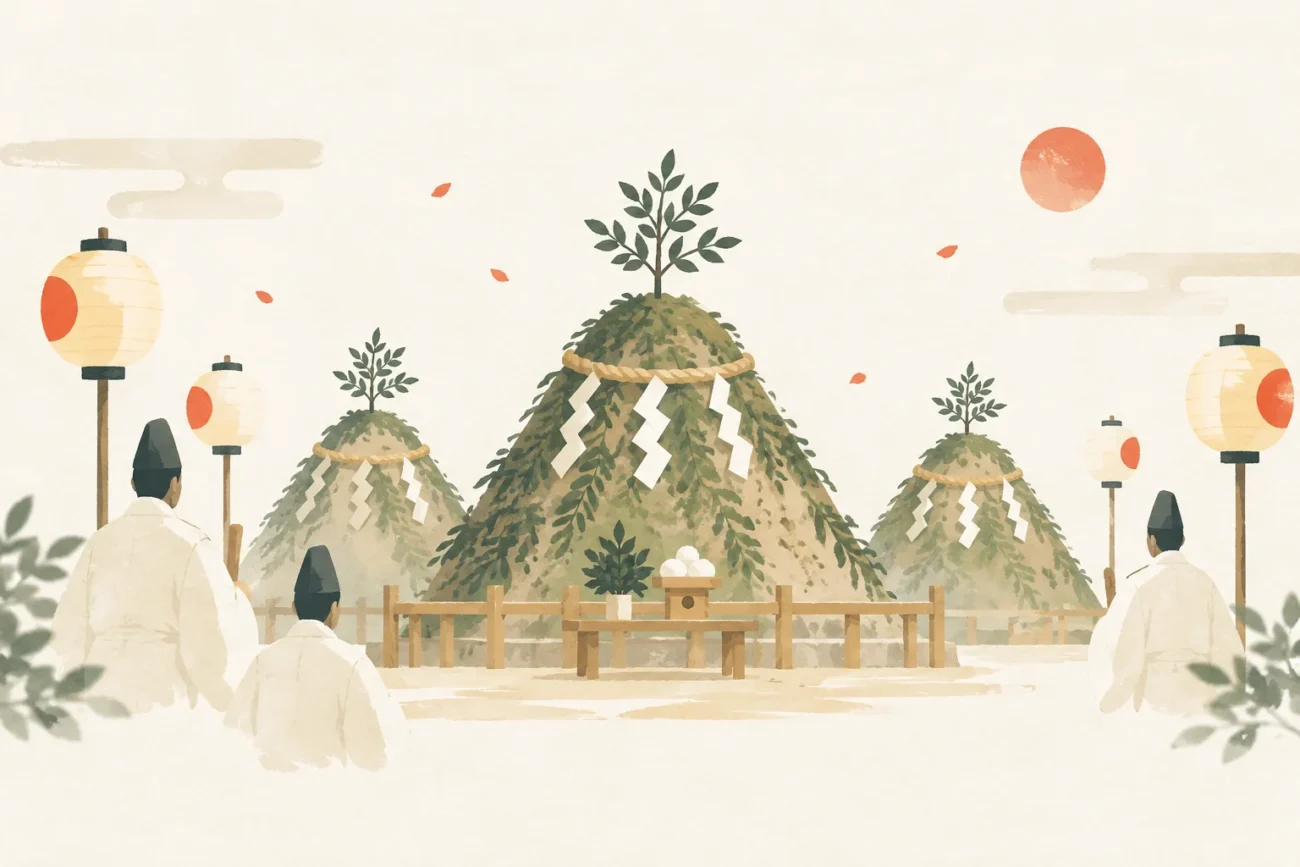
The Harima Sosha Hitotsuyama and Mitsuyama Ritual is a traditional ritual in Himeji City in which kami believed to have descended onto an artificial “placed mountain” are welcomed to a temporary festival site and enshrined.
About Harima Sosha Hitotsuyama and Mitsuyama Ritual
The Harima Sosha Hitotsuyama and Mitsuyama Ritual is held at Harima Sosha in Himeji City.
Hitotsuyama is held every 60 years, and Mitsuyama every 20 years. An artificial mountain called an “oki-yama” (placed mountain) is built.
The kami believed to have descended onto the placed mountain are invited to the festival site and enshrined there. In principle, the site is set up temporarily.
Festival highlights
A highlight is the creation of an artificial mountain, the “oki-yama” (placed mountain), to welcome the kami.
The ritual’s distinctive character is expressed in the sequence: the kami are believed to descend onto the placed mountain, then invited to a temporary festival site and enshrined.
One distinctive feature is that a temporary festival site is set up, rather than the ritual being centered solely on the shrine buildings.
A grand ritual passed down in Himeji, welcoming the kami to an artificial mountain
What to expect
The ritual begins with the construction of an artificial mountain called an “oki-yama” (placed mountain).
The kami are believed to descend there, after which they are invited to the festival site and enshrined.
The festival site is generally set up temporarily, and the ritual is carried out according to the respective cycles of Hitotsuyama and Mitsuyama at Harima Sosha.
Location and access
- Venue and address
Harima Sosha (Himeji City)
Event venue 兵庫県姫路市 播磨総社
This map uses the venue name. Check the official guide for the event area and entrances.
Dates and season
- Season
Hitotsuyama is held every 60 years, and Mitsuyama every 20 years.
- Frequency
Hitotsuyama: every 60 years / Mitsuyama: every 20 years
Accommodation and hotels PR
Showing nearby accommodation.
Prices and availability are current at the time of retrieval. For multi-night stays, only the first night’s price is shown. Confirm the final price and directions to the venue with the booking provider. Select your dates again when using the area search link. Search area: within 3 km of Central Hyogo Prefecture / Himeji City (the search is not centered on the festival venue)
Nearby attractions

兵庫県立歴史博物館
兵庫県姫路市にある博物館

好古園
兵庫県姫路市の姫路公園内にある日本庭園

姫路セントラルパーク
兵庫県姫路市にあるレジャー施設

姫路城
兵庫県にある日本の城
Origins and History of Harima Sosha Hitotsuyama and Mitsuyama Ritual
The Harima Sosha Hitotsuyama and Mitsuyama Ritual is an event documented as an intangible folk cultural property.
The date of its designation as a cultural property is March 1, 1959. Related equipment was designated an Important Tangible Folk Cultural Property on June 9, 1960 under the name “Harima Sosha ‘Mitsuyama’ Model.”
The practice of setting up a temporary festival site is also described as preserving a form that predates shrines.
Official information
Agency for Cultural Affairs, Cultural Heritage Online: “Harima Sosha Hitotsuyama and Mitsuyama Ritual”
Harima Sosha Hitotsuyama and Mitsuyama Ritual at a Glance
The Harima Sosha Hitotsuyama and Mitsuyama Ritual is an intangible folk cultural property held at Harima Sosha in Himeji City.
Hitotsuyama is held every 60 years and Mitsuyama every 20 years. An artificial “placed mountain” is built to welcome the kami, who are enshrined at a temporary festival site in principle.
A related Mitsuyama model is also designated an Important Tangible Folk Cultural Property.
Sources and references
Japanese Festivals.jp Editorial Team
Celebrating local culture and helping you discover a side of Japan you never knew.
Article updated: 2026/11/11