Dancing and lights in Hokuriku: How to choose between Owara Kaze no Bon, Yotaka, and Kiriko

As you explore Hokuriku’s festivals, you’ll discover the rich variety of their dances and lights. Here, we introduce Toyama’s Owara Kaze no Bon and F福野 Yotaka Festival, along with Ishikawa’s Kiriko festivals, by comparing what each experience is like. They take place at different times of year, so this guide is for choosing a theme for a future trip, not planning an itinerary to visit them all at once.
Listen closely to the songs and dancing at Owara Kaze no Bon
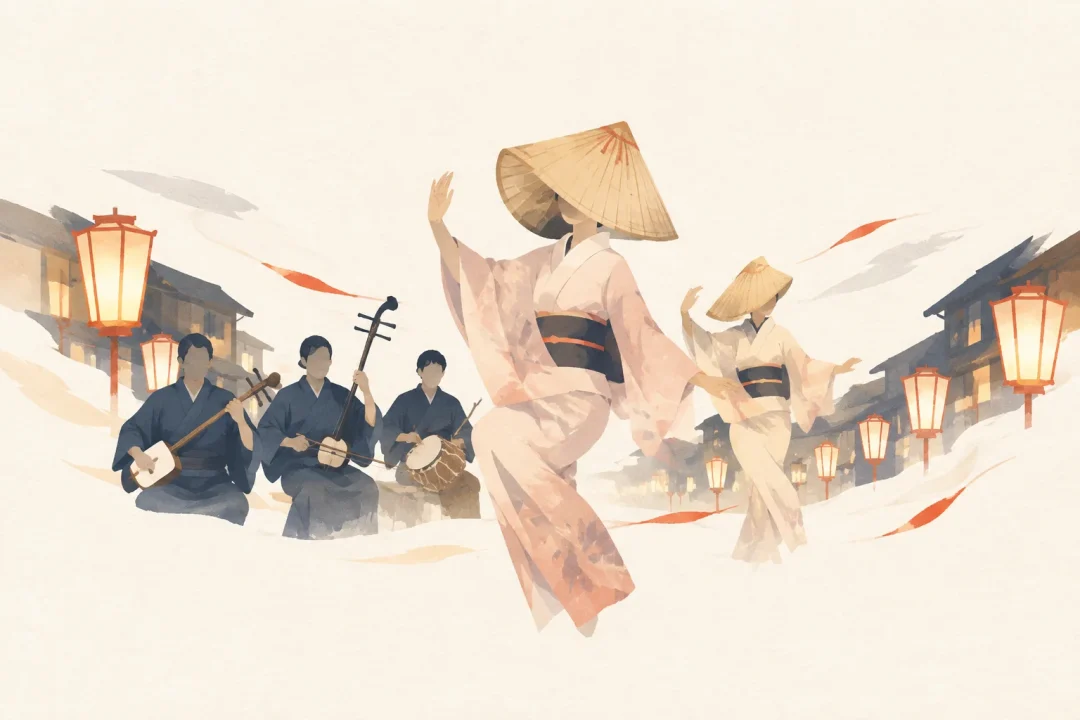
Owara Kaze no Bon in Yatsuo, Toyama City, is held annually from September 1 through the 3rd. It’s a festival where you can enjoy the sounds of shamisen and kokyu, the dancing, and the townscape together. A good choice for anyone who wants to take their time appreciating the character of each town rather than looking for flashy lights and loud performances. (Toyama Tourism Navi, “Etchu Yatsuo Owara Kaze no Bon”)
Don’t try to visit every town in one night; start by narrowing your walking area. Rather than pushing forward just to see the dancers, take time to listen to the music somewhere you can stop. That way, your night won’t be spent entirely on the move. Follow the day’s announcements for updates on events such as the street procession.
See enormous lanterns and feel the excitement at the Fukuno Yotaka Festival
According to Nanto City’s tourism information, enormous lanterns are paraded through town during the evening festival on May 1 and the 2nd, and the main festival takes place on the 3rd. If you want to see the lanterns at night, don’t assume all 3 days are the same—check which day is the evening festival. (Nanto City Tourism Association, “Fukuno Yotaka Festival”)
If you’re hoping to see a late-night highlight, check in advance whether you’ll have transportation back. Don’t assume you’ll be able to get home if you stay until the festival ends. Decide whether to stay overnight or watch only until the time you can still get home. The more spectacular the scene, the more important it is to watch from the designated viewing area.
Kiriko is not the name of a single festival
Noto’s Kiriko festivals are held in various places, and Wajima Taisai is the collective name for the summer festivals in four districts of Wajima City. Official information describes local features, including Kiriko floats covered entirely in lacquer. Instead of simply deciding to “go to a Kiriko festival,” choosing which town’s festival to visit is the starting point for your trip. (Wajima Taisai, a Kiriko festival in Noto)
When visiting Noto, don’t make your plans based only on past photos or the usual dates. Check each district’s event information and transportation updates for the current year. The procession and visitor arrangements may change. It’s important to respect the areas designated by local organizers and the form the festival takes that year.
How to choose beyond just “quiet” or “spectacular”
| Interest | Where to start looking |
|---|---|
| Enjoy the dancing and live music | The town and day-of events for Owara Kaze no Bon |
| Look up at glowing works of art | Fukuno Yotaka Festival lanterns and evening festival dates |
| Learn what makes each region different | Districts, shrines, and event information for the Kiriko festivals of Noto |
At every festival, it’s the townspeople who create the lights and dances. When choosing, don’t just consider which festival is the biggest—imagine how it moves through town and what you might hear. A festival trip in Hokuriku can also be a chance to visit the same region in a different season.
Official sources referenced
- Toyama Tourism Navi, “Etchu Yatsuo Owara Kaze no Bon”
- Nanto City Tourism Association, “Fukuno Yotaka Festival”
- Wajima Taisai, a Kiriko festival in Noto
This page is based on publicly available information from official sources, local governments, tourism associations, and other organizations. Information checked: 2026/10/01. Please check the official information for the year you plan to visit for dates, venues, traffic restrictions, and participation requirements.
Festivals related to this article
Etchū Yatsuo Owara Kaze no Bon
Yatsuo’s street procession, enveloped in bonbori lantern light and wistful melodies
