Gion Matsuri: Saki Matsuri or Ato Matsuri? Differences in dates, dashi, and how to plan your trip
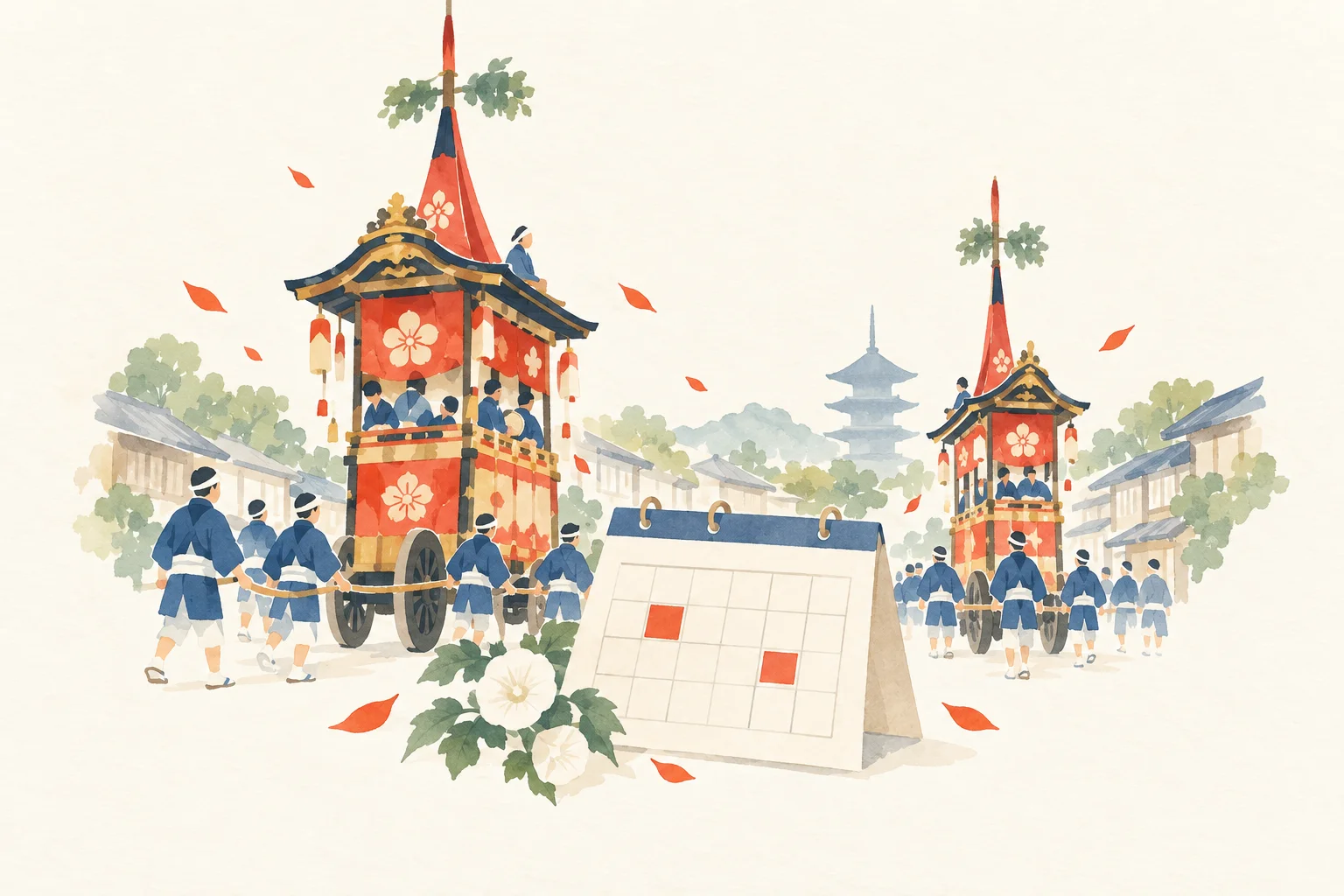
You want to see Gion Matsuri, but you’re not sure whether to go for the Saki Matsuri or the Ato Matsuri. When that happens, before trying to predict which will be less crowded, look into the and events you want to see. The Saki Matsuri and Ato Matsuri are not two days that repeat the same program. Considering the dates and events separately can also make it easier to plan your travel bookings.
The procession days are the 17th and 24th
According to Yasaka Shrine’s guide, the dashi procession is divided into the Saki Matsuri on July 17 and the Ato Matsuri on the 24th. Gion Matsuri itself is a month-long festival held in July, so the procession days aren’t the whole festival. But if you want to see the dashi in motion, this distinction is the place to start. (Yasaka Shrine: “Gion Matsuri”)(Yasaka Shrine: “Introduction to the Mikoshi and Dashi; Procession Maps”)
If you book accommodation after checking only that “Gion Matsuri takes place in July,” your stay may not line up with the events you want to see. Decide whether you want to see the procession, the dashi displayed around town, or the rituals, then choose your dates accordingly.
The participating dashi and procession routes differ
Different dashi take part in the Saki Matsuri and the Ato Matsuri, and separate procession maps are provided. If a dashi catches your eye in a photo, look up its name and check which procession it takes part in. It’s important not to assume that you’ll see the same dashi in both processions. (Yasaka Shrine: “Introduction to the Mikoshi and Dashi; Procession Maps”)
Don’t simply apply what you learned about viewing locations at the Saki Matsuri to the Ato Matsuri; check the route for that day. The best viewing location depends on whether you want to see a turning maneuver, watch for an extended time, or choose a spot near the station you’ll use to head home. Don’t decide based only on popular photo spots; use the official viewing guide.
Yoiyama and the procession offer different experiences
Visiting the neighborhoods where the dashi are displayed before the procession offers a different experience from watching them move on procession day. If you’re interested in the decorations or the atmosphere of the neighborhoods, check the dates when they are open to visitors—not just the day before the procession—and set aside time to walk around. Check the viewing or boarding requirements for each dashi.
| What you want to see | What to consider when choosing |
|---|---|
| A particular dashi | Which to attend: the Saki Matsuri or the Ato Matsuri |
| The dashi in motion and tsujimawashi turning maneuvers | The day’s procession route and viewing arrangements |
| Festival textiles and the atmosphere of the neighborhoods | Dates when the dashi are open to visitors before the procession and viewing requirements |
| Mikoshi processions | Times and routes of the Shinkosai and Kankosai |
Don’t assume the Ato Matsuri will be less crowded
Crowds vary depending on the location, time, and weather. Rather than assuming either the Saki Matsuri or Ato Matsuri will always be less crowded, narrow down the area you plan to walk and leave extra time before and after the scenes you want to see. If you want to watch while seated, also check the information on reserved seating for that year.
Seeing both in one trip requires a longer stay, so another option is to see the Saki Matsuri this year and the Ato Matsuri on your next visit. Even in the same Kyoto, you’ll encounter different dashi and neighborhoods. For your first trip, start by choosing one dashi you want to see.
Official sources consulted
- Yasaka Shrine: “Gion Matsuri”
- Yasaka Shrine: “Introduction to the Mikoshi and Dashi; Procession Maps”
This article is based on publicly available information from official sources, local governments, tourism associations, and others. Information checked: 2026/10/01. Please check the official information for the year you plan to visit for dates, venues, traffic restrictions, and participation requirements.
Festivals related to this article
Gion Festival
A month of Kyoto summer brought to life by yamahoko floats and Gion music
