Before taking children to a festival: How to choose a viewing spot, find restrooms, and decide when to go home
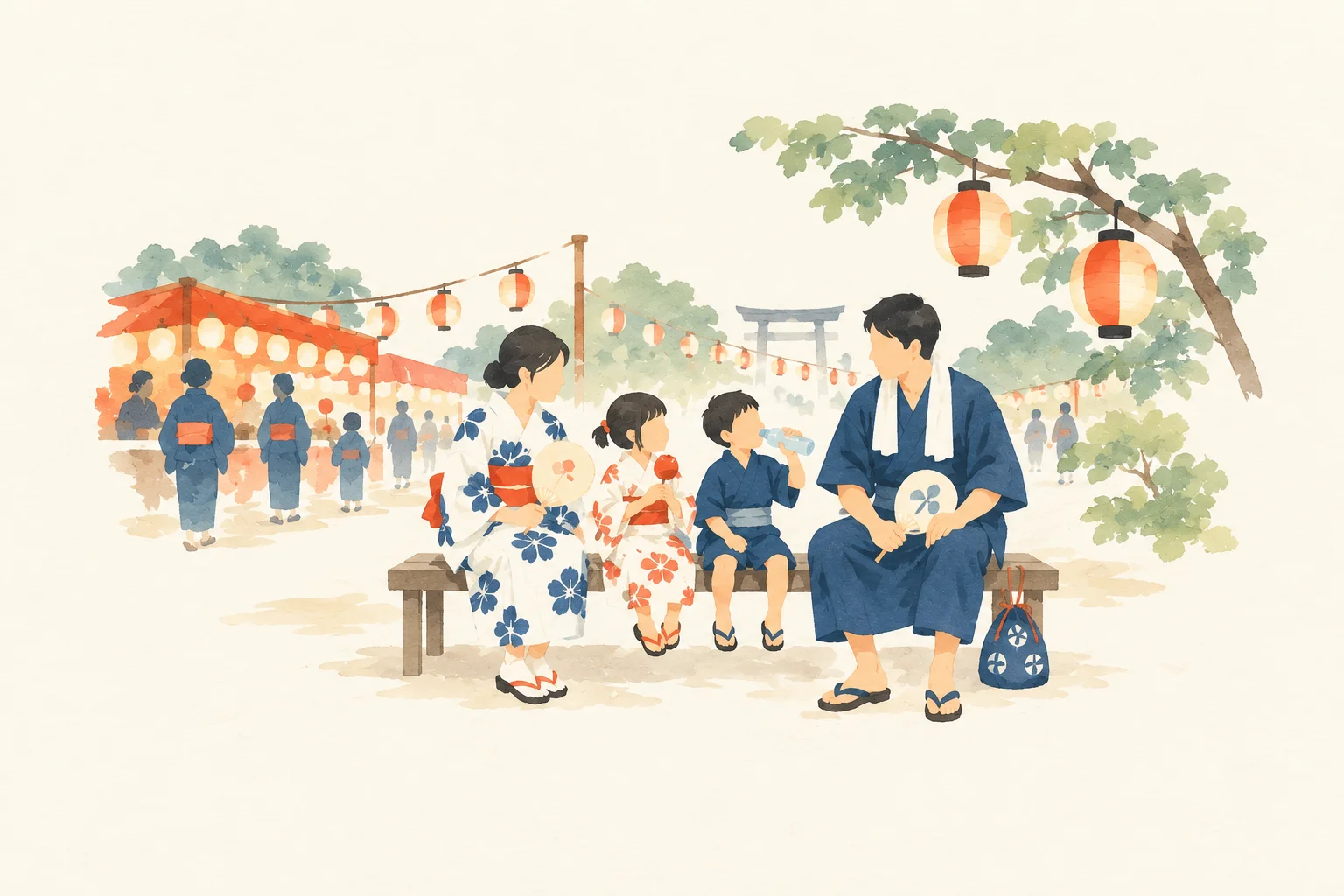
When taking children to a festival, it’s easier to plan if you decide “which scene to watch, and for how long” rather than asking “is it a popular festival?” Some days, children may enjoy the sounds and crowds; other days, they may want to go home early. Build into your itinerary from the start the option of cutting your visit short.
Choose one event to see, and start with a short visit
Watch one during the day, enjoy the lights for a little while at night, or look for costumes and drums. For your first visit, it’s a good idea to choose one specific activity like this. If you try to fit in every climax the adults want to see, the day may end up being mostly walking and waiting for the children.
For example, if you’re considering the Kawagoe Festival, check the official venue and transportation information to see how far you’ll need to walk, and plan your route so you don’t leave the farthest point from the station until last. Roads may be inaccessible during traffic restrictions, so check the organizers’ information as well as your map app. (Kawagoe Festival official “Pamphlet”)
Look for restrooms and places to take a break along with your viewing spot
Rather than looking for a restroom after you arrive, check the venue map for two possible options in advance so you can decide what to do more easily. If you’re bringing an infant or toddler, also check separately whether there are diaper-changing and nursing facilities. If you plan to use facilities at a commercial venue, check that day’s opening hours and conditions of use. Don’t assume they are free rest areas for festivalgoers.
- When you arrive, check where the restrooms are and which way you’ll need to go back.
- Schedule meals separately from the lines for festival events.
- Decide on a route for leaving early if it rains or you get tired.
- Agree on a clear landmark as a meeting point in case family members get separated.
Strollers: Check separately where they can be used and where they can be left
Even if a path is accessible by stroller, that doesn’t necessarily mean you can take it into the viewing area or crowded sections. Check for steps, stairs, and traffic restrictions, as well as the rules for seating. Ask the organizers or facility whether there is somewhere to leave a stroller if it can’t be used. Don’t assume you can leave it in a passageway or in front of a shop.
If you’re reserving seats, check whether children need tickets, the rules for watching from an adult’s lap, and whether re-entry is allowed. Age requirements differ by event. Don’t assume that because children were admitted free at another festival, they’ll be free here too.
Consider whether the sounds and crowds will suit your child
The Namahage Sedo Festival features scenes of namahage appearing in the , as well as performances such as drumming. The spectacle may be part of its appeal, but not every child will enjoy it. Watch photos or videos beforehand to get a sense of what to expect, and be ready to keep your distance or leave partway through. (Oga City: “Sedo Festival”)
This isn’t about avoiding any particular festival; it’s preparation to help you choose a way of watching that your child will enjoy. Think of activities that don’t require getting close, such as looking for a particular costume color or spotting an animal on a dashi. This will also give you more options for where to watch.
Agree as a family on “what time to head home”
Decide when you’ll aim to leave the venue, not just when you’ll get home. Getting back to the station or parking lot is part of the festival too. Going home earlier than planned doesn’t mean the day was a failure. For your first festival trip, try making your goal to end the visit while your child is still enjoying a particular scene and feels they’d like to come again.
Official sources consulted
This content is based on publicly available information from official sources, local governments, tourism associations, and similar organizations. Information checked: 2026/10/01. Please check the official information for the year you plan to visit for the dates, venue, traffic restrictions, and participation requirements.
