To the festival by train or bus. How to plan your journey so you don’t get lost beyond the nearest station
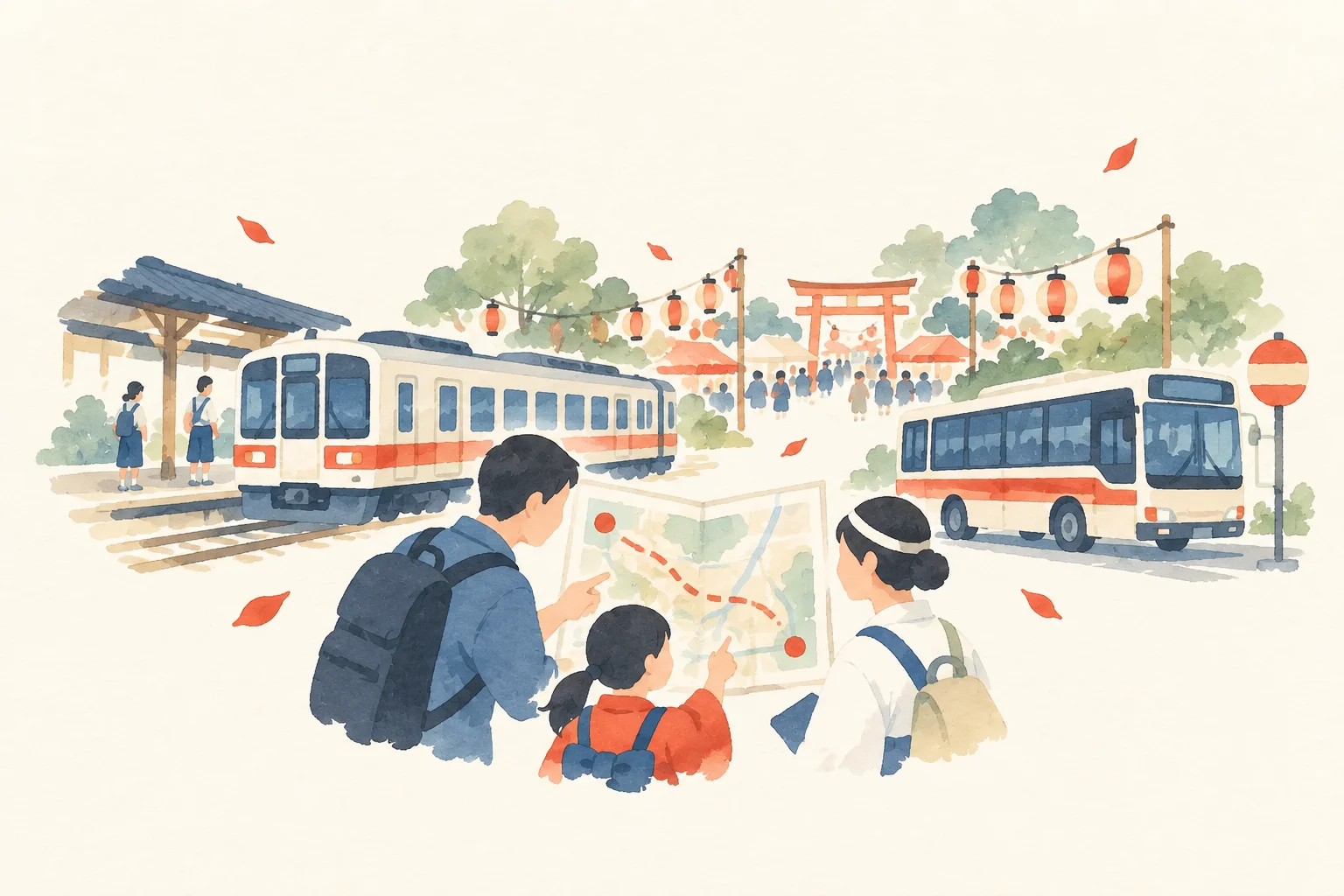
Once you’ve checked your arrival time at the nearest station using a journey planner, do you think your transport planning is done? On festival days, the parts that often take extra time are the walk from the station to the viewing spot and the trip back after the event ends. For a festival you’re attending by train or bus, it’s reassuring to plan the whole journey—from home to the place you want to see, and then back home—instead of just planning “home to the station.”
Choose a viewing spot, not just a venue name
At festivals held throughout a town, arriving at the central point of the venue doesn’t necessarily mean you’ll be able to see the event you’re interested in. First, use the official venue map to choose one street or performance location you want to see, then look up the route to that spot. Kawagoe Festival publishes an official pamphlet, which you can use as a starting point to check how the station is positioned relative to the places you want to see.(Kawagoe Festival Official “Pamphlet”)
On the map, find not only the route the procession will take, but also places where you can cross and information centers. A route you can travel during restrictions matters more than the shortest route shown by a straight line. If someone in your group has limited mobility, also look for routes that avoid stairs and pedestrian overpasses.
Secure your ride home before planning your trip there
You may be able to switch to an earlier service on the way there, but if you miss the last service back, you’ll have fewer options. For the return trip, decide when to leave the venue, not just when you need to arrive at the station. Allow extra time for periods when the procession prevents you from crossing, queues to enter the station, and getting around at transfer stations.
Add special trains and buses to your plan only after their operation is announced. A service that ran last year may not run this year. If you first make a plan that works with the regular timetable, then update it when this year’s special services are announced, you can decide the broad outline of your trip well in advance.
Check the bus stop’s location on the day, not just its name
Buses may be diverted or stops relocated because of traffic restrictions. Before heading to the usual bus stop along the road, check the bus operator’s and event organizer’s updates. Since you may not be able to use the same route for the return trip, it helps to save the return stop separately.
If you’re going to Takayama to see a festival, first get a sense of the town’s layout from a tourist brochure, then check the day’s service updates for the trains and buses you plan to use. Tourist information and transport information serve different purposes. Use the festival map to plan how to get around on foot, and transport updates to confirm which services are actually running.(Hida Takayama Travel Guide “Brochures”)
These 4 things to save on your phone
| What to save | When this is useful |
|---|---|
| Venue and traffic restriction map for the current year | When checking walkable routes and viewing spots |
| Return service and stop | When you want to get around without getting lost after the event ends |
| A target time to leave the venue | When deciding whether to stay until the end |
| Route for returning one service earlier | When shortening your plans because of fatigue or the weather |
It’s helpful to save the maps you need to your device so you can access them even if the network is congested. Share the return station and meeting place with your companions too, so it’s easier to coordinate what to do if you get separated. Once you’ve planned your travel, you can focus on enjoying the festival while you’re there.
Official information referenced
This is based on publicly available information from official sources, local governments, tourism associations and others. Information checked: 2026/10/01. Please check the official information for the year you plan to visit for the dates, venue, traffic restrictions and participation requirements.
