How to take festival photos considerately: choosing a spot, using flash and photographing people
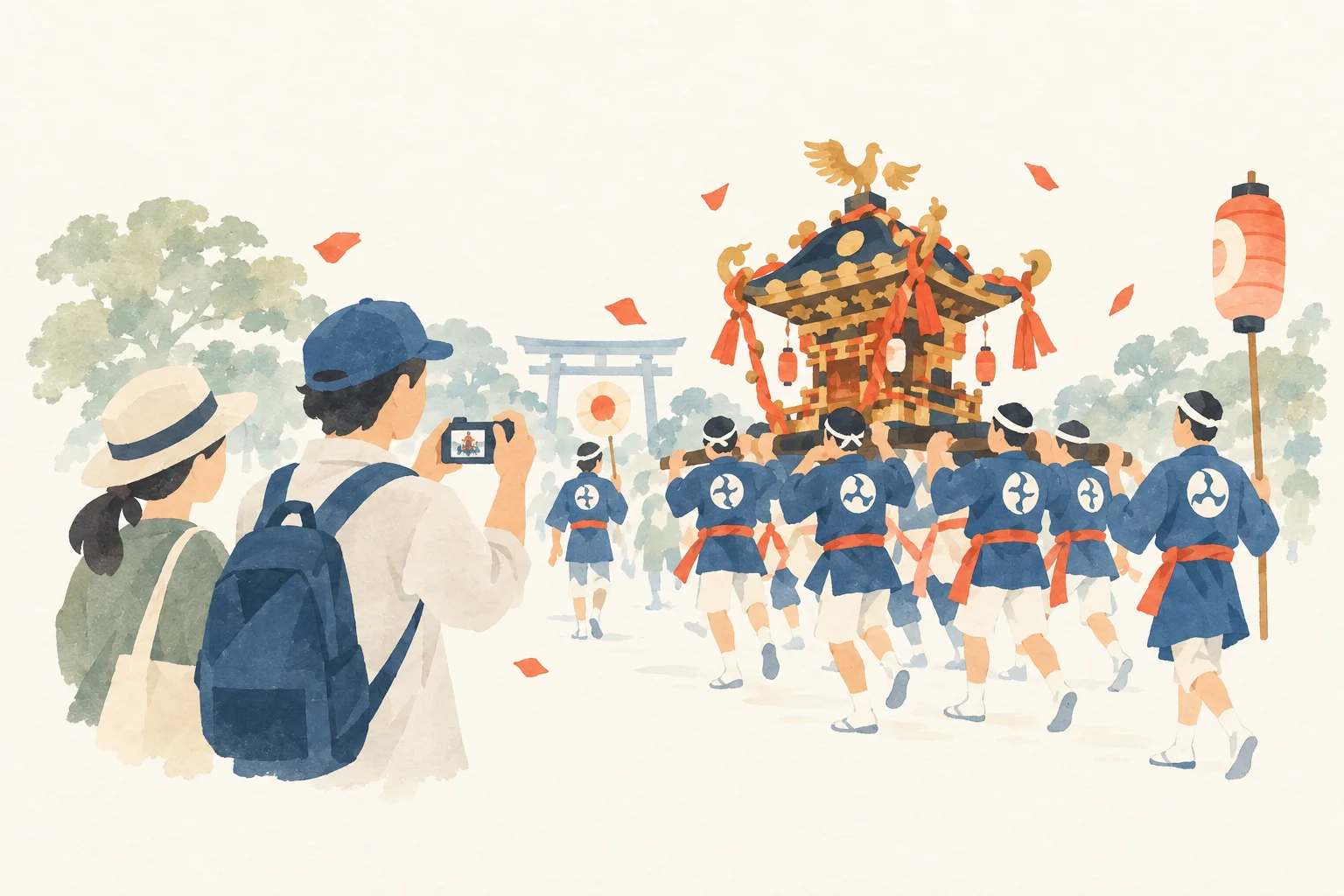
Festival photos are something to look forward to even before you set off. On the other hand, a spot that offers a good photo isn’t necessarily a place where you’re allowed to stop. We’ve outlined what to consider before your equipment, so you can enjoy taking photos without disrupting the festival or other spectators. Always follow the official guidance for that year regarding specific prohibitions.
Distinguish between “photography is allowed” and “you can photograph freely”
Even if you’re allowed to bring a camera to the venue, there may be separate restrictions on tripods, stepladders, flash, drones and other equipment. Check the organizer’s guidelines for the equipment you plan to use. The official Hakata Gion Yamakasa website also posts specific notices about photography. It’s important to make a habit of reading the guidance for each festival. (Hakata Gion Yamakasa Promotion Association, “About Photography”)
If you can’t find the information, don’t assume that something is allowed just because it isn’t listed as prohibited. Check the on-site guidance or ask a staff member. At festivals where a procession moves along the street, the viewing area may change while you’re taking photos. Don’t assume you can stay in a spot just because you were able to stand there at first.
Look around you, not just at your camera’s height
If you keep holding your device high in front of people, those behind you will see nothing but your screen. Raise it only when you need to, then lower it once you’ve finished taking pictures. That small gesture makes it easier for others in the same spot to see. If you’re using a telephoto lens, also check that your body or belongings aren’t sticking out into the walkway.
When viewing the festival floats at the Takayama Festival, choose one thing you want to photograph, such as the decorations or mechanical puppets, rather than trying to capture everything at once. This can help you avoid feeling rushed. However, the floats and events may change in rainy weather, so read the day’s guidance and don’t wait in one fixed spot for too long. (Hida Takayama Travel Guide, “Autumn Takayama Festival”)
Ask before taking close-up photos of people
Festival performers and spectators are people, each with their own feelings and dignity. If you want to photograph a particular person up close as the main subject, ask them when it’s appropriate; if they seem uncomfortable, don’t pursue them. Rather than speaking to people during a ritual or performance, you may need to decide not to take the photo at all.
Before posting, it’s a good idea to review the image for prominent faces, name tags, children, and the interiors of shops or homes. This is not a blanket legal rule, but an editorial suggestion to help you respect your relationship with the people who support the festival. Don’t assume that permission to take photographs at the venue also grants permission to use them for other purposes, such as advertising.
Take home the sounds and pauses, not just the photos
At festivals such as Owara Kaze no Bon, where people enjoy the songs, instruments and dancing through the town, taking time to listen quietly is part of the appeal. Avoid shutter sounds and conversation, and watch one full song first; you may find it easier to spot the moments you want to photograph afterward. (Toyama Tourism Navi, “Echū Yatsuo Owara Kaze no Bon”)
- Before photographing: Check this year’s guidelines, viewing areas and equipment restrictions
- While photographing: Keep pathways and the view of people behind you clear, and move immediately if directed
- Before posting: Review people and private information captured in the image, and take care appropriate to how you plan to use it
Taking only a few photos doesn’t mean you didn’t fully enjoy the festival. Set aside time to record the event and time to experience it directly, so you can take in the sounds and atmosphere as well. To get a good shot, first try to go with the flow of the festival as one of the spectators.
Official information consulted
- Toyama Tourism Navi, “Echū Yatsuo Owara Kaze no Bon”
- Hida Takayama Travel Guide, “Autumn Takayama Festival”
- Hakata Gion Yamakasa Promotion Association, “About Photography”
This content is based on publicly available information from official sources, local governments, tourism associations and others. Information checked: 2026/10/01. Please check the official information for the year you plan to visit for event dates, venue, traffic restrictions and participation requirements.
