How to check festival dates: a step-by-step guide to telling “usual dates” from “this year’s dates”
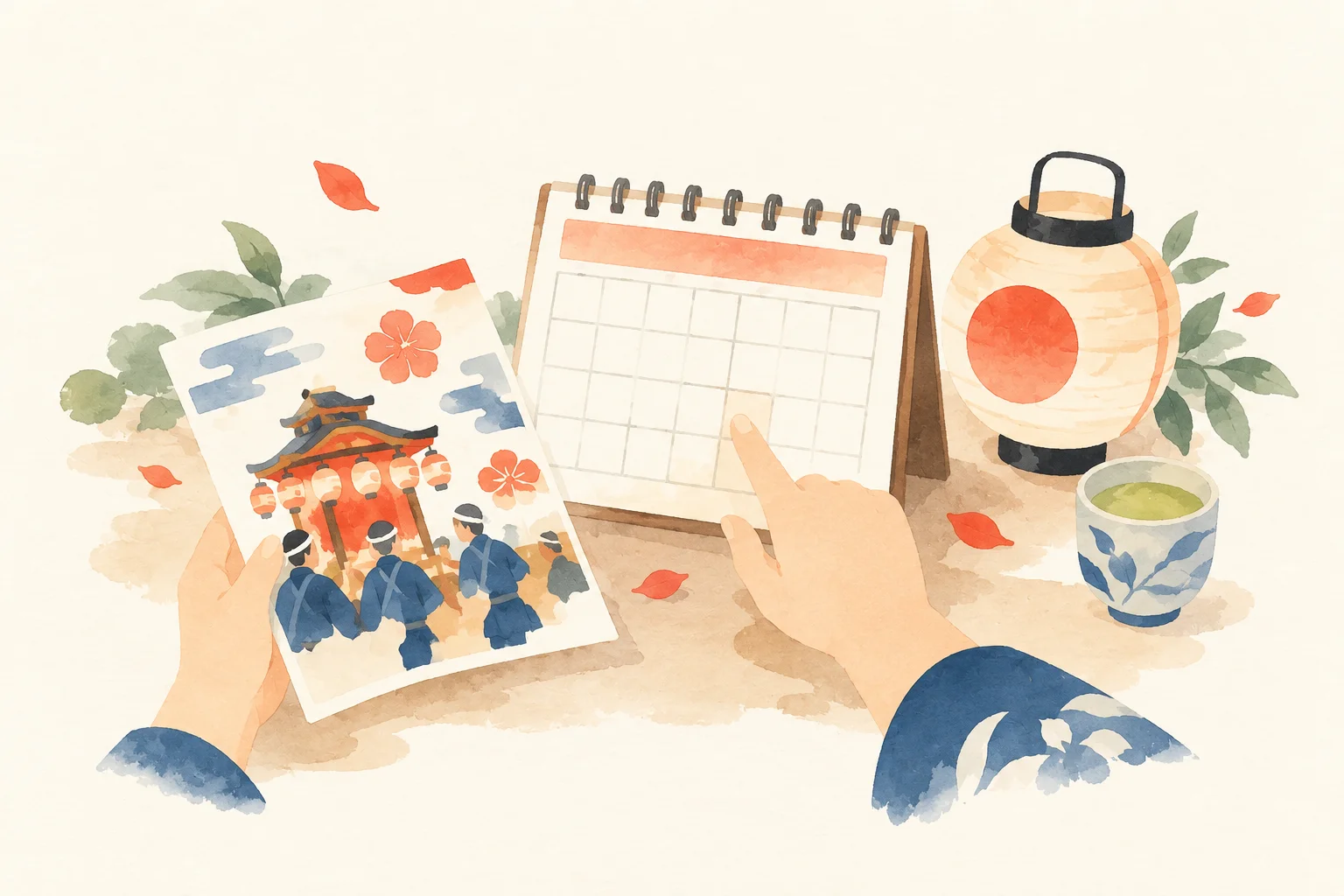
When you search for a festival, last year’s spectator seating information or a travel blog from several years ago may appear near the top of the results. Even if the photos are appealing, the dates may not be for this year. Before booking travel or accommodation, learn how to check the “usual time of year” separately from the “announcement for the current year.”
Look for the year, not just the date
First, check the page title, main text, and year shown on any attached PDF. Even if the update date is recent, the information in the text may still be from a previous year. Conversely, a URL may contain an old year even though the text has been updated. Don’t rely on the URL alone; check that the event year, date, venue, and organizer all match within the same announcement.
The day of the week can also be a useful supporting clue. If the dates and days of the week don’t match the calendar for the year you plan to visit, check the material again. However, the day of the week may also be printed incorrectly. Don’t correct the event date based only on the day of the week; cross-check it against another announcement from the organizer or their contact details.
Even festivals held on the same dates every year can change their schedules
Yokote City has announced that, starting in 2026, the Kamakura festival will be held on the second Friday and Saturday of February. This is an example that people who remember the traditional dates should pay particular attention to. The city’s information lists the dates for 2027 as February12 and 13. It may not be that an older article was wrong; the rules themselves may have changed.(Yokote City, “Yokote Kamakura”)
Even for festivals described as happening “on this date every year,” allow for the possibility of changes due to traffic conditions, local operating needs, or other factors. If the dates have not yet been announced, use the usual time of year to shortlist options, and wait for a confirmed announcement before deciding on booking conditions.
Make a note of the festival period and the date of the event you want to see separately
For festivals that span several days, such as Nagasaki Kunchi, knowing the overall festival period is not enough; you also need to check the location and time of the performance you want to see. Try adding the venue, event name, and admission requirements to a note that lists only the festival name and date.(Nagasaki Traditional Performing Arts Promotion Association, “About Nagasaki Kunchi”)
To check traffic restrictions and event schedules for the Takayama Festival, you can select materials for the current year from Takayama City’s pamphlet list. Even if you open a PDF directly from search results, it is important to check the year on its cover or in the text again.(Hida Takayama Travel Guide, “Pamphlets”)
Five details to confirm before booking
- Event year and date: Is this an announcement for the current year, rather than a description of the usual schedule?
- Venue: Does the information give more than just the town or city name—does it specify the shrine, street, or facility?
- Event you want to see: Which day and time during the festival period it takes place.
- Requirements: What are the arrangements for spectator seating, participation applications, and bad weather?
- Where to check: Which official page should you check if there has been a change?
Save the URL and the date you checked the page together so it’s easier to review later. Screenshots are useful when you don’t have an internet connection, but they won’t reflect changes made after you saved them. Check the latest online announcements again before you set off.
Use our event dates and articles as a starting point for finding festivals, and consult the organizer’s information when making your final decision about attending or booking. Instead of checking “When is it this year?” just once and calling it done, check twice—before booking and before departure—to avoid misunderstandings.
Official sources referenced
- Yokote City, “Yokote Kamakura”
- Hida Takayama Travel Guide, “Pamphlets”
- Nagasaki Traditional Performing Arts Promotion Association, “About Nagasaki Kunchi”
This content is based on publicly available information from official sources, local governments, tourism associations, and others. Information checked: 2026/10/01. Please check the official information for the year you plan to visit for the event dates, venues, traffic restrictions, and participation requirements.
