How can you enjoy a festival while limiting the amount of walking? What to check about venues, seating, and restrooms
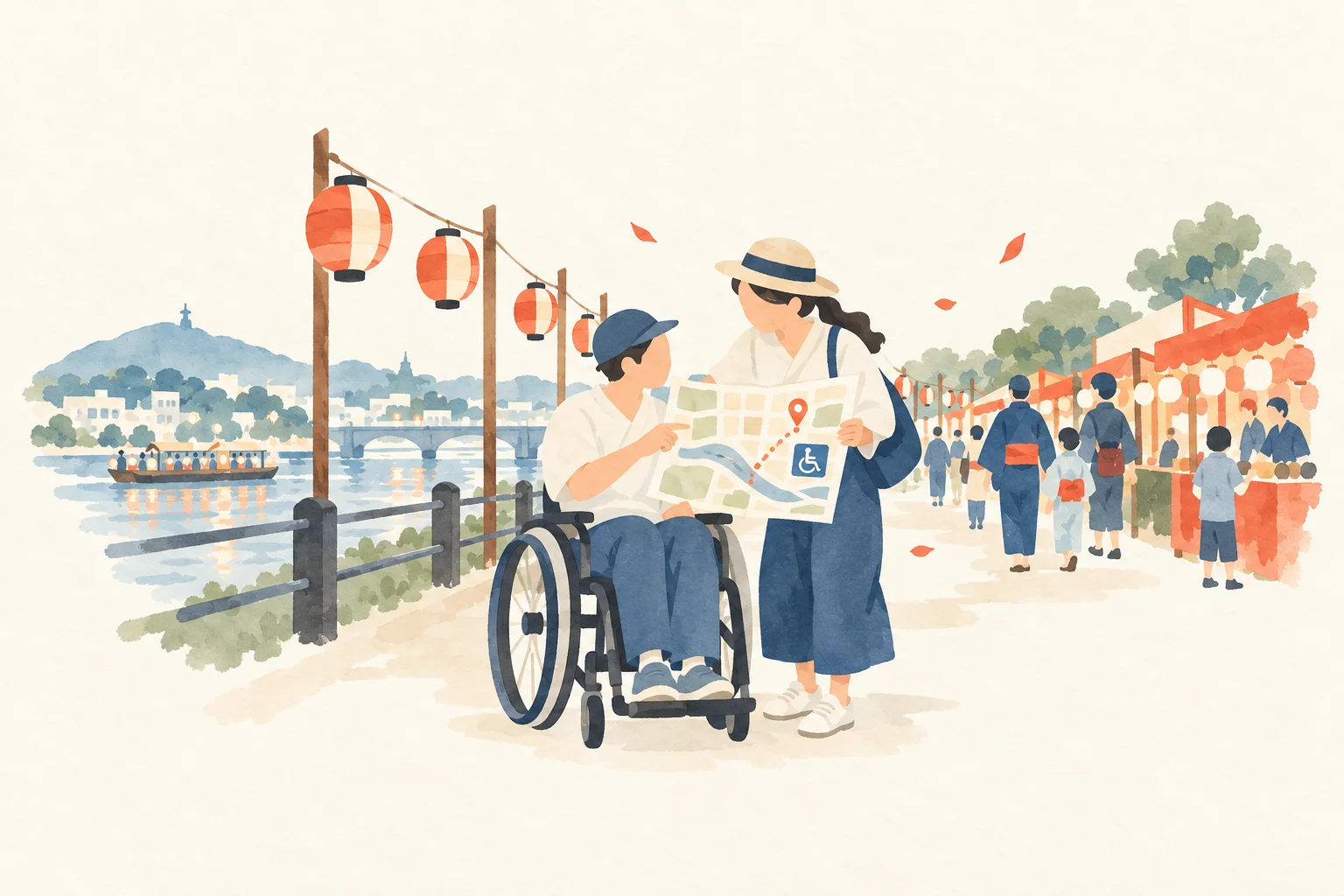
Even if a festival description says it is “close to the station,” that does not necessarily mean the viewing area is easy to reach. If you want to limit the amount of walking, it is important to check the entire route from the nearest station to the venue entrance, viewing area, restroom, and departure point for your return trip. Check not only whether facilities are available, but also whether they can be used on the day.
Distinguish between how close places look on a map and how easy they are to reach
Even when the distance on a map is short, stairs, slopes, uneven surfaces, gravel, and crowds can affect how easy it is to get around. First, choose one viewing area using the official venue map, then check the route there in detail. Local maps, such as Takayama tourism brochures, can help you understand the layout, but check that year’s event information separately to confirm which routes are open during the festival. (Hida Takayama Travel Guide “Brochures”)
Mobility needs differ from person to person. Rather than asking only, “Is it accessible?”, you may find it easier to get the information you need by asking specific questions such as, “Can I enter without encountering steps?”, “Can I pass side by side with my companion?”, and “Are there places to sit along the way?” It can also help to explain what type of wheelchair or mobility aid you will be using.
For seating, check the route from the entrance as well
For festivals such as Awa Odori, where dance venues and seating are listed, check not only the seat location but also the entrance, stairs, arrangements for wheelchair users, and seats for companions. It is easier to plan if you discuss the conditions you need before booking, rather than buying a standard-seat ticket first and asking later whether accommodations are possible. (Awa Odori Official “Guidebook”)
Even when wheelchair-accessible spaces are available, the arrangements may not be the same at every venue or time. The height of the view from your seat and the possibility of people standing in front of you can also affect how easy it is to watch. If you organize any questions that are not answered on the website and contact the organizers, you can get more specific answers.
Check the distance to restrooms and rest areas, and when they are open
- Whether the restroom you want to use will be open during the festival
- Whether the necessary facilities are available, such as wheelchair-accessible facilities
- Whether you can reach the viewing area without crossing a restricted zone
- Whether you can return to the viewing area after going to a rest area
Even if a facility appears on the map, the building may be closed on the day, or part of the route may be inaccessible. Checking the shortest option and an alternative in case it cannot be used can reduce the burden of having to look for another route from scratch at the venue.
A short checklist you can use when making inquiries
Start by telling the organizers, “I’d like to see [event] on [date] at [venue].” Then note the mobility aid you will use, the number of people accompanying you, steps or long periods of standing you want to avoid, and which entrance you want to check. Giving specific details about your mobility needs is more likely to get you the information you need than asking for general information about the festival.
Even for facilities and arrangements confirmed by official sources, weather or operational changes may affect them, so check the information for the day again before setting out. Once you have found one place where you can watch comfortably, you can fully enjoy the festival. Rather than planning around the size of the venue or the number of attractions, decide how much of the festival to see based on your own mobility needs.
Official sources consulted
Based on publicly available information from official sources, local governments, tourism associations, and others. Information checked: 2026/10/01. Please check the official information for the year of your visit for event dates, venues, traffic restrictions, and participation requirements.
